


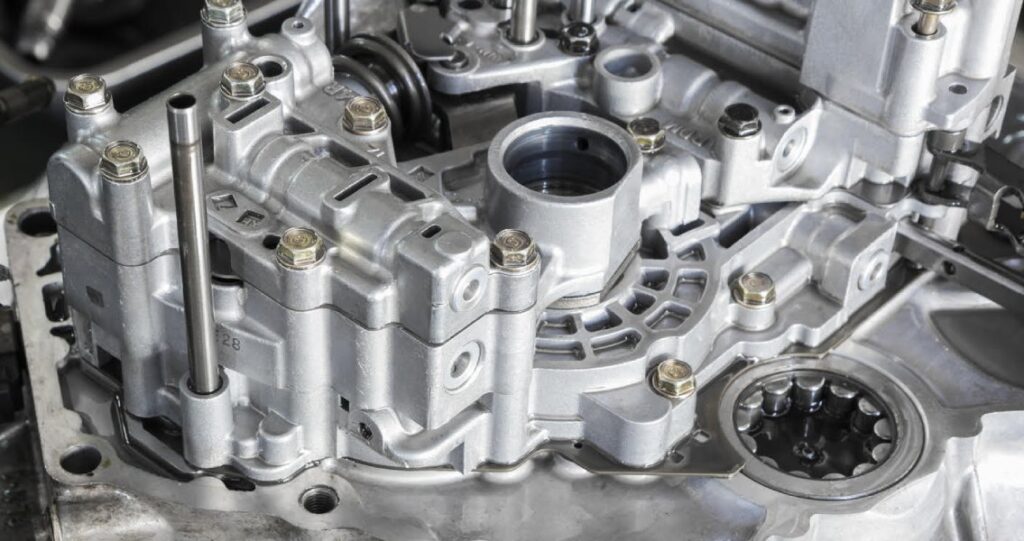
Innovation in the world of manufacturing is often found at the intersection of traditional techniques and modern technologies. A very powerful combination is that of additive manufacturing and casting. Casting has been the backbone of manufacturing for centuries, but additive manufacturing, commonly known as 3D printing, is a relatively new entrant that has redefined how products are designed and made.
When combined, these two methods bring out the best of both worlds. Additive manufacturing allows for the rapid creation of intricate patterns, molds, or cores that would be difficult or impossible to achieve with traditional methods. These 3D-printed molds and prototypes not only reduce lead times but also enable greater design flexibility, opening the door to lighter, stronger, and more efficient components. Once the digital design is validated, casting transforms these patterns into high-performance parts using tried-and-tested metallurgical processes.
Industries such as aerospace, automotive, energy, and healthcare are already adopting this hybrid approach. For example, 3D printing can produce lightweight, optimized mold designs for turbine blades or engine parts, which are then cast in metals that meet strict performance requirements. This accelerates product development cycles, reduces material waste, and minimizes costly rework caused by defects.
The synergy between additive manufacturing and casting is also helping smaller manufacturers and foundries remain competitive. By reducing tooling costs and shortening development timelines, even limited production runs can be more economical.
By merging these two methods, manufacturers can harness the strengths of both to achieve unprecedented efficiency, precision, and versatility. In this blog, we’ll explore how additive manufacturing complements casting, the benefits of this combination, and real-world applications where it’s making a significant impact.
Understanding Additive Manufacturing and Casting
What Is Additive Manufacturing?
In additive manufacturing, the object is created layer by layer with a digital model. Material such as metal powders, resins, or polymers are deposited and fused together to form a three-dimensional structure. The process permits highly intricate designs with very little waste.
Additive manufacturing, more commonly known as 3D printing, is a modern production process where objects are created layer by layer based on a digital model. Unlike traditional subtractive methods, where material is cut away from a solid block, additive manufacturing builds the structure from the ground up. This makes it highly efficient, flexible, and well-suited for creating complex designs.
The process begins with a digital file, often designed using computer-aided design (CAD) software. This file is then translated into instructions that guide the printer to deposit material in precise layers. Depending on the application, different materials can be used, including metal powders, resins, ceramics, and high-performance polymers. Each layer is fused together through techniques such as laser sintering, electron beam melting, or stereolithography, resulting in a solid three-dimensional object.
One of the greatest advantages of additive manufacturing is the ability to create highly intricate geometries that are difficult or even impossible to achieve using conventional methods. Features such as internal channels, lattice structures, or lightweight yet strong designs can be produced without the need for complex tooling. Moreover, the layer-by-layer approach generates very little waste, making the process more sustainable compared to traditional manufacturing.
Industries such as aerospace, automotive, medical, and consumer goods are increasingly leveraging this technology. For example, aerospace companies use additive manufacturing to produce lightweight yet durable engine parts, while the medical field applies it to create custom implants and prosthetics tailored to individual patients.

What Is Casting?
Casting is the process of pouring molten metal into a mold, where it solidifies into the desired shape. It is one of the oldest and most versatile manufacturing processes, capable of producing components with complex geometries and high strength.
One of the greatest strengths of casting lies in its versatility. It can be used to manufacture small, detailed parts like jewelry as well as massive industrial components such as engine blocks, turbine housings, and structural elements for heavy machinery. Because casting can work with a wide range of metals and alloys—including steel, aluminum, iron, and bronze—it is adaptable to many industries, from automotive and aerospace to construction and energy.
Casting processes vary depending on the material and application. Some of the most common methods include sand casting, die casting, investment casting, and permanent mold casting. Each has its advantages: sand casting is cost-effective for large parts, die casting offers high precision for mass production, and investment casting enables intricate shapes with smooth finishes.
The benefits of casting are substantial. It allows for the economical production of both simple and complex shapes, supports large-scale manufacturing, and provides excellent mechanical properties when combined with proper alloy selection. Moreover, casting can integrate multiple design features into a single piece, reducing assembly needs and improving overall product reliability.
In essence, casting remains a cornerstone of manufacturing. Its ability to combine tradition with modern techniques ensures that it continues to be a highly efficient, adaptable, and reliable process for producing strong, durable components across countless industries.
How Additive Manufacturing Enhances Casting
The integration of additive manufacturing (AM), also known as 3D printing, with traditional casting processes has created new opportunities for manufacturers to improve efficiency, reduce costs, and expand design possibilities. By combining the strengths of both methods, manufacturers gain the ability to optimize production without compromising quality.
1. Rapid Prototyping
One of the most valuable contributions of additive manufacturing to casting is rapid prototyping. Instead of waiting weeks for conventional tooling, manufacturers can 3D print molds, patterns, or prototypes in a matter of hours or days. This speed allows engineers to evaluate designs, make adjustments, and validate performance before investing in expensive full-scale casting operations. As a result, time and resources are saved, reducing the risk of costly errors during mass production.
2. Complex Mold Designs
Additive manufacturing also enables the creation of complex mold patterns that would otherwise be impossible or highly impractical to produce using traditional methods. Features such as internal channels, intricate undercuts, or lattice structures can be incorporated directly into the mold. This innovation expands the design freedom of casting, allowing the production of high-performance components for industries like aerospace, automotive, and energy.
3. Lead Time Reduction
By replacing conventional tooling with 3D-printed patterns and molds, manufacturers significantly shorten production lead times. Traditional tooling can take weeks or months, but with AM, molds can be created quickly and directly from digital models. This efficiency accelerates the entire casting process and brings products to market much faster, offering a competitive advantage in industries where speed is critical.
4. Material Efficiency
Additive manufacturing uses only the material necessary to build the mold or pattern, greatly minimizing waste. This complements casting’s inherent sustainability, as scrap metal from castings can be recycled. Together, these processes promote cost savings and environmental efficiency.
5.Customization
Additive manufacturing excels in making customized parts, and thus, the production of bespoke patterns is much easier for casting applications.

Benefits of Additive Manufacturing Coupled with Casting
The combination of additive manufacturing (AM) and traditional casting is revolutionizing the way manufacturers approach product development and production. By leveraging the strengths of both methods, industries are achieving improved efficiency, cost savings, and innovation. Below are the key benefits of integrating these two processes.
1. Freedom to Design
Additive manufacturing allows engineers to create complex geometries, intricate channels, and detailed mold patterns that are difficult or impossible to achieve with conventional methods. When combined with casting—which excels at producing strong, durable parts—this synergy provides unmatched design freedom. Manufacturers can produce parts with optimized functionality, reduced weight, and enhanced performance, particularly valuable in aerospace, automotive, and medical applications.
2. Cost Saving
Traditional casting often requires expensive tooling and machining, especially for prototypes or low-volume runs. Additive manufacturing reduces these costs by enabling direct 3D printing of molds or patterns, eliminating the need for lengthy and costly tooling processes. This makes the casting of small batches or custom components economically feasible while maintaining quality and efficiency.
3. Quality Improvement
The use of 3D-printed molds and patterns allows for higher precision and accuracy in the casting process. With improved detail and surface finish, manufacturers can minimize post-processing requirements such as machining or polishing. This not only shortens production time but also enhances the quality and consistency of the final product, meeting tighter tolerances and performance standards.
4. Sustainability
Both additive manufacturing and casting emphasize efficient material usage. AM consumes only the necessary amount of material for molds and patterns, while casting allows for recycling of scrap metal. Together, they support sustainable practices by minimizing waste and maximizing resource efficiency—an increasingly important factor in modern manufacturing.
5. Faster Innovation Cycles
The speed and flexibility of additive manufacturing allow for fast iteration and testing of designs in casting, accelerating the innovation cycle.

Applications of Additive Manufacturing and Casting
This synergy of additive manufacturing with casting is being applied through industries to produce high performance components. Here are few of the most notable applications.
The integration of additive manufacturing (AM) with traditional casting has opened new horizons for industries seeking to combine design flexibility with strength and durability. By leveraging the precision of 3D printing to create molds and patterns, and the robustness of casting to form high-performance parts, this hybrid approach is transforming production across multiple sectors.
1. Aerospace
The aerospace industry benefits significantly from the synergy of AM and casting. Components such as turbine blades, engine housings, and structural parts require a balance of lightweight properties and high strength. Additive manufacturing allows the creation of highly detailed molds for casting, enabling optimized designs that improve fuel efficiency and overall performance while meeting strict safety standards.
2. Automotive
In the automotive sector, manufacturers use AM-assisted casting to produce complex engine and transmission parts. This approach allows for weight reduction without compromising structural integrity. The ability to customize and fine-tune designs also supports the production of performance-enhancing parts, improving fuel economy and reducing emissions. For both prototyping and full-scale production, this combination accelerates innovation in vehicle design.
3. Medical
The medical field leverages this hybrid process to produce custom implants, orthopedic devices, and surgical instruments. Additive manufacturing makes it possible to design patient-specific molds, ensuring precise fit and enhanced functionality. When paired with casting, these components gain the necessary strength and durability for long-term medical use, offering both customization and reliability.
4. Energy
In the energy sector, AM and casting are applied to produce critical parts for wind turbines, gas turbines, and power plant machinery. These components must withstand extreme conditions while maintaining efficiency. By utilizing 3D-printed molds, manufacturers can achieve higher performance designs, longer component lifespans, and reduced maintenance costs.
5. Art and Design
With this technology pair, artists and designers create beautiful designs for sculptures, jewelry, and decorative products.

Challenges and Considerations
While the additive manufacturing and casting combination has many benefits, it also has drawbacks:
1.Equipment Cost
Additive manufacturing machines and materials are costly, thus a significant investment.
2.Material Limitations
Not all materials used in casting can be used in additive manufacturing, thus limiting its applicability in some cases.
3.Expertise Required
The integration of these technologies requires expertise in both additive manufacturing and casting processes.
4.Scaling Up
While additive manufacturing is ideal for low-volume production and prototyping, it is still a challenge to scale up to high-volume production.
The Future of Additive Manufacturing and Casting
The integration of additive manufacturing and casting will grow even stronger as technologies advance. Emerging trends include:

- Improved Materials: Development of new materials compatible with both additive manufacturing and casting will expand their combined applications.
- Hybrid Machines: It can both print 3D and do casting so as to bring ease to manufacturing processes
- AI: Designing the thing itself is improved as well as all parameters using AI in designing, with more emphasis towards improvement.
Why Cast at Kbear Metal?
At Kbear Metal, we innovate to deliver better casting solutions. By assimilating the latest advances in additive manufacturing with other traditional casting techniques, our precision, efficiency, and durability in every project go unmatched. Whether you seek rapid prototypes or large productions, our team is experienced enough to meet your specific needs.
What Makes Us Different?
Advanced 3D printing capabilities for the creation of molds and patterns
Wider experience in various types of casting materials and methods
Adherence to sustainability by the efficient use and recycling of materials
Individually designed solutions to a range of industries such as aerospace, medical and others
Conclusion
Additive manufacturing combined with casting represents the powerful evolution of manufacturing that can never be paralleled by other modes of production. Industries through this synergy can manufacture products faster and more efficiently.
One of the most compelling advantages of this combination is its ability to accelerate product development. Complex geometries that once required multiple steps and extensive machining can now be achieved in fewer stages, significantly reducing lead times. This allows industries to innovate more rapidly, bring prototypes to market faster, and respond effectively to evolving customer demands.
Furthermore, the synergy enhances material utilization and minimizes waste, contributing to environmentally sustainable manufacturing practices. Through the recycling of scrap metals and the precision of 3D-printed molds, both cost-effectiveness and eco-efficiency are achieved. These benefits are particularly important in sectors such as aerospace, automotive, medical, and energy, where performance, precision, and sustainability are critical.
Looking ahead, as additive technologies continue to mature and casting methods evolve, the integration of the two will only grow stronger. Manufacturers will gain even greater flexibility in design, improved mechanical performance, and unmatched efficiency. This positions additive manufacturing coupled with casting not just as a trend but as a long-term solution that reshapes how industries design, build, and deliver products.
Kbear Metal is your go-to when it comes to capitalizing on this winning combination. Contact us today to explore how we can bring your casting projects to life with the latest advancements in manufacturing technology!



