

Concrete lifting anchor pullout test is the first checkpoint buyers should lock before they approve a supplier, budget, or production slot. Subject: Precast panel lift failure — re-check the anchor pullout test procedure. That email thread from last week where a $50K order of double-tees got flagged because the pre-production sample passed a bare-steel tensile test but the mass production run had anchors pulling out at 1.8x working load? That’s the gap this article closes. A concrete lifting anchor pullout test procedure that only checks dimensions and material certs is not a verification — it’s a paperwork exercise.
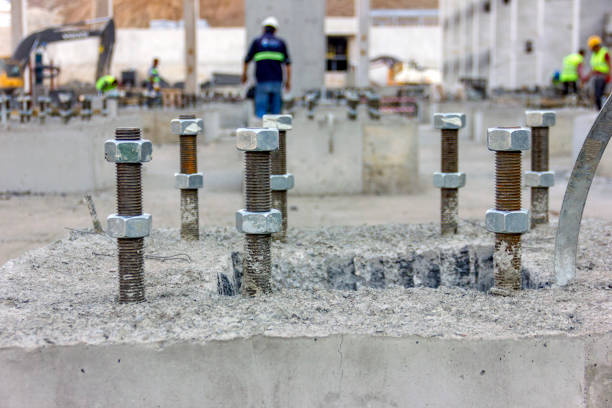
Most factory QC departments never proof-load cast-in anchors in concrete. They test the steel alone, record a number, and call it good. But the bearing capacity of an anchor head inside a precast panel depends on embedment depth, edge distance, and concrete maturity at stripping time — none of which show up on a mill certificate. If you are signing off on lifting anchors for a production run, you need three things: an ASTM E488 displacement-controlled pullout test to at least 2.5x working load, a recorded load/displacement curve, and the ability to read what the failure mode actually tells you.

Why Your Lifting Anchor Pulled Out of the Concrete Panel
A concrete cone forms in under 0.3 seconds.
When a lifting anchor pulls out, it does not happen slowly. The mechanical sequence starts at the anchor head, which bears against the surrounding concrete to transfer the tensile load into the panel. As the load increases, the head pushes upward into the concrete above it. That bearing stress creates a tensile hoop stress around the embedment zone.
The Mechanical Sequence of a Pullout Failure
If the edge distance is too small or the concrete tensile strength is too low, a cone-shaped crack propagates from the head to the nearest free surface. The crack forms fast — typically in less than half a second at proof load. Once that cone breaks free, the anchor displaces through the panel with no further resistance.
The weak link in this chain is almost never the steel itself. A properly designed cast-in lifting anchor has a head area large enough to spread the load into the concrete without exceeding its bearing capacity. When pullout happens before steel yields, either the embedment depth was undersized or the concrete lacked sufficient tensile strength at lift time.
The Green Concrete Risk Window
Most premature pullouts occur during stripping or early lifting — before concrete reaches its specified stripping strength. Green concrete has significantly lower tensile capacity than its 28-day design value. That reduction directly shrinks the force needed to form a concrete cone around any embedded anchor.
A panel lifted at 70% of design strength can see its effective anchor capacity drop by roughly 30%, depending on mix design and curing conditions. This is why minimum concrete strength before lifting precast panels must be verified through maturity records or cylinder tests, not estimated by calendar days alone.

How to Run a Concrete Lifting Anchor Pullout Test On-Site
The load cell and dial indicator are the only instruments that prove anchor capacity.
Set Up the Reaction Frame and Load Cell
A hydraulic ram with a calibrated load cell sits on a reaction frame that spans the anchor. The frame transfers the pull force back into the concrete around the embedment zone, isolating the anchor from surrounding reinforcement effects. Position a dial indicator on the anchor shaft to track displacement as load increases.
Apply load at a controlled rate of 1–2 mm/min . This rate captures the full load/displacement curve, not just the peak value. Ramp too fast and you skip the yield plateau where concrete cracking begins. The target is 2.5x the rated working load for proof testing, with ultimate capacity expected at 4x WLL . Record continuous data — a single pass/fail number is worthless for diagnostics.
Never substitute a torque wrench for this setup. Torque tests measure thread friction and installation preload only. They say nothing about bearing capacity of the anchor head against concrete, which is what actually holds during a lift.
Compare Against Certified Anchor Capacity
Compare your measured curve to the manufacturer’s certified capacity chart for that anchor size, embedment depth, concrete strength, and edge distance. A valid anchor holds proof load without sudden displacement or visible concrete cracking beyond design assumptions.
If you see movement at or below proof load before reaching concrete cone failure criteria, reject that anchor lot immediately — it means head geometry or material is insufficient for its rating.
How to Read the Failure Mode and What It Means
The fracture shape is a diagnostic fingerprint that tells you which component failed first — concrete, steel, or the anchor head.
A pullout test that stops at a load reading misses half the story. The failure mode — the physical shape of the breakout — tells you exactly which component reached its limit first. Concrete, steel, and anchor head each produce a distinct fracture signature. Learning to read those signatures is what separates a QC pass/fail decision from a root-cause investigation.
Steel Fracture
When the anchor body or thread necking down and snaps before the concrete cracks, the steel cross-section was undersized for the applied load. The fracture face shows ductile cup-and-cone features typical of tensile overload. Corrective action: upgrade to a larger diameter anchor or a higher-strength material grade.
Concrete Cone Pullout
A cone-shaped chunk of concrete detaches with the anchor head. This means embedment depth or edge distance fell below the design value for that anchor’s bearing area. The concrete tensile capacity gave out before the steel yielded. Corrective action: increase embedment depth, move the anchor away from panel edges, or specify a larger head bearing area.
Anchor Head Slip
The anchor pulls through without breaking concrete and without necking the steel. The head geometry or material failed — either the head deformed under load or its bearing surface was too small relative to the hole in the concrete form. Corrective action: redesign head geometry to increase bearing area, upgrade to a harder material, or verify dimensional conformance to certified drawings.
Conclusion
A cast-in lifting anchor is only as reliable as the concrete it bears against and the test that proves it. A paper certificate and a dimensional check do not confirm the bearing capacity of the anchor head inside a panel. The only valid verification is a displacement-controlled pullout test per ASTM E488, loaded to at least 2.5x the working load.
- Proof-load cast-in anchors to at least 2.5x rated working load.
- Use ASTM E488, not a torque wrench or dimensional check.
- Read failure mode — concrete cone, steel necking, or head slip.
Before your next precast lift, ask your supplier for documented proof-load traces and material traceability — not just a certificate. Review KBear Metal’s concrete connection options and compare how they document lifting anchor quality against your current supplier’s QC report.
Frequently Asked Questions
What is a concrete pullout test?
A concrete pullout test applies controlled tensile force to an embedded anchor to measure its resistance to being pulled out. This verifies the anchor’s load capacity and installation quality before a critical. Use this test to confirm anchor performance, not just paperwork.
How much pullout force can a lifting anchor hold?
The certified capacity is set by the anchor manufacturer and depends on anchor size, embedment depth, concrete strength, and edge distance. Always proof-load to at least 2.5 times the working load during testing. Never exceed the manufacturer’s rated working load limit.
How deep should a lifting anchor be embedded?
Embedment depth is defined by the manufacturer’s data sheet for the working load and concrete strength. If the data sheet is missing, consult a structural engineer before proceeding with any lift. Verify embedment depth against the approved shop drawing.
Can a torque test verify a lifting anchor?
No. A torque test measures frictional resistance during installation and preload in the thread, not the bearing capacity of the concrete cone. Always verify compliance against the exact model and the target market requirement.