


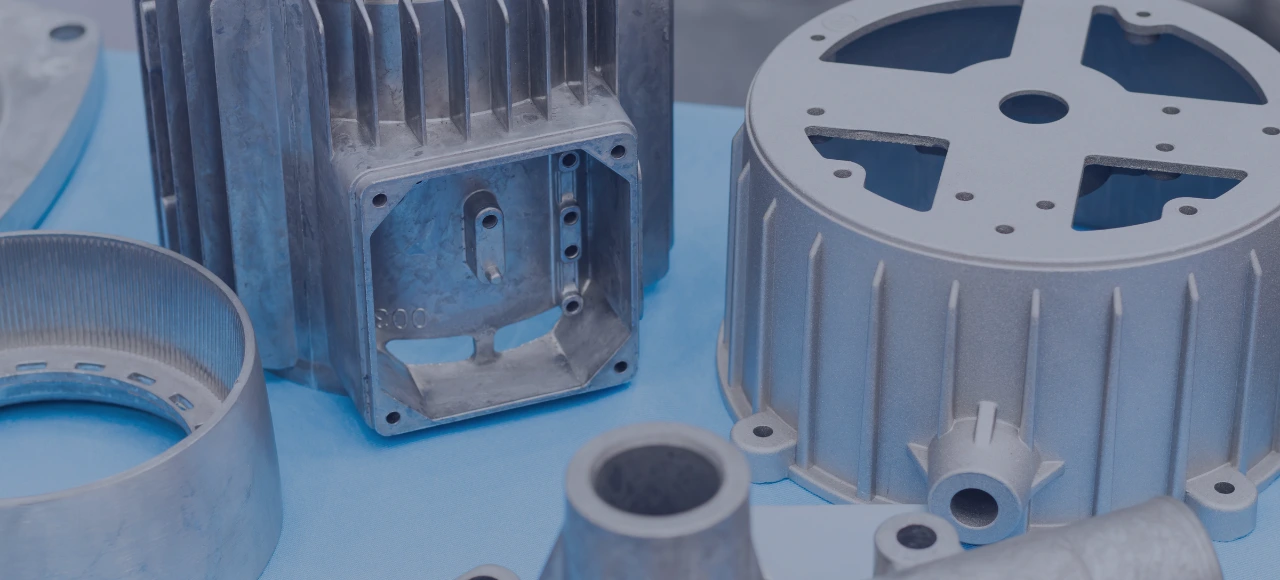
Casting has been around for thousands of years, allowing the construction of intricate metal parts through precision and efficiency. Not all the attention goes to ferrous metals like iron and steel, though. Non-ferrous metals are at the forefront of modern industrial applications. Aluminum, copper, zinc, and titanium-alloys of these metals with themselves and other elements-possess a set of properties highly valued by industries: lightweight and corrosion-resistant, they also display high thermal conductivity.
This blog post looks into the use of casting in non-ferrous metals, its applications in diverse industries, and the drawbacks associated with it by the manufacturer.
What are Non-Ferrous Metals?
Non-ferrous metals refer to a metal that doesn’t have iron content; thus they naturally do not rust and corrode. The best examples are aluminum: It is lightweight with anti-corrosive properties; mostly used in the aerospace and automobile sectors.
- Copper: High electrical conductivity and strength, used extensively in electrical wiring and plumbing.
- Zinc: Galvanizing steel for protection against corrosion is very common.
- Titanium: High strength-to-weight ratio and excellent biocompatibility, aerospace and medical applications.
- Magnesium: Light with good machinability, electronics and automotive components.
- These metals are often alloyed with other elements to enhance their properties further.

Applications of Casting with Non-Ferrous Metals
1. Aerospace Industry
The aerospace industry also utilizes non-ferrous casting for materials that are light and hard. Aluminum and titanium are typically used in the fabrication of aircraft parts such as the fuselage, engine components, and landing gear.
Why Non-Ferrous?
They offer a lesser weight that improves fuel efficiency and at high temperatures, they have properties that provide safety in applications that are critical.
2. Automobile Industry
Aluminum and magnesium alloys are widely used in the automotive industry to minimize vehicle weight and enhance fuel efficiency. These metals are cast to produce parts such as engine blocks, wheels, and transmission housings.
- Key Benefits: Lightweight parts improve performance and reduce emissions, satisfying the stringent environmental requirements of modern times.
3. Electrical and Electronics Industry
Copper and its alloys are used widely in the electrical industry due to their excellent conductivity. Non-ferrous casting is used to manufacture connectors, switches, and other electrical components.
- Example: Copper busbars for power distribution systems are crucial for efficient energy transfer.
4. Medical Field
Titanium is the star in the medical field, due to its biocompatibility. Non-ferrous casting produces surgical tools, joint replacements, and dental implants.
- Key Benefit: Casting non-ferrous metals is important because it ensures the devices meet high quality requirements in the medical industry.
5. Building Sector
In architecture, non-ferrous metals are applied for window frames, decorative elements, and plumbing fixtures.
Why Non-Ferrous? Due to their corrosion resistance, the parts will last for longer and require less maintenance in the long run.

Benefits of Casting with Non-Ferrous
1. Light Weight Characteristics
Non-ferrous are considerably lighter than ferrous alternatives, and therefore have extensive applications where weight needs to be reduced.
2. Resistance to Corrosion
Most non-ferrous metals do not experience rust or other types of corrosion, thereby increasing the lifespan of the products.
3. High thermal and electrical conductivity
These metals, copper and aluminum, are a good conductor of heat as well as electricity, in which specific industries they hold a lot of importance
4. Design flexibility
Non-ferrous metals have the ability to be cast with intricate shapes, providing design flexibilities for complex components.
5. Recyclability
Most non-ferrous metals are very recyclable, such as aluminum and copper, which supports the sustainability of manufacturing.

Challenges of Casting Non-Ferrous Metals
Even though non-ferrous metals have many benefits, working with them is not without challenges. Here are some of the common challenges manufacturers face:
1. High Material Costs
Non-ferrous metals are usually more expensive than ferrous metals because they are rare and require much energy to extract and refine.
- Solution: Manufacturers can minimize cost by optimizing material usage and incorporating recycling practices.
2. Melting Point Differences
Non-ferrous metals melt at a relatively lower temperature than ferrous metals. This makes them prone to thermal distortion during casting.
- Solution: Advanced temperature control and cooling systems can be implemented to avoid dimensional inaccuracy.
3. Oxidation Problem
Metals such as aluminum and magnesium are more prone to oxidation when cast in the presence of air, leading to defects.
- Solution: Inert gas shielding or vacuum casting techniques can be used to reduce the oxidation risk.
4. Shrinkage and Porosity
The non-ferrous metals are usually prone to shrinkage and porosity when they solidify. These may lead to the structural weakness of the cast part.
- Solution: The use of accurate gating systems and risers minimizes the defects.
5. Specialized Equipment Requirements
Casting non-ferrous metals often requires high-quality equipment and techniques, thereby increasing the initial setup cost for the manufacturers.
- Solution: Companies can access the desired expertise and technology by associating with foundries of experience.

Advances in Non-Ferrous Metal Casting
The technology of non-ferrous metal casting is changing at a fast pace, fueled by technological advancements that seek to overcome conventional issues like oxidation, porosity, and material constraints. These advances are assisting industries in enhancing efficiency, accuracy, and material performance. Some of the major developments are:
- Vacuum Casting
Vacuum casting is a sophisticated technique that aims to reduce oxidation and porosity within sensitive non-ferrous metals like aluminum, magnesium, and titanium alloys. By evacuating air and impurities from the casting process, this process improves the integrity of the end product, providing better mechanical properties, smoother surface finish, and higher structural homogeneity. The process is especially useful in aerospace and medical fields where accuracy and purity of material are paramount.
- Additive Manufacturing Integration
The combination of additive manufacturing (3D printing) with conventional casting techniques has transformed the production of molds for non-ferrous metals. This blended technique facilitates the production of extremely complex, detailed molds with increased precision and reduced material waste. Additive manufacturing also makes it possible to create prototypes in a short span of time, lowering the time and expense of creating new metal parts. The automotive, aerospace, and medical device industries are taking advantage of this technology to extend the limits of design and functionality.
- High-Tech Alloys
Recent developments in metallurgy have resulted in the creation of new-generation non-ferrous alloys that improve strength, thermal stability, and corrosion resistance. High-performance materials improve the lifespan and reliability of parts in harsh environments, including high-temperature engine components, electrical conductors, and marine systems. The development of tailored alloy formulations specific to particular industrial applications has also introduced new opportunities for lightweight and high-strength uses.
As technology in non-ferrous metal casting progresses, producers can anticipate better efficiency, greater accuracy, and tougher, more durable materials. These developments are inspiring the future of industries dependent on high-performance metal parts to provide improved product quality and increased application potential.

Partner Selection for Non-Ferrous Metal Casting
For your next project, choosing the right partner is crucial when considering non-ferrous metal casting. A trusted foundry like Kbear Metal will offer you:
- Precision Casting: The capability to manage even the most complex geometries with demanding specifications.
- Advanced Technology: State-of-the-art equipment ensuring quality and efficiency.
- Sustainability Focus: Dedication to environmentally-friendly policies, which include recycling and reducing wastes.
Conclusion
Throwing non-ferrous metals around opens numerous potential industries needing lightweight and durable materials. From aerospace, car to the medical and electronic products, casting non-ferrous metal brings about as vast numbers of application as the list it solves over.
By understanding the benefits and challenges associated with these materials, manufacturers can make informed decisions and leverage the full potential of non-ferrous metal casting. Ready to explore the possibilities? Partner with Kbear Metal to bring your vision to life with precision, quality, and sustainability.



