

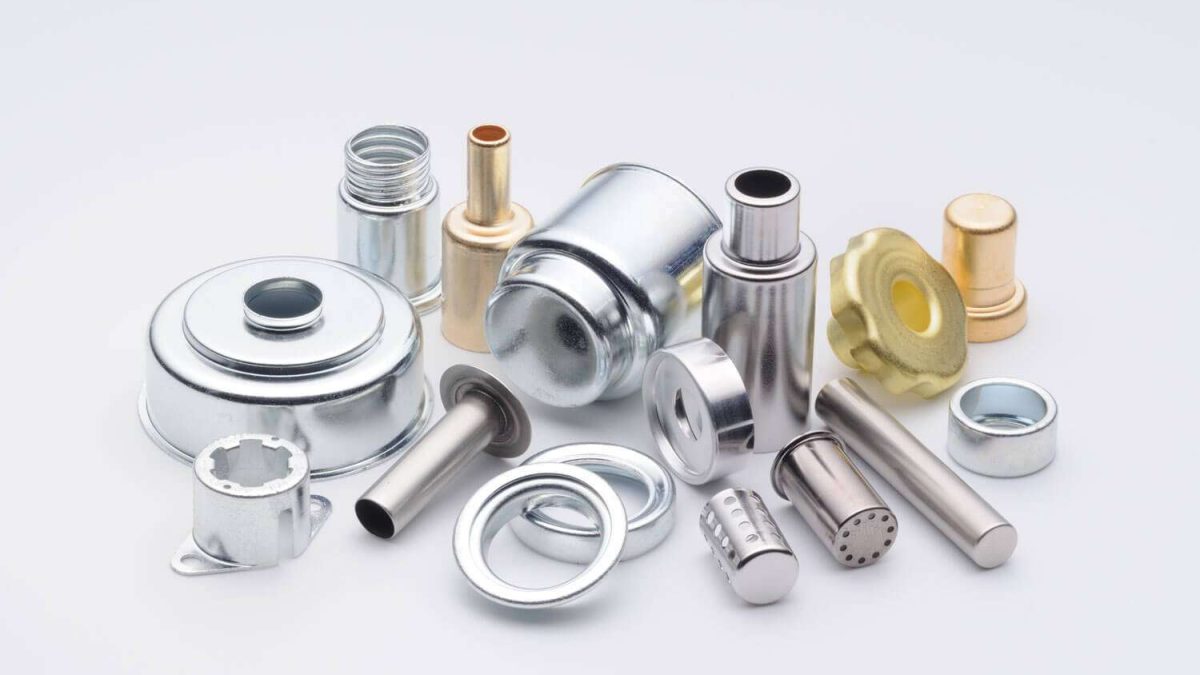
Metal stamping is a very important manufacturing process used in producing precision parts for applications in the auto sector, aerospace industry, electronic devices, and even medical devices. Out of so many metal stamping methods, two of the most common ones used today are progressive die stamping and deep draw stamping each of which has its own advantages, limitations, and ideal usage.
While both processes utilize high-tonnage presses to shape sheet metal, they are optimized for vastly different component geometries and production goals. Each method has its own distinct advantages, limitations, and ideal usage scenarios. This article will thoroughly compare progressive die stamping and deep draw stamping to help manufacturers determine which process best suits their design specifications, material properties, and ultimate production needs.
This article will compare progressive die stamping and deep draw stamping to help manufacturers determine which process best suits their needs.
What is Progressive Die Stamping?
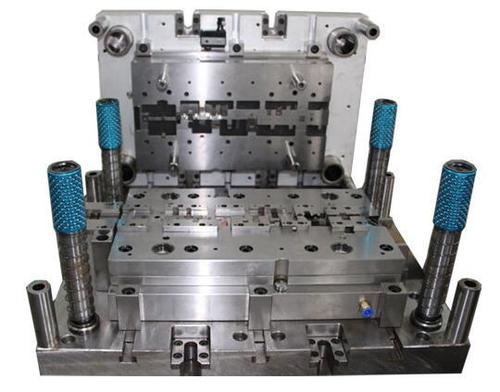
Progressive die stamping is a metal forming process that involves feeding a metal strip through a series of stations within a progressive die. Each station performs a specific operation, such as cutting, bending, punching, or coining, until the final part is completed.
How It Works
It feeds a continuous metal strip into a press, in which it runs through a progressive die.
- Continuous Feed: A continuous metal strip is fed automatically into a press, where it runs through the progressive die one step at a time. The strip is accurately indexed forward by a fixed distance after each stroke.
- Staged Operations: At every station along the die, a specific, sequential operation is performed. These operations can include cutting (blanking, punching), bending, forming, embossing, coining, or lancing.
- Final Separation: After the last required operation is completed, the finished part remains attached to the carrier strip until the final station, where the component is precisely separated (blanked) from the strip and ejected.
- High-Speed Repetition: The process is repeated at extremely high speeds, with the press cycling rapidly. This continuous, multi-station approach is, therefore, the primary technique appropriate for ultra-high-volume production of small to medium-sized parts.

Benefits of Progressive Die Stamping
- High Efficiency and Speed: Large quantities of parts are produced quickly and consistently with minimal manual intervention. Cycle times can be exceptionally fast, measured in parts per second.
- More Economical for High-Volumes: While the initial tooling cost is high, the labor costs are minimal, resulting in a very low cost per unit for mass production runs exceeding hundreds of thousands of pieces.
- Consistent Quality and Tight Tolerances: The fixed, integrated nature of the die ensures very high precision and repeatability with each stamped piece, critical for complex assemblies.
- Minimal Waste: The tooling design allows for highly optimized strip utilization, using part nesting techniques that effectively decrease scrap rates.
- Versatile Forming: This method is highly capable of handling a large variety of metals (steels, brass, copper, nickel alloys) and forming complex geometries that involve multiple bends, holes, and cuts in a single process.
Limitations of Progressive Die Stamping
- More Expensive to Start With: The complexity of the custom dies and tooling—which must integrate all operations—results in a significant initial investment cost.
- Not Suitable for Deep Components: The process relies on a rigid carrier strip, which cannot accommodate parts requiring considerable depth or height (draw depths are limited).
- Difficult to Modify Once Started: Design changes can be extremely expensive and time-consuming once the complex, multi-station tooling is fixed and commissioned.
What is Deep Draw Stamping?
Deep draw stamping is a metal forming process specifically designed to create seamless, hollow, cylindrical, or box-shaped parts. It involves drawing (pulling and stretching) a flat metal blank into a die cavity using a punch.
The process is termed “deep drawing” when the depth of the resulting component is significantly greater than its initial diameter or width, often defined as a depth-to-diameter ratio greater than.
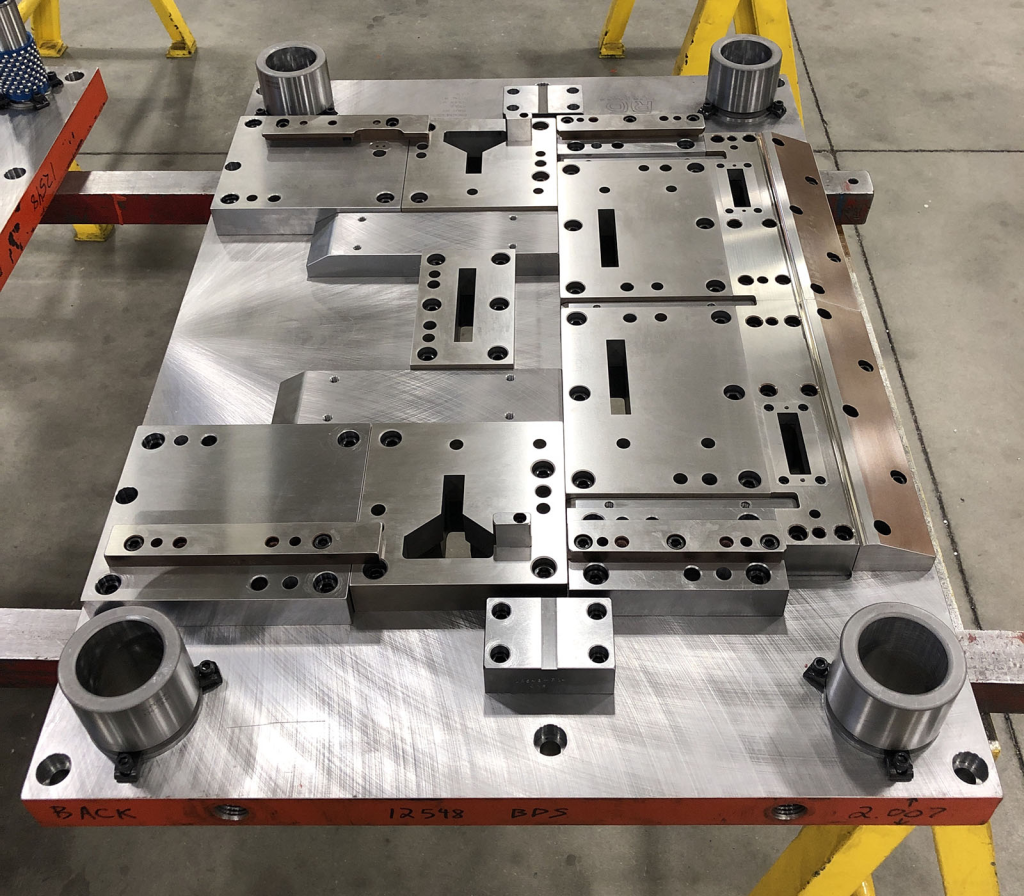
How It Works
- Blank Positioning: A pre-cut metal blank (or slug) is precisely placed over a die cavity, held in place by a blank holder (or pressure ring) to control metal flow and prevent wrinkling.
- Drawing Action: A punch descends and forces the blank into the die, stretching and forming the material around the punch nose and sides into the desired shape. The material flows radially inward from the flange area into the die cavity.
- Multi-Stage Capability: To achieve extremely deep draws or complex features without tearing the material, the process may be repeated in multiple, sequential stages (re-drawing) with intermediate annealing (heat treating) sometimes required to restore ductility.
- Finishing: The resulting cup or shell is often trimmed and finished for precision, removing any excess material or uneven edges created during the draw.
Advantages of Deep Draw Stamping
- Ideal for Deep and Hollow Parts: It is the perfect manufacturing solution for items like fluid cans, medical casings, enclosures, fire extinguisher bodies, battery housings, and any part requiring significant depth.
- High Strength Components: The severe cold working process involved in stretching the material greatly increases the finished part’s hardness, tensile strength, and overall durability.
- Seamless Structures: Deep drawing creates parts that are entirely seam-free and weld-free. This results in stronger, hermetically sealed components that are also more aesthetically appealing.
- Reduced Secondary Operations: Since the part is formed in one piece (or series of draws), there is often no secondary assembly, welding, or fastening required, simplifying the Bill of Materials (BOM).
- Cost-Effective for High-Volume Production: Like progressive stamping, once the specialized tooling (punch, die, and blank holder) is complete, the process is highly efficient and economical for medium to high-volume production.
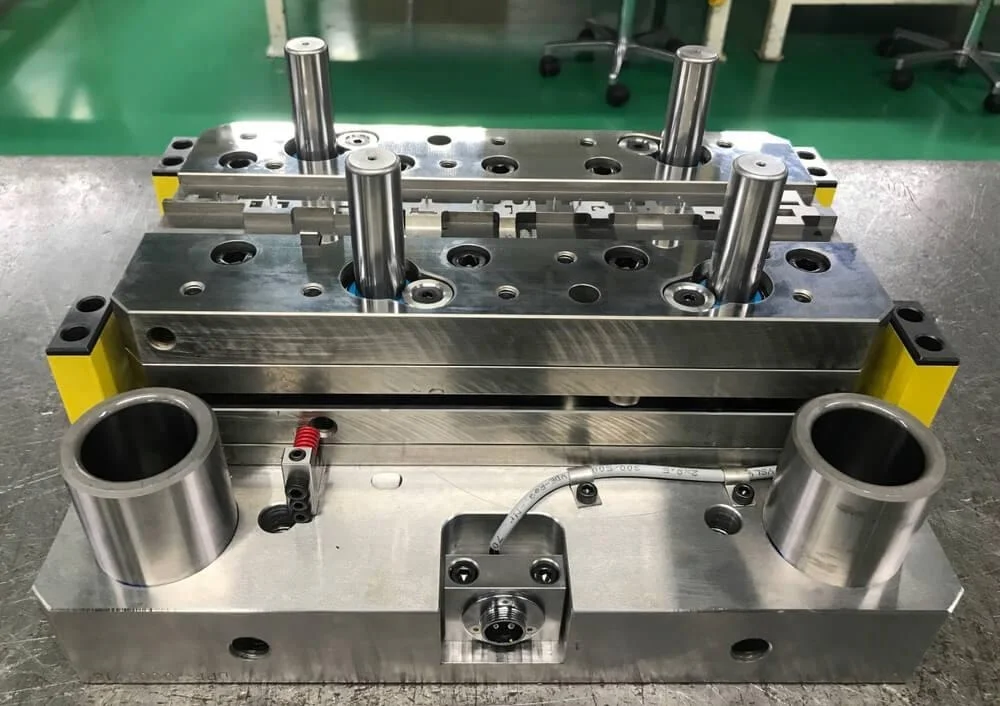
Limitations of Deep Draw Stamping
- Higher Material Stress and Thinning: The excessive stretching inherent in deep drawing can cause the material to be thinned out unevenly (which must be controlled) or, if uncontrolled, can cause the material to fracture or tear.
- Material Limitations: The process is primarily suitable for highly ductile materials such as specific grades of aluminum, brass, copper, and certain ductile stainless steels, which can withstand significant plastic deformation.
- Expensive for Small Batch Runs: Due to the complexity and size of the dedicated tooling (punch, die, and blank holder), the one-time tooling cost makes small batch runs financially less economical.
- Design Changes are Complicated: Both the die and the punch require precise changes if the part design is modified, making adjustments challenging and costly once production starts.
Comparative Differences of Progressive Die Stamping and Deep Draw Stamping
| Feature | Progressive Die Stamping | Deep Draw Stamping |
| Best for | Flat or moderately complex parts | Deep, hollow, cylindrical, or box-shaped parts |
| Production Volume | High-volume, continuous production | Medium to high-volume production |
| Material Waste | Low waste due to optimized strip usage | Higher material usage due to stretching |
| Component Strength | Good strength, but limited in depth | Enhanced strength due to cold working |
| Seams or Joints | May require additional assembly | Seamless components |
| Tooling Costs | High initial costs but cost-effective for large runs | Expensive for small runs, but efficient for mass production |
| Customization | Limited modification after tooling setup | Design changes require die and punch adjustments |
Which Process is Better?
The choice between progressive die stamping and deep draw stamping depends entirely on the specific geometric and functional requirements of the final component. There is no universally “better” method; only a more suitable one for the application. Here are definitive guidelines to help manufacturers decide:
Choose Progressive Die Stamping If:
- Deep, Seamless Components are Necessary: Your components are deep and must be cylindrical, domed, or fully enclosed (e.g., canisters, containers, fluid reservoirs).
- High Strength and Hermetic Sealing is Essential: Your parts must have high strength without weld seams, a requirement often found in aerospace, medical (hermetic sealing), or food/beverage packaging environments where durability and hygiene are paramount.
- Material Suitability: Your chosen material (aluminum, brass, highly ductile steel) can withstand the rigorous stretching and cold working required without fracturing.
- Minimal Secondary Finishing: You want to minimize secondary operations such as welding, sealing, or additional fastening.
Choose Deep Draw Stamping If:
- Your components are deep and may be cylindrical, domed, or fully enclosed.
- Your parts must have high strength without weld seams.
- Your application will be in an aerospace, medical, or food packaging environment where durability is of utmost importance.
- You want to minimize secondary operations such as welding or fastening.
Conclusion
Progressive die stamping and deep draw stamping have distinct advantages that set them apart from each other, depending on what is needed. High volume, complex flat, or moderately complex component manufacturing is more suited for progressive die stamping. Deep draw stamping excels in deep, seamless, and highly durable parts. Considering factors such as design complexity, production volume, material properties, and cost considerations, manufacturers may be able to determine the best stamping method for the greatest efficiency and product quality.
By meticulously considering factors such as final part design complexity, required production volume, the material’s ductility, and the tolerance for initial tooling cost versus long-term piece cost, manufacturers can accurately determine the best stamping method for maximizing efficiency, ensuring optimal product quality, and achieving significant cost savings in the long run.
For businesses involved in metal stamping, consulting with an experienced stamping provider can help determine the most efficient process for their specific requirements, ensuring optimal performance and cost savings in the long run.