


When selecting a partner for custom metal stamping, it’s essential to choose a manufacturer that combines advanced capabilities, industry expertise, and reliable customer service. Start by evaluating their ability to maintain precision and consistency—critical for producing stamped components that meet exact specifications. A strong manufacturer will use advanced stamping equipment, automation, and quality control systems to ensure efficient, accurate, and repeatable results.
Scalability is another important factor. Whether you need a small prototype run or high-volume production, your partner should have the capacity to adjust output to meet changing demand. Look for a supplier experienced in handling various materials and capable of offering value-added services like finishing, deburring, heat treatment, or assembly.
Industry experience also matters. A manufacturer with a deep understanding of your sector—whether it’s automotive, aerospace, electronics, medical, or construction—will be better equipped to anticipate challenges and recommend effective solutions.
By carefully evaluating these aspects, you’ll find a custom metal stamping partner that supports your goals, maximizes efficiency, and helps bring your projects to life successfully.
In this blog, we’ll explore how metal stamping plays a vital role in building the cars we drive every day, and why it’s indispensable to modern automotive manufacturing.
What Is Stamping in Manufacturing?
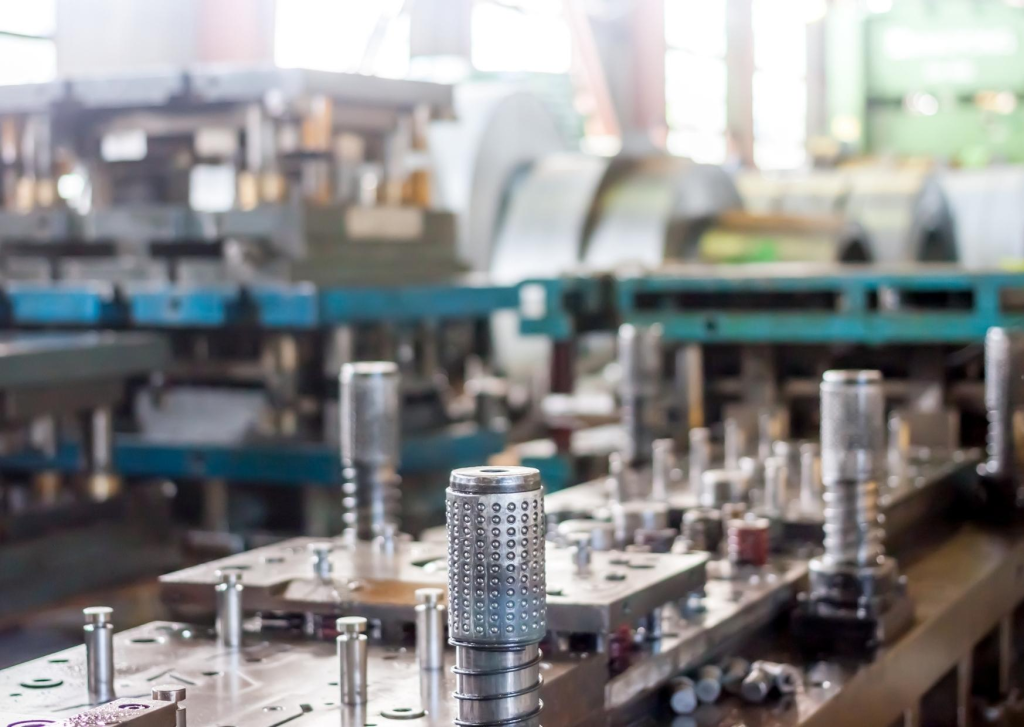
Stamping in manufacturing refers to a process where flat metal sheets are transformed into specific shapes through the use of a stamping press and custom dies. It’s a key part of metal stamping manufacturing, widely used to produce everything from small electronic components to large automotive body panels. The stamping process can involve multiple techniques, such as blanking, bending, and punching, each contributing to the final shape and functionality of the part.
This versatile process offers numerous advantages, including high precision, repeatability, and the ability to produce complex parts at high volumes. Metal stamping is also highly cost-effective for mass production, as the tooling can be reused for long runs with minimal maintenance. It allows manufacturers to meet tight tolerances and create parts with uniform quality, which is crucial in industries like aerospace, medical devices, consumer electronics, and automotive manufacturing.
Additionally, modern stamping operations often incorporate automated systems and computer-aided design (CAD) technologies, enhancing efficiency, accuracy, and speed. These innovations allow manufacturers to reduce production lead times and increase output without compromising on quality. Overall, metal stamping plays a critical role in modern manufacturing, offering a scalable and reliable solution for producing durable, high-performance parts across a wide array of industrial applications.
Why Is Stamping Used?
Stamping is used because it provides a highly efficient way to create complex and precise parts in large quantities. It’s especially valuable in industries like automotive, aerospace, and electronics, where components need to meet strict standards for accuracy and durability. Metal stamping is also cost-effective, as it minimizes material waste and reduces the labor required for production, making it an ideal solution for high-volume projects. Additionally, stamping ensures consistency, allowing manufacturers to produce identical parts with minimal variation across large production runs.
One of the major advantages of stamping is its cost-effectiveness. The process minimizes material waste through optimized die design and efficient use of raw materials. It also reduces labor costs due to automation and the ability to produce multiple parts quickly in a single press cycle. This makes stamping ideal for high-volume production where efficiency and quality are both critical.
Additionally, metal stamping ensures uniformity across all manufactured parts, eliminating variation and enhancing product quality. This consistency is crucial for assemblies and components that must fit together precisely. As manufacturing continues to evolve, stamping remains a preferred solution due to its speed, scalability, and ability to meet rigorous industry standards. Whether you’re producing thousands of connectors or intricate structural components, stamping provides the precision and repeatability needed for success.

Metal Stamped Automotive Applications
The automotive market encompasses a variety of products. In addition to components required for the manufacture of automobiles, there is a large and growing aftermarket of custom parts. Custom aftermarket components and parts enable consumers to individualize their vehicle to meet their needs.
Both original manufacturer’s equipment and aftermarket products are often critical components that are required to meet strict industry standards to ensure safety and reliability. Metal stamping for automotive applications requires fabricators to manufacture precision components that meet specific requirements and have extremely tight tolerances. Metal fabricators in this sector employ various fabrication techniques and technologies to manufacture parts and products that meet these rigorous standards.
Metal stamping processes are used to create a range of essential automotive parts and are incredibly cost-effective solutions for manufacturing customized automotive parts. Metal stamped automotive parts include:
- Seat Latches
- Floor mat securement brackets
- Horn buttons
- Rearview mirror mounting plates
- Steering wheel components and brakes
- Fuel Injectors
- Fuel Pressure Regulators
What Is the Stamping Process in the Automotive Industry?
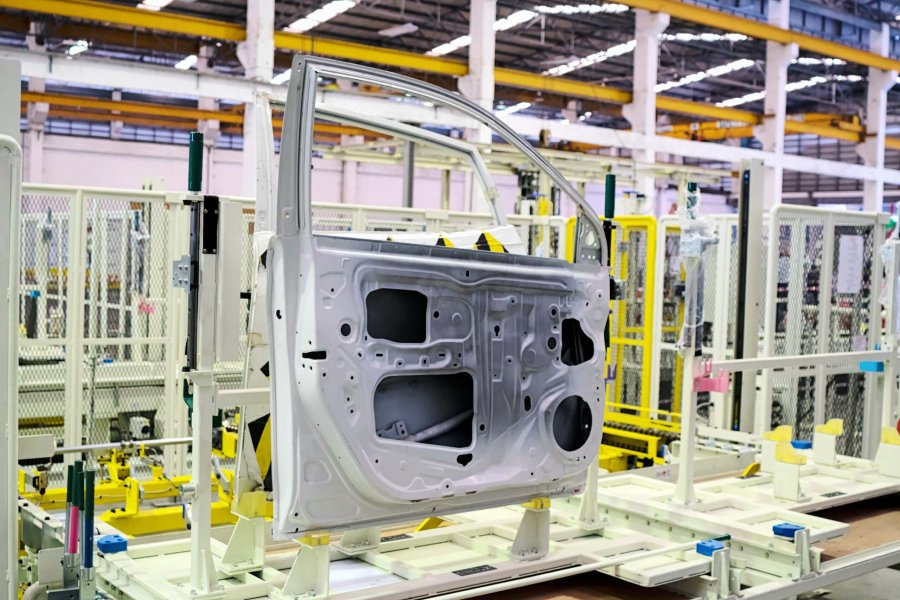
Thestamping process in car manufacturing plays a critical role in shaping the various metal parts needed for vehicle production. This process involves feeding flat metal sheets into a stamping press, where custom-designed dies form them into components such as body panels, doors, and structural elements. The stamping process step by step typically includes blanking, where the metal is cut into basic shapes, followed by forming, trimming, and piercing to achieve the precise dimensions and features required. Stamping ensures that each part is made to exact specifications, providing the durability and accuracy needed for high-performance vehicles.
Key Applications:
- Body panels (hoods, roofs, doors, fenders)
- Structural components (frames, beams, supports)
- Interior reinforcements and mounting brackets
Main Steps in the Stamping Process:
- Blanking: Cutting the raw sheet metal into a basic shape or “blank” to prepare it for forming.
- Forming: Bending, stretching, or shaping the blank to create the desired geometry.
- Trimming: Removing excess material for a clean edge and proper fit.
- Piercing: Punching holes or slots needed for assembly or function.
- Flanging (optional): Creating edges that allow parts to be joined or reinforced.
- Embossing (optional): Adding raised or recessed designs for rigidity or branding.
Benefits of Stamping in Automotive Manufacturing:
- High efficiency: Ideal for high-volume production with consistent part quality.
- Precision: Produces parts with tight tolerances and complex geometries.
- Cost-effective: Reduces labor and material waste.
- Scalability: Supports large production runs for various vehicle models.
- Strength and lightweighting: Uses high-strength metals to make durable yet lightweight parts, helping improve fuel efficiency and performance.
Stamping is essential to producing the thousands of components required for modern vehicles. Its ability to deliver accuracy, durability, and efficiency makes it a cornerstone of automotive manufacturing worldwide.
Metal Stamping Continues to Grow in the Automotive Industry
Metal stamping for automotive applications is projected to continue to grow and expand in the coming years. Industry forecasts predict that by 2025 the worldwide demand for metal stamped automotive parts will reach nearly $300 billion.
This incredible growth rate is due in part to technological advancements of metal stamping processes that are employed in a variety of growing industries such as industrial machinery, automotive, aerospace, consumer appliances, and more. As these industries continue to grow and expand, they are also increasing their dependence and use of metal components, which further fuels the growth of the metal stamping industry. The strength and flexibility of metal stamped parts enable automobile manufacturers to maintain the required safety standards while reducing consumer costs.
Several factors will contribute to the explosive growth that is expected in the metal stamping industry. Metal stamping is a low-cost manufacturing process that reduces the waste of raw materials. Metal stamping for automotive applications increases sheet metal usage in the production of automobile chassis, transmission components, and interior and exterior structural components.
The use of metal alloys such as titanium, cast aluminum, cast iron, and forged steel for engines and critical components are expected to continue to grow, and metal stamping is a versatile, dependable, and affordable method for manufacturing. Technological advancements such as the use of hybrid electromagnetically assisted sheet metal stamping machines have improved the quality of metal stamped automotive parts.
Drive Your Manufacturing Forward with Kbear Metal
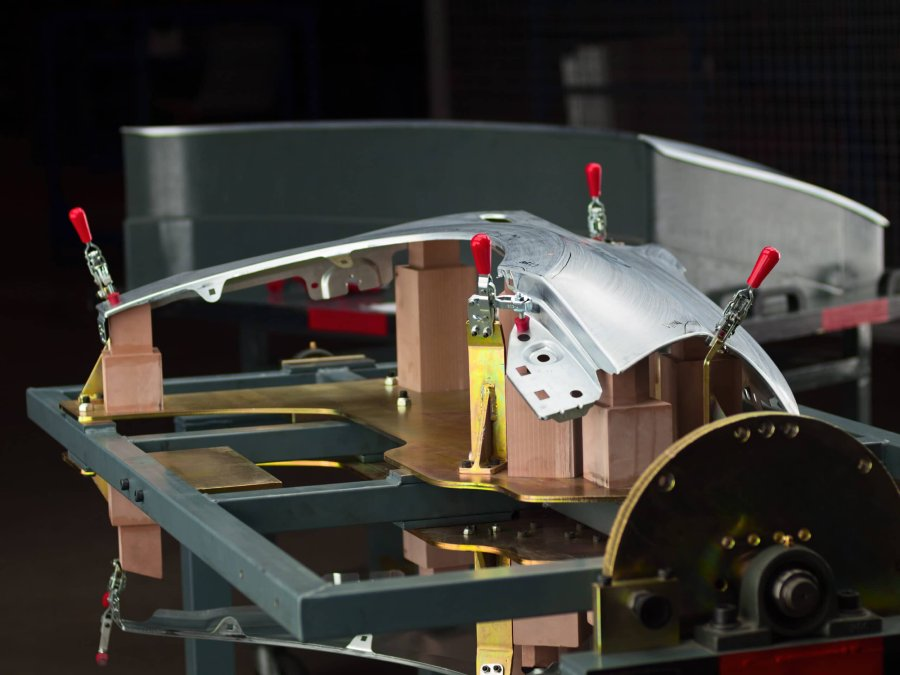
At Kbear Metal, we specialize in delivering precision-engineered metal components that meet the highest standards of quality and performance. We understand the complexities of the automotive manufacturing process, including the critical role of the stamping process in shaping essential vehicle parts. From body panels to structural components, our expertise ensures accuracy, strength, and consistency across every production run.
Our capabilities extend beyond automotive, serving a wide range of industries that demand reliability and durability. With advanced stamping equipment and a highly skilled team, we manage every stage of production — from design and prototyping to final manufacturing. Every part we produce undergoes strict quality control to ensure it performs flawlessly in demanding environments.
Whether you’re developing new vehicle components or need scalable production for other industrial applications, Kbear Metal is your trusted partner. We’re committed to delivering superior results on time and with unmatched attention to detail.
Whether you’re in automotive, medical, or alternative energy, Kbear has the expertise and technology to bring your project to life. Ready to take your manufacturing to the next level? Contact kbear metal today to learn how we can help you achieve your goals with precision and efficiency.



