


Gravity die casting is a casting technique that has been adopted for metal manufacturing as a sustainable and versatile option.
Of its various advantages, such as the production of high-quality metal components with very little waste, it has gained a lot of attention in the use of new industries, including automotive, aerospace, and industrial machinery.
Thus, this article explains what gravity die casting is, how it works, its benefits, and why it is considered a sustainable option for modern manufacturing.
What is Gravity Die Casting?
Gravity die casting, also known as permanent mold casting, is a manufacturing process in which the filling of molten metal in the mold relies on gravity.
In the case of other casting methods, it would involve external forces like pressure or centrifugal force to facilitate the entry of liquid metal into the mold.
The process uses reusable molds typically made of steel or cast iron, which distinguishes it from the more common single-use molds associated with the process of sand casting.
This reusability is thus yet another component of sustainability within the process, reducing waste and improving efficiency in production.
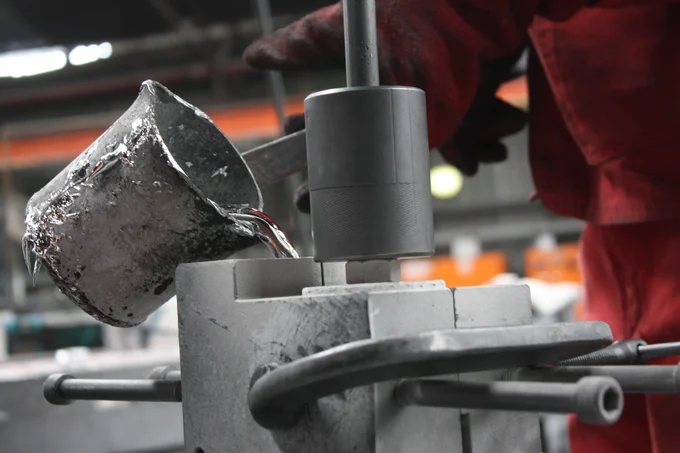
How does Gravity die-casting work?
The gravity die-casting process can be broken down as follows:
- Mold preparation: The mold is cleaned, smoothed, and painted with a layer of refractory material or lubricant. The layer thus obtained lets the metals flow smoothly, preventing their sticking to the mold and prolonging its life.
- Melting of Metal: Selected metal such as aluminum, magnesium, or copper alloys is melted in a furnace by heating them to a predetermined pouring temperature.
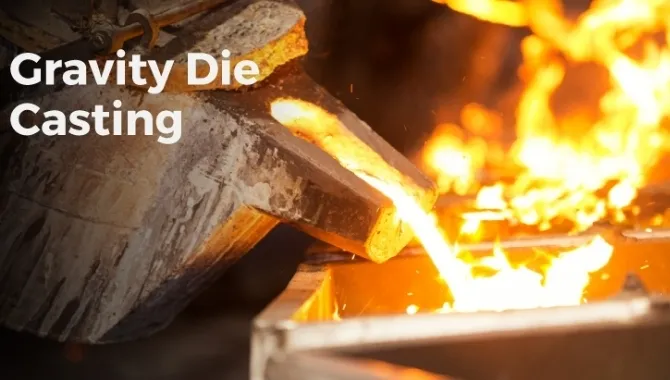
- Pouring: The molten metal is poured exclusively by gravity into the mold cavity. Flow and filling depend on the design of the mold as well as its tilt.
- Cooling and Solidification: In cooling, the molten metal solidifies within the mold, attaining shape and dimensions. Critical cooling processes ensure lower internal stresses and superior material properties.
- Ejection and Finishing: Upon setting of the metal, the mold is broken open to take out the casting. Secondary operations, such as trimming, machining, or applying surface treatment, may be carried out to deliver final sizes.

Advantages of Gravity Die Casting
Gravity die casting presents many advantages that make it a popular choice for sustainable manufacturing:
1. High Dimensional Accuracy
Permanent molds enable the reproduction of the accuracy and effectiveness of the process. Components manufactured through gravity die casting have uniform sizes and high-quality surface finishes that minimize post-treatment operations.
2. Mould Reusability:
Permanent molds allow for multiple uses, which resulted in a much lower waste generation when compared to one-time-use sand cast molds. This aspect makes gravity die casting an eco-friendly process.
3. Minimize Material Waste
This is done by using gravity to fill the mold, thus minimizing spillage and overall material wastage, and as leftovers are often recycled and reused back in the same process, it further increases sustainability.
4. Improved Mechanical Strength
Components produced through controlled cooling in gravity die casting have far better mechanical strength than others, with increased tensile strength and durability, which is particularly good for high-performance parts.
5. Economically Efficient for Medium to Large Production Runs
While the initial cost of creating permanent molds is high, the molds are reusable, making gravity die casting economical when medium to large volumes are produced.
Why Is Gravity Die Casting an Environmentally Friendly Process?
An environmental concern is a common issue in all industries today. Gravity die casting fits quite well with new environmental developments. Here’sHere’s how:
1. Minimization of Resource Utilization
The process eliminates waste by using solid molds and recycling all excess materials. This efficient usage of material lessens the carbon footprint associated with the production process.
2. Energy Efficiency
Compared to other casting techniques, for example, pressure die casting, gravity die casting uses relatively very low energy. There are no external pressure systems in this process; hence, the process becomes much more energy-efficient.
3. Reduced Emissions
Due to its focus on gravity-driven methods and efficient melting techniques, gravity die casting also brings about less associated greenhouse gas emissions with manufacturing.
4. Mold Life Cycles
Permanent molds can be used thousands of times until they wear out and need replacement. This mold life cycle lowers the frequency of mold production, thereby saving raw materials and energy.
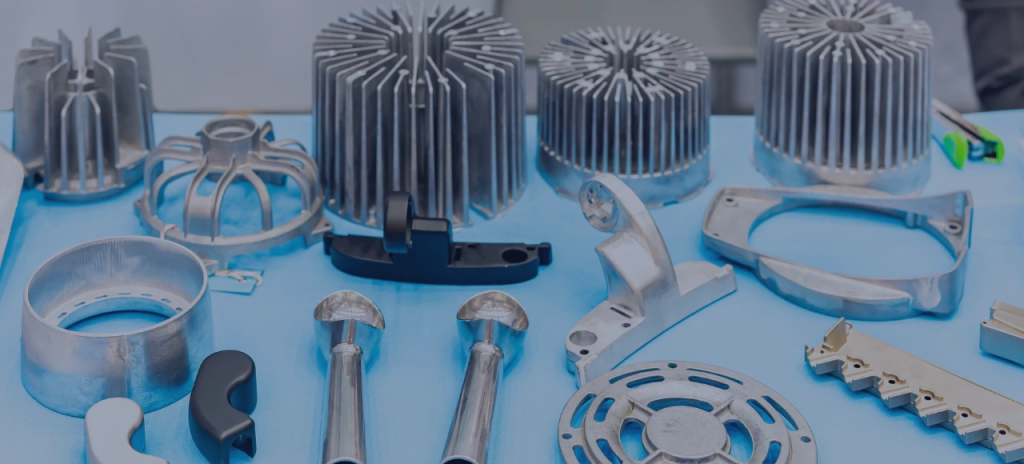
Applications of Gravity Die Casting
Gravity die casting is applied widely in industries requiring high-quality, strong, and precisely shaped metal components. Some of the relevant applications are as follows:
1. Automotive Industry
- Components Manufactured: Engine blocks, cylinder heads, brake components, and transmission housings.
- Why It is Ideal: The method can produce lightweight but tough components, so it best suits applications in the automotive industry.
2. Aerospace Sector
- Components Manufactured: Structural parts, brackets, and turbine blades.
- Why It’sIt’s Ideal: The significant mechanical strength and precision provided by gravity die casting fulfill the tough safety and performance standards for products in aerospace.
3. Industrial Machinery
- Components Manufactured: Pumps, valves, and gears.
- Why It’s Ideal: Strong and accurate parts cast using gravity die casting ensure the reliability of industrial machinery.
4. Electrical and Lighting Industries
- Components Manufactured: Encasements for electrical equipment and lighting.
- Why It’s Ideal: The excellent surface finish and dimensional accuracy are essential for aesthetic and functional components.
Challenges in Gravity Die Casting
While gravity die casting offers numerous benefits, it is not without challenges:
- Higher Initial Costs: The production of permanent molds requires significant upfront investment.
- Limited Shape Complexity: Gravity die casting is best suited for simpler designs; more complex parts may require alternative methods like pressure die casting.
- Skill Requirement: The process requires skilled operators to produce consistent quality and performance.

Why Kbear Metal for Gravity Die Casting?
Kbear Metal is the best and most innovative company that can be relied on when it comes to gravity die casting. Here are some reasons why:
1. Cutting-Edge Technology
The productions made by Kbear Metal feature the best cutting-edge equipment with precision and consistency in every casting project.
2. Sustainability Commitment
Our processes have a focus on reducing waste, recycling, and energy-efficient consuming while harmonizing with environmental considerations of the modern world.
3. Industry Variety
With decades of experience in the automotive, aerospace, and manufacturing industries, Kbear Metal understands the distinct needs of different applications.
4. Customized Solutions
We work directly with our clients to create custom molds and casting solutions for unique applications.
5. Uncompromising Quality
Every component that leaves the production lines at Kbear Metal is tested for the highest quality of durability and performance.
Through a partnership with Kbear Metal, you benefit from assured and environmentally friendly gravity die-casting solutions to reach your manufacturing objectives.
Conclusion
Gravity die casting is not only a process in manufacturing but also a sustainable solution for producing quality metal components with minimum waste and environmental impact.
Its reusability, efficiency, and versatility give it an edge over others, to be ideally applied in industries from the automotive industry down to aerospace.
For business requirements of consistent and environmentally friendly casting solutions, there is no match for Kbear Metal’s expertise and innovation.
Among our commitment to quality and sustainability, we help you meet your needs while paving the way to a greener future.
Experience the best of gravity die casting with Kbear Metal: precision meets sustainability.



