


Centrifugal casting is a specially technical process of metal casting, creating high-class cylindrical or tubular components through the application of centrifugal force.
This innovative method gives great accuracy, material integrity, and flexibility. It is predominantly used in most industries. But what is centrifugal casting, after all?
And where is it mainly used? Let’s dig deeper and find out the process, advantages, and applications of this interesting method.
What is Centrifugal Casting?
In the centrifugal casting process, molten metal is fed to the moving mould. It spins at a very high velocity, and the molten metal outwards presses against the mold walls due to the centrifugal force.
This force evenly disperses the material and removes impurities as well. Once cooled and solidified, the metal component produced is extremely dense with very few defects and, hence, of extremely high strength.
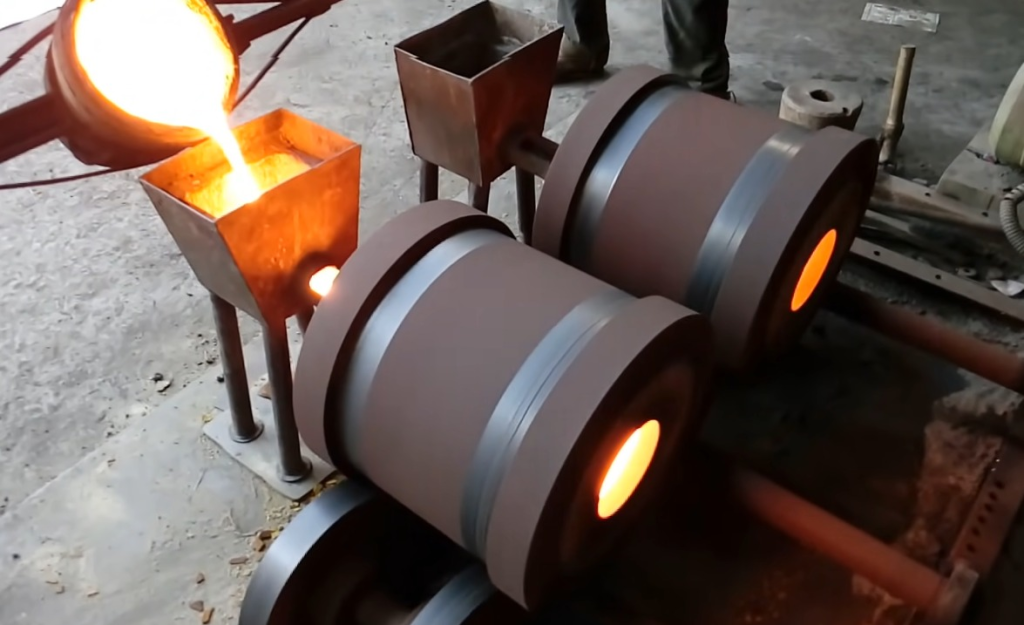
Centrifugal casting can be classified as having three main types:
1. True Centrifugal Casting:
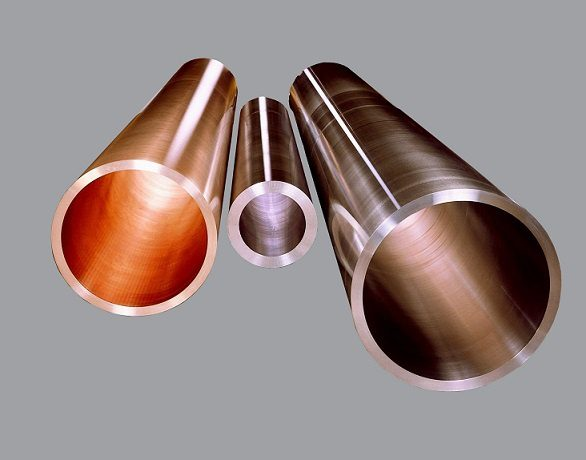
It finds applications in hollow cylindrical parts like tubes, pipes, and sleeves.
2. Semi-Centrifugal Casting:
Involves the production of parts that have a single rotation axis like wheels or pulleys.
3. Centrifuged Casting:
Applied for a complex shape containing voids like gears and bushings.
The Process of Centrifugal Casting
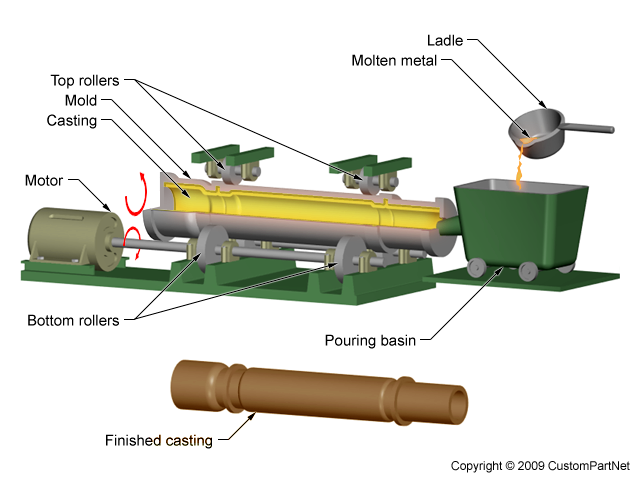
The centrifugal casting technique encompasses several very accurate steps:
1. Preparation of Mold: A mold is prepared in a cylindrical or semi-cylindrical shape. The surface is usually coated with refractory material. This ensures easy casting and removal.
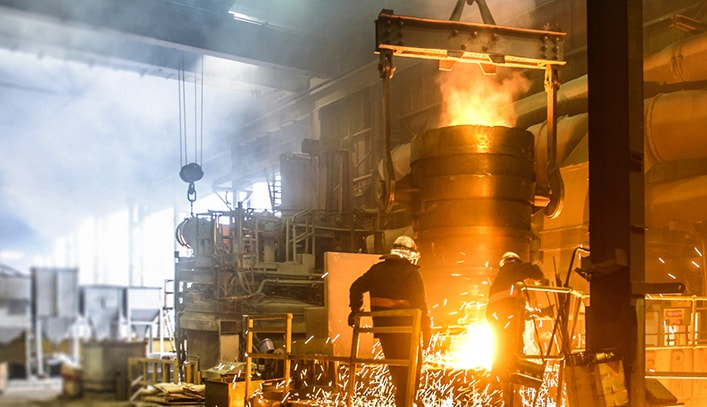
2. Melting of Metal: A furnace is used to melt the alloy or metal to the proper temperature.
3. Pouring of Liquid Metal: Liquid metal is poured into the rotating mold. The speed at which the mold rotates creates centrifugal forces driving the metal against the walls of the mold.
4. Cooling and Solidification: At this time, the mold continues to rotate while the metal hardens uniformly.
5. Component Ejection: After reaching solidity, the component is ejected from the mold for additional machining or even finishing.
Advantages of Centrifugal Casting
There are various advantages enjoyed with centrifugal casting. It is used in applications where the following conditions are present:
1. High Material Density: The centrifugal force removes gas bubbles and impurities to produce dense, high-strength components.
2. Improved Mechanical Properties: Components manufactured using this technique generally display higher tensile strengths and greater strength.
3. Less Waste: The process is less wasteful and may even recycle materials.
4. Adjustable Sizes and Shapes: Moulds may be adjusted for making parts of different measurements – from as small as bushings to sizable industrial cylinders.
5. Economical: This process is generally cost-effective when making medium to large quantities – especially when it comes to materials.

Where Is Centrifugal Casting Used?
The application of centrifugal casting is seen in industries that require extreme accuracy, strength, and performance. Most of the applications are:
1. Automotive Industry
- Applications: Cylinder liners, brake drums, flywheels.
- Benefits: Centrifugal casting shows high strength and wear resistance values thereby making it useful in automotive industry parts that are highly stressed and have frictional forces.
2. Aerospace Sector
- Applications: Aircraft engine components, turbine rings, and structural parts.
- Benefits: Lightweight yet strong parts ensure safety and efficiency for aerospace applications.
3. Oil and Gas Industry
- Applications: Pipes, casings, pump components
- Advantages: These applications require high-pressure resistance and durability in hostile corrosive environments.
4. Power Generation
- Applications: Turbine blades, sleeves for generators, and bearings.
- Advantages: High-performance components lead to reliable and efficient power systems.
5. Marine Applications
- Applications: Propeller sleeves, stern tubes, and heat exchangers
- Advantages: Corrosion-resistant components ensure long-lasting marine applications
6. Industrial Machinery
- Applications: Rollers, gears, and bushings.
- Advantages: Strong parts will perform well against such heavy loads as well as wear in an industrial environment.
Metals and Alloys Used for Centrifugal Casting
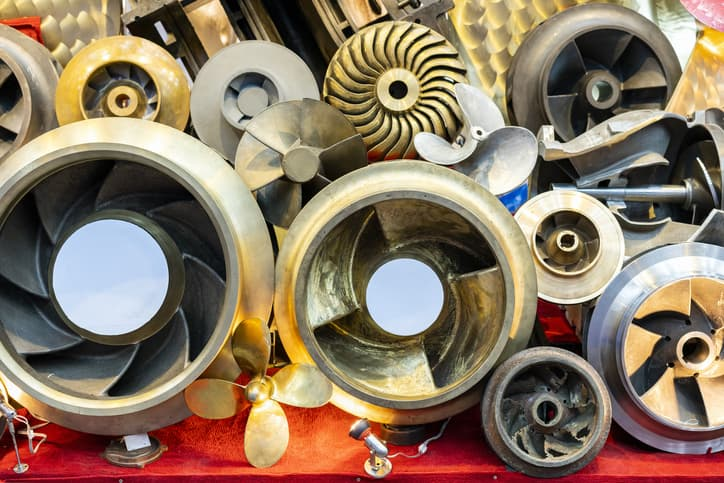
The centrifugal casting process allows using various metal and alloy types to suit the demands of a particular industry:
- Cast Iron: Mostly used for pipes and parts for automobiles.
- Steel: Suitable for highest strength industrial applications.
- Aluminum: Corrosion-resistant and very light, aluminium is used in aircraft and automotive components.
- Bronze: Applied in marine and ornaments from aesthetic and corrosion-resistant properties.
- Nickel and Cobalt Alloys: Preferred alloy for the aerospace and power generation, where high temperature is involved.
Problems with Centrifugal Casting
Although there are many advantages of centrifugal casting, there are certain difficulties associated with it:
- High Initial Expenses: Specialized equipment is needed to make the process and that too in its initial setup is expensive.
- Less Complicated Shape: The technique is mainly intended for symmetrical components rather than irregular shapes.
- Skillful Skill: Quality and uniformity are needed from a highly skilled person or a group of people.
Success Over Barriers by Kbear Metal
Centrifugal casting depends on the company to do it. Kbear Metal helps you realize your needs on time as it employs state-of-the-art equipment, offers solutions to bespoke the industry, and maintains an experienced working team.
- State-of-the-Art Equipment: Guaranteed accuracy and consistency in casting.
- Custom Solutions: Tailored to specific needs of all industries.
- Experienced Team: Years of experience ensure projects of any complexity can be easily handled.
- Commitment to Quality: High-quality results are guaranteed by our strict quality control standards.
Through Kbear Metal, you will have access to the latest technology and unmatched experience, thereby ensuring that your components are held to the highest standard.
Conclusion
Centrifugal casting is an incredible metal-forming process that proves to be precise, efficient, and versatile.
Its capability to produce high-quality durable components has made it indispensable across industries like automobile and aerospace and also in power generation.
From dense, defect-free materials to cost-effective production, the advantages of centrifugal casting are apparent.
For all your centrifugal casting, you can expect Kbear Metal to produce the best results. Let us help you bring your ideas to life with our precision casting expertise.
Raring to go with your casting needs? Contact Kbear Metal now for precision, reliability, and exceptional results.



