


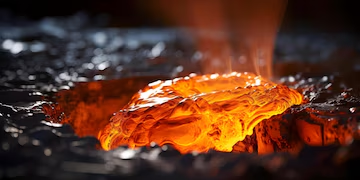
Metal casting is an ancient craft that relies on a key scientific process: metal solidification. This phenomenon transforms molten metal into solid forms, shaping everything from intricate jewelry to industrial machinery components. Understanding the science behind metal solidification is crucial for producing high-quality castings while minimizing defects. This blog explores the fascinating science of metal solidification, its stages, influencing factors, and how mastering it ensures casting excellence.
What Is Metal Solidification?
Metal solidification is the process in which the molten metal cools and undergoes a change of state from liquid to solid. It starts when the molten metal is poured into a mold, and heat escapes through conduction, convection, or radiation. The end product is a hardened structure that takes the shape of the mold’s cavity.
The solidification process affects the properties of the metal, such as strength, grain structure, and durability. The knowledge of its mechanics helps manufacturers make reliable and precise castings.

Stages of Metal Solidification
Metal solidification occurs in three stages:
1. Nucleation
The first stage, nucleation, starts when the metal cools to its freezing point. Small solid particles, known as nuclei, form within the molten metal.
Key Factors:
- The rate of cooling determines how many nuclei form.
- A finer grain structure is usually obtained with a faster cooling rate, enhancing the mechanical properties.
- Importance: Higher nucleation rate results in stronger and more uniform castings.
2. Crystal Growth
Once the nuclei are formed, they start growing into crystals or grains, which grow outward with the continued cooling of the molten metal.
- Grain Orientation: Grains grow based on the direction and rate of cooling, which determines the strength and appearance of the casting.
- Dendritic Structures: During growth, certain metals will form tree-like dendritic structures, affecting the ultimate characteristics of the cast.
3. Completion of Solidification
When the molten metal fully solidifies, grain boundaries are formed because of where the crystals touch. This grain structure, in particular, determines final properties: strength, toughness, or ductility.

Factors Controlling Solidification
Several variables influence the way in which metals solidify during casting. All must be controlled and adjusted as necessary to optimize the results :
1. Cooling Rate
The rate at which molten metal loses heat determines the size and orientation of grains.
- Slow Cooling: Results in larger grains and possibly weaker castings.
- Fast Cooling: Results in fine-grained structures with better mechanical properties.
2. Alloy Composition
The type of metal or alloy used heavily influences the solidification process.
Pure metals melt at a single temperature.
Alloys melt within a range of temperatures, developing a solidification front and unique microstructures.
3. Material and Design of Mold
Material and design of the mold influence cooling and solidification of metals.
- Thermal Conductivity: High-conductivity molds, such as metal molds, cool rapidly, whereas sand molds cool slowly.
- Complexity: Intricate mold designs require careful control of solidification to avoid defects in the cast.
4. Pouring Temperature
The temperature of the molten metal upon pouring into the mold determines how solidification begins.
- Too High: May lead to shrinkage or excessive porosity.
- Too low: Can lead to incomplete mold filling or even cold shuts.

Common Solidification Defects and Their Cures
Understanding the science behind metal solidification is how one avoids casting defects. Below are some common ones and how to cure them:
1. Shrinkage
- Cause: The cooling metal contracts, leaving room.
- Cure: The risers should be designed accurately to feed molten metal when it solidifies.
2. Porosity
- Cause: Gases are trapped in the material or the material cools too fast, leaving the material with small holes throughout the casting.
- Solution: Use degassing techniques and enhance cooling rates.
3. Shrinkage Cracks
- Cause: Inadequate cooling or excessive thermal shock.
- Solution: Design mold and cooling systems to facilitate symmetric solidification.
4. Segregation
- Cause: Unequal distribution of alloying element during solidification.
- Solution: Regulate cooling and stirring in the molten phase

Advanced Metal Solidification Techniques
Progressive casting techniques have recently used advanced technologies to increase metal solidification:
1. Directional Solidification
By controlling the cooling path, directional solidification ensures that grains grow in a specific direction, improving the mechanical properties of castings.
2. Grain Refinement
Additives or treatments lead to finer grains, strengthening and toughening castings.
3. Simulation Software
Thermal analysis and simulation software predict how metals will solidify, helping engineers design molds and processes to minimize defects.

Applications of Metal Solidification Science
Metal solidification science is crucial in numerous industries:
- Automotive: Engine blocks, transmission housings, and suspension parts.
- Aerospace: Lightweight and durable aircraft and spacecraft components.
- Construction: Beams and fittings.
- Consumer Goods: High-quality castings for electronics, appliances, and decorative items.

Why Choose Kbear Metal?
- At Kbear Metal, we pride ourselves on having mastered the science of metal solidification to deliver the best quality castings. Here’s why we are your best choice.
- Precision Engineering: Highly advanced facilities and skilled experts ensure precise control over solidification for flawless results.
- High-Tech Technology: We make the use of simulation tools in predicting and optimizing the process for solidification, thus eliminating flaws.
- Custom Solutions: The casting process is designed in accordance with your specific designs, from simple designs to complex geometries.
- Quality commitment: Every casting is rigorously tested and inspected to meet industry standards.
- Eco-Friendly Practice: Our sustainable casting method prevents waste and reduces environmental impact.
Let Kbear Metal turn your casting challenges into success stories!
Conclusion
The science of metal solidification is at the heart of every successful casting process. By understanding and controlling the factors that influence solidification, manufacturers can produce high-quality components with exceptional strength, durability, and precision.
Whether it’s for complex aerospace parts or durable automotive components, this transformative process provides the backbone of metal casting. Partner with Kbear Metal for reliable, innovative, and expertly crafted castings that meet your exact specifications. Let’s shape the future together!



