


In the metal stamping process, a sheet of metal is fed into a press which – using a tool and die, and tons of pressure – shapes the metal.
Another ancient metal forming process, metal stamping traces its roots to coin striking, which was performed as early as 700 BCE. Then, small amounts of malleable metals were placed in a die and struck with a hammer, forming a coin; now, sheet metal is automatically fed into a hydraulically or mechanically driven press. Though the processing methods have advanced greatly over almost 3,000 years, the core functionality of stamping has remained essentially the same.
At Kbear Metal, we pride ourselves on combining centuries-old craftsmanship with cutting-edge technology in the metal stamping process. This process begins by feeding a flat sheet of metal into a press that, using specially designed tools and dies along with immense pressure, precisely shapes the metal into the desired form. Let’s explore in this blog.
Die Casting Vs. Metal Stamping- A Detailed Comparison
What is Die Casting?
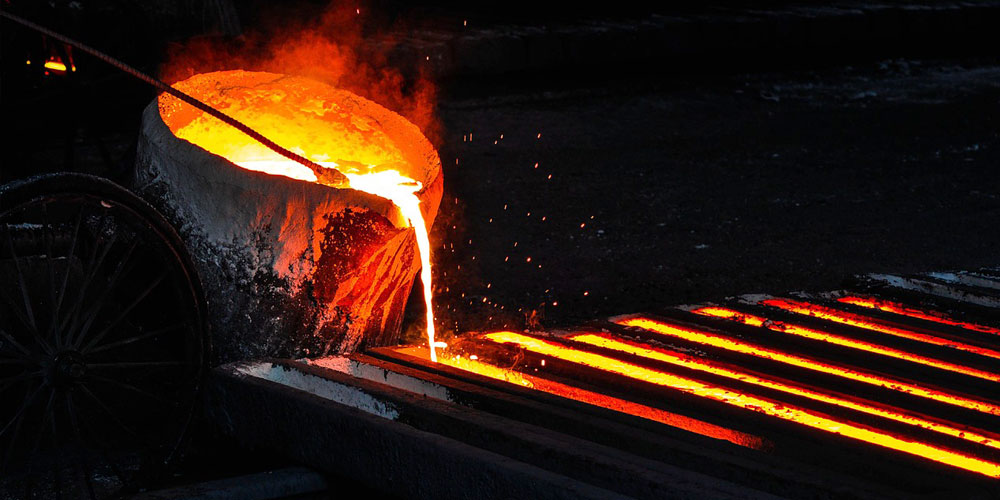
Die casting is a technique used in manufacturing complex metal products or parts. For instance, it produces automotive and decorative products with unique geometric structures. The process involves melting non-ferrous metals beyond their melting point, after which the metal fluid is injected into a casting mold.
The die casting molds are cavities in the shape of the final product within which the molten metal is injected. The molds allow the molten metal to be cooled and pressed into the finished complex product form. Typically, the level of precision is known to be high when it comes to die-casting.
What is Metal Stamping?
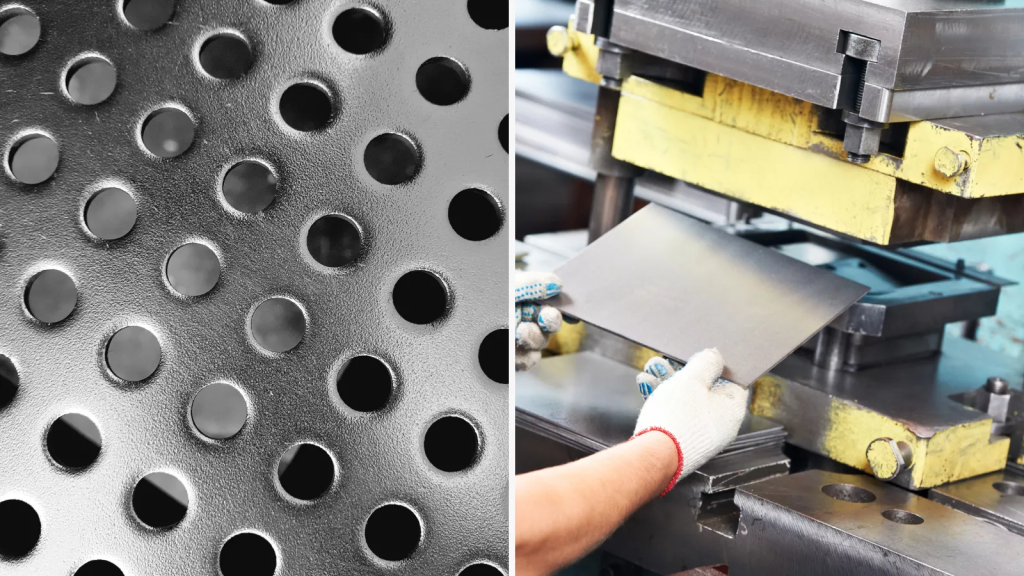
Stamping, widely known as pressing, is another manufacturing process that involves positioning a flat metal sheet as coils or blanks under a metal press, which presses the metal with extreme force, forming the desired metal shape.
The metal press head can be adjusted to perform bending, punching, embossing, and even blanking.
This technique is usually straightforward, as the products do not need any finishing touches. However, the Metal Stamping technique is mainly confined to producing metal products with simpler geometric designs rather than complex due to the size of the metal pressing machine.
Die Casting vs. Metal Stamping: Here Are the 8 Notable Differences You Must Know
1. Applicability
Die casting, as many might already know, is well known for its quality mass production capabilities. Due to its high accuracy, quality, and repeatability level, it is best suited for series production. Some industries that apply the Die Casting and machining technique are lighting technology, domestic utilities, aerospace, machinery, and many more.
It is also applicable in automobile industries to produce cylinder heads, blocks, and wheels.
Metal stamping is known to produce simple, very thin walls, lightweight, and good conductivity metal parts; thus, it is mainly employed in telecommunication, automobile, and electronic industries.
2. Cost
We all prefer working on budget-friendly projects, right? Wondering which technique works well on a low budget? Let’s check it out!
To start off, Metal Stamping is less costly since the stamping machine used is not as expensive as those in the die-casting process. Additionally, metal stamping produces simple design metal parts that take minimal time to manufacture, so one can produce more metal parts quickly, making it a budget-friendly option.
Die casting, conversely, produces complex designs, which call for more expensive machines and materials- The cold chamber machine, the hot chamber machines, and molds. If you don’t have an aluminum die-casting manufacturer in China, this technique can be quite expensive. But on the brighter side, the metal parts are durable, making it a long-term investment.
3. Waste
Metal stamping vs. Die casting, which offers a more sustainable solution? Let’s find out!
Metal stamping produces a lot of waste, from metal scraps, strips, and shavings to punches. Most of the metal scraps result from using non-ferrous metals like aluminum and copper. But the good news is that these waste materials are recyclable. One great way of doing this is by partnering metal stamping with Interco.
On the other hand, Die Casting produces less waste materials due to its accuracy and precision. Some waste materials, including metal scraps, are melted and reused to produce other metal parts. Not to worry, reusing does not affect the properties of the metal. So, if you are looking for a sustainable solution, die casting is your go-to.
4. Complexity
Die Casting and machining is the most idealistic technique when it comes to producing numerous complex products. The accuracy of the technique enables the production of more complex products at a lower cost.
Although Metal Stamping can also stamp shapes on metal sheets, it’s only limited to producing simple designs since the process involves just stamping and cutting shapes onto metal sheets.
5. Material
The die-casting process works well with either ingots, which are bar-shaped materials, or billets, which are rod-shaped metal materials. Since the process involves the melting of metal, there is a necessity for metals with a low melting point. These metal materials are called non-ferrous, famously known for their low melting points. Examples of non-ferrous materials are aluminum, copper, lead, and zinc.
Metal stamping can use both ferrous and non-ferrous materials in the form of coils and blanks since it is a simple process that involves stamping and cutting metal sheets into the final shape. This quality makes it easy for manufacturers to use both ferrous and non-ferrous metals without focusing more on their melting points.
6. Condition
When it comes to Stamping vs. Die Casting, the latter technique, which is die casting, requires extreme heat. Metal stamping only uses a cold forming process to stamp the metal sheets into shape. The high heat and pressure in Die Casting allow the metal to be melted beyond its melting point, injected into the molds, and later cooled to form the finishing complex shape.
The production condition in Metal Stamping is fair to say simpler, as compared to Die Casting. It involves a sheet of metal placed under a machine containing a blade within the press head. The machine later comes down, presses on the metal sheet, and cuts out the desired shape piece. This is now the cold-forming process.
7.Machine
Die casting uses two types of die-casting machines: the Hot chamber Machine and The Cold chamber machine. The hot chambers have a furnace built for melting the metal. It performs a rapid process of allowing the flow of molten metal into a compartment that is pressurized and linked to the molds.
The cold chamber melts the metal in a separate furnace and then moves it into the die-casting machine, where the molten is forced into the molds.
Judging by how simple Metal Stamping is, it uses a Pressing or a Stamping Machine. These machines press on a metal sheet and stamp a desired shape on the object. The sets of Dies are used to mark, shape, cut, and form the finished metal product.
8. Mold
Die casting relies on mold to produce complex metal parts. Despite being costly, the molds last longer and can be reduced to produce high-volume production.
Metal Stamping, on the other hand, does not rely on molds; the process utilizes machines to produce simple designs of metals. But as much as the metal stamping machines are less costly, this technique is only limited to producing simple design metal parts.
Die Casting vs. Metal Stamping: What Would Work Best for You?
When picking between Stamping vs. Die casting for your manufacturing projects, it is best to understand your end goals, your project’s needs, the costs, and the volume production level. When it comes to producing numerous complex metal parts with high accuracy and preciseness, Die Casting and machining stands as an alternative.
Metal stamping offers an alternative for stronger, thinner, simpler, and less costly metal parts or products. All-inclusive, both techniques can be used; it all depends on what you are looking for.
Is a manufacturing project underway? Hire the best trust Kbear Metal, and rest assured that you will get the most value for your money.
Conclusion
In conclusion, both metal stamping and die casting are essential manufacturing processes with unique advantages suited to different project needs. Metal stamping, a time-tested method dating back thousands of years, is ideal for producing simple, lightweight, and cost-effective metal parts with high speed and precision. It uses cold forming to shape metal sheets efficiently, making it well-suited for industries requiring thinner and simpler components.
On the other hand, die casting excels at creating complex, durable, and highly detailed metal parts by injecting molten metal into molds under high pressure and heat. This process is perfect for high-precision applications, such as automotive and aerospace components, where intricate designs and superior strength are critical.
When choosing between these techniques, consider factors like the complexity of the design, material requirements, production volume, cost constraints, and desired part durability. While metal stamping offers faster turnaround and lower costs for simpler parts, die casting provides unparalleled precision and robustness for more demanding applications.
Ultimately, the right choice depends on your project’s specific needs. By partnering with experienced manufacturers like Kbear Metal, you can ensure expert guidance and quality results—maximizing value while meeting your production goals efficiently and effectively.



