


In today’s manufacturing world, precision is not a luxury—it’s a requirement. Aerospace, medical device, and automotive engineering industries require parts with close tolerances, intricate geometries, and high-quality surface finishes. 投資鑄造, or lost-wax casting, is one of the best ways to achieve these requirements. This very sophisticated metal casting technique is well known for creating complex and dimensionally precise components. But why is investment casting so precise? This post discusses how investment casting is possible to such great precision, how it is processed, its advantages, and optimum uses.

Know the Investment Casting Process
Investment casting is a multi-process manufacturing process by which metal products are produced using wax models.Investment casting, often referred to as the lost-wax process, is a highly precise manufacturing technique used to create complex metal parts with excellent detail and surface finish. Known for its ability to replicate intricate shapes and thin-walled designs, it is widely used across industries where accuracy and performance are critical. The process follows the following most important stages:
- Pattern Creation: A wax duplicate (pattern) of the product is made, typically by using injection molding.
- Assembly: Several wax patterns can be joined together on a wax tree so that several parts can be cast simultaneously.
- Shell Building: The wax model is immersed in a ceramic slurry and covered in sand. The procedure is repeated several times in order to develop a thick shell of ceramic.
- Wax Removal: The whole assembly is subjected to an autoclave or furnace, in which the wax is melted out and drained, creating a hollow ceramic mold.
- Metal Pouring: Molten metal is poured in the preheated mold, filling the cavity left by the wax.
- Shell Removal: When cooled, the ceramic shell is removed to leave the cast metal part.
- Finishing: The part is processed further with post-processing operations such as cutting, grinding, heat treating, and machining if needed.
Why Investment Casting is the Best for Precision Parts
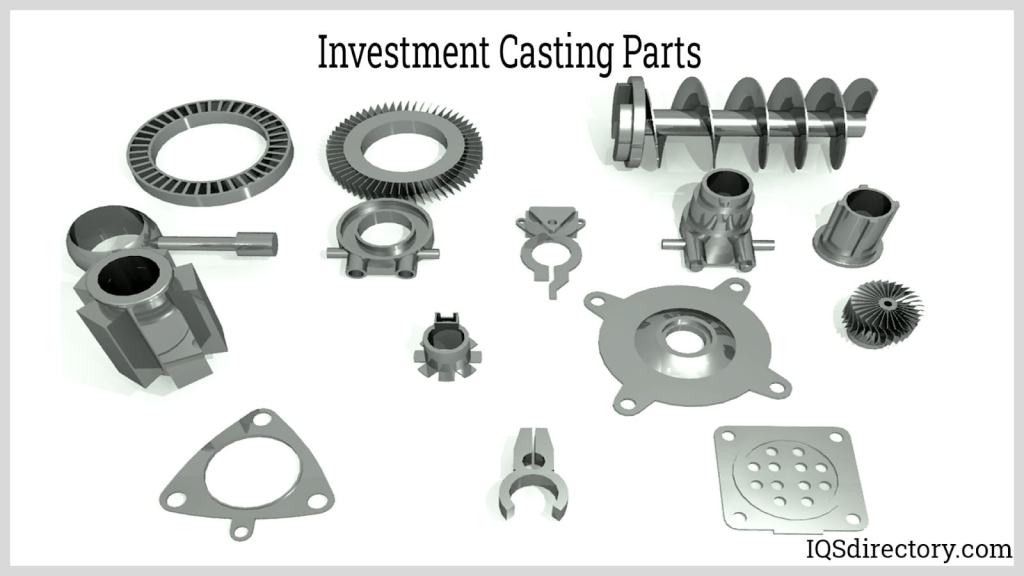
Investment casting, also known as lost-wax casting, has long been recognized as one of the most effective manufacturing methods for producing highly precise and complex parts. Its ability to create intricate geometries, smooth surface finishes, and near-net shapes makes it the preferred choice across industries such as aerospace, automotive, medical, and engineering. Unlike other casting methods, investment casting minimizes the need for extensive machining, reducing both cost and material waste. With its unmatched accuracy, consistency, and versatility in working with a wide range of metals, investment casting stands out as the best solution for producing precision components that meet exacting standards.
1. 尺寸精度高
投資鑄造 always produces close tolerances, usually to ±0.005 inches per inch (0.127 mm). This accuracy reduces the requirement for machining after casting, which saves time and money.
2. Fine Surface Finish
The ceramic molds with a fine grained structure in investment casting result in a good surface finish, usually as good as 125 RMS (Root Mean Square). This is especially useful where appearance parts or low-friction parts are needed.
3. Complex Geometries
Since the process begins with a wax model, almost any shape that can be wax-molded can be cast in metal. This encompasses thin walls, undercuts, internal cavities, and fine details that would be hard or impossible to produce with machining.
4. Minimal Material Waste
Due to near-net-shape capabilities, investment casting minimizes material waste. This is particularly advantageous when working with costly alloys, like titanium or cobalt-chrome.
5. Wide Range of Materials
Investment casting accommodates a wide range of ferrous and non-ferrous metals, such as stainless steel, carbon steel, aluminum, bronze, and high-performance alloys. Its versatility in material ensures suitability for both structural and aesthetic components.

Important Factors That Affect Accuracy in Investment Casting
Accuracy is one of the most critical requirements in investment casting, especially for industries that demand complex, high-performance components such as aerospace, automotive, and medical devices. Even small deviations in dimensions or surface quality can compromise functionality, efficiency, and safety. Achieving precision in investment casting depends on a variety of factors, from the quality of wax patterns to the control of temperatures, mold materials, and metal solidification processes. Understanding these factors is essential not only for manufacturers to ensure consistency and reliability but also for customers who rely on the superior accuracy this process can deliver.
1. Wax Pattern Quality
Accuracy in the last half is largely a function of the quality of the wax model. Defects in the wax will be duplicated in the metal component. Wax injection tools are therefore precision-machined and well maintained.
2. Shell Uniformity
Every layer of ceramic shell must be applied uniformly to achieve dimensional uniformity. Shell thickness variation can influence metal flow and cooling rates and, as a consequence, create defects.
3. Controlled Metal Pouring
Molten metal pouring should be accurately controlled in order not to cause turbulence, air entrapment, or temperature variations. Optimum temperature pouring guarantees a uniform grain structure and minimizes porosity.
4. Thermal Expansion Considerations
Wax and ceramic materials possess varying thermal expansion properties. Engineers have to consider these differences during mold design so the resulting part will have exact specifications once cooled.
5. Post-Casting Processes
Whereas investment casting minimizes the amount of machining, subsequent operations such as grinding, heat treatment, or CNC finishing may be employed to further improve tolerances when required.

Applications Requiring Investment Casting Precision
Investment casting is widely chosen in industries where precision, intricate detail, and superior surface finish are non-negotiable. Its ability to produce near-net-shape components with tight tolerances makes it invaluable for sectors such as aerospace, automotive, defense, energy, and medical technology. In these fields, even the smallest part must perform with flawless accuracy under demanding conditions. From turbine blades and engine components to surgical tools and industrial equipment, investment casting ensures consistency, reliability, and performance. This precision-driven process has become a cornerstone for applications where failure is not an option and exacting standards must always be met.
航天
投資鑄造 is widely utilized to cast turbine blades, structural parts, and housings. These components have to endure high temperatures and stresses while keeping very accurate dimensions.
醫療設備
Surgical instruments, orthopedic implants, and dental parts need precision and biocompatible materials. Investment casting provides safety and performance.
汽車
Everything from engine parts to turbochargers and transmission components, investment casting provides the strength and accuracy high-performance automobiles need.
Defense and Firearms
Investment casting is best for producing firearm parts such as receivers, triggers, and sights, where accuracy and strength are paramount.
工業設備
Valves, pumps, and impellers used in oil and chemical industries appreciate investment casting’s high detailing and corrosion resistance.
Comparison with Other Casting Methods
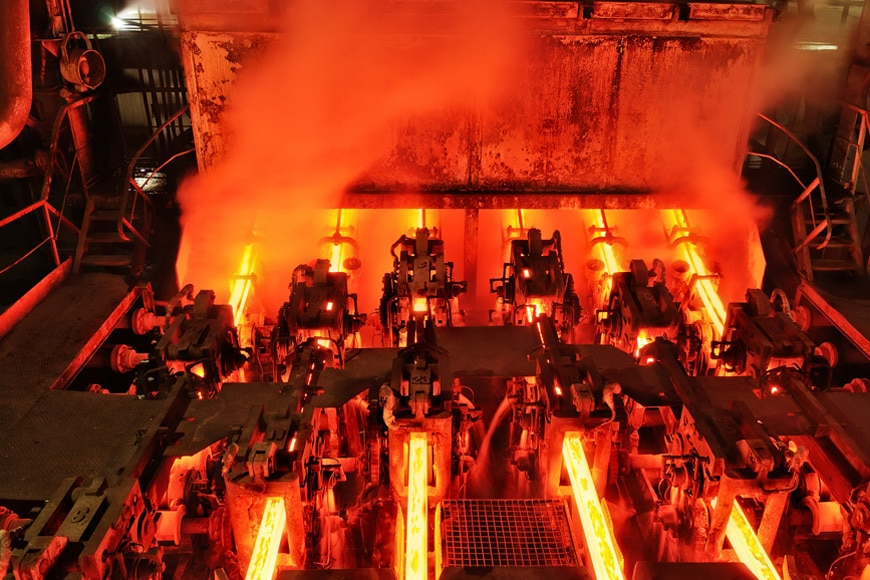
When evaluating investment casting against other casting methods such as sand casting and die casting, the differences largely come down to precision, cost, and scalability. Investment casting is unmatched in producing complex geometries with fine detail and excellent surface finish, making it ideal for high-value applications. In contrast, sand casting is more economical for large or simple parts but lacks the same level of accuracy and finish. Die casting, while excellent for high-volume production with non-ferrous metals, is limited in material versatility compared to investment casting. Understanding these distinctions helps manufacturers choose the best process for their needs.
| 特徵 | 投資鑄造 | 砂型鑄造 | 鑄造 |
| 精確 | 高的 | 緩和 | 高的 |
| 表面飾面 | 出色的 | 從差到一般 | 好的 |
| 複雜 | 很高 | 低到中等 | 高的 |
| 模具成本 | 緩和 | 低的 | 高的 |
| Volume Suitability | 低到中 | Low to High | 高的 |
| Material Flexibility | 很高 | 高的 | 有限的 |
Environmental and Economic Benefits
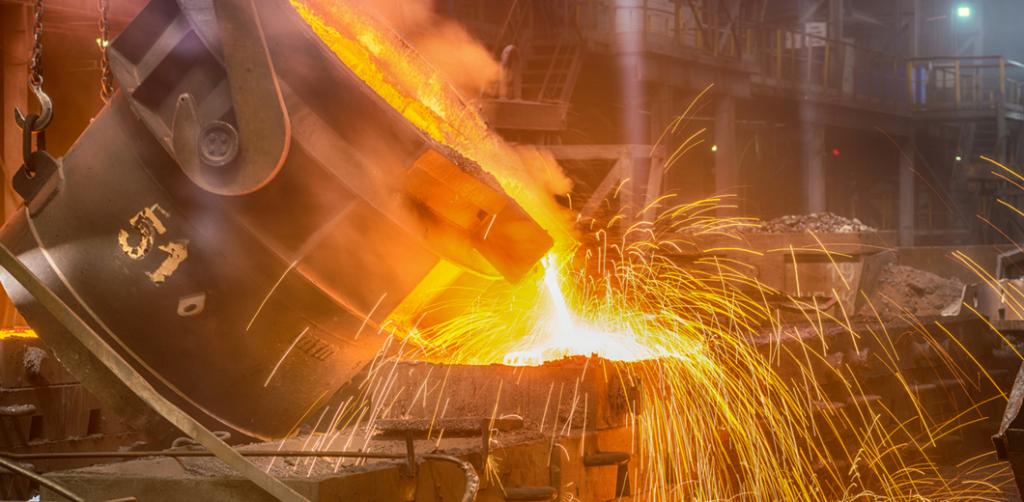
In today’s manufacturing landscape, sustainability and cost-efficiency are just as important as performance and precision. Investment casting offers notable advantages on both environmental and economic fronts. By minimizing material waste, reducing the need for extensive machining, and enabling near-net-shape production, it contributes to resource conservation and lower energy consumption. Additionally, the ability to produce intricate parts in a single casting reduces assembly requirements, saving labor and production costs. These combined benefits make investment casting not only a technically superior choice but also a responsible and cost-effective solution for industries striving to balance quality with sustainability.
- Reduced Waste: Near-net-shape parts translate into less machining required, minimizing scrap.
- Long Tool Life: Wax injection dies and ceramic shells can be used multiple times when taken care of.
- Energy Efficiency: With new furnace and mold technologies, the process has become increasingly energy-efficient over the years.
結論
投資鑄造 is an elite option for producing intricate, high-precision metal components. Its capacity for achieving tight tolerances, superb surface finish, and complex geometries makes it a favorite with industries that need performance and dependability. If the aim is to create parts that integrate form, function, and low waste, investment casting produces outstanding outcomes.
Whether you are creating aerospace parts, medical devices, or complex automobile components, the accuracy of investment casting can take your project to the next level in quality and consistency.
參考
Groover, M. P. (2010). Fundamentals of Modern Manufacturing: Materials, Processes, and Systems. Wiley.
比利,P.(2001)。鑄造技術。巴特沃斯-海涅曼。
Davis, J. R. (1996). ASM Specialty Handbook: Casting. ASM International.
Investment Casting Institute. (n.d.). Introduction to Investment Casting. Retrieved from https://www.investmentcasting.org
Totten, G. E. (2006). Handbook of Metallurgical Process Design. CRC Press.
NADCA (North American Die Casting Association). (n.d.). Casting Process Comparisons. Retrieved from https://www.diecasting.org



