


Casting is among the most adaptable manufacturing methods, allowing for the production of intricate metallic parts utilized in numerous sectors. Sand casting, die casting, and investment casting are some of the most common methods of casting. Each of these techniques has unique advantages and is best suited to certain materials, volumes, costs and complexities. In this article, we will discuss the basic differences between these casting techniques and that how to choose the casting method suitable for your manufacturing requirements.

What is Sand Casting?
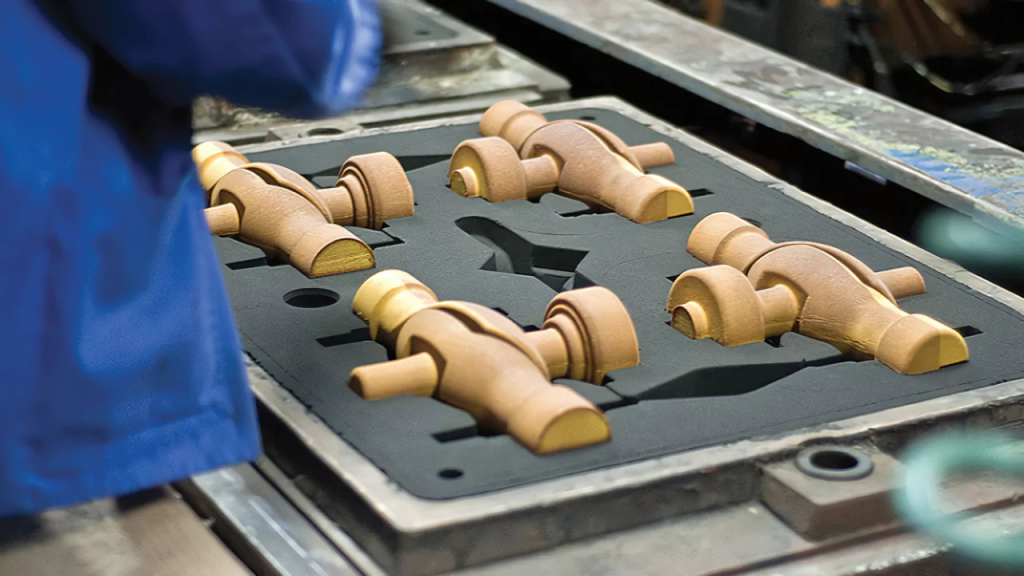
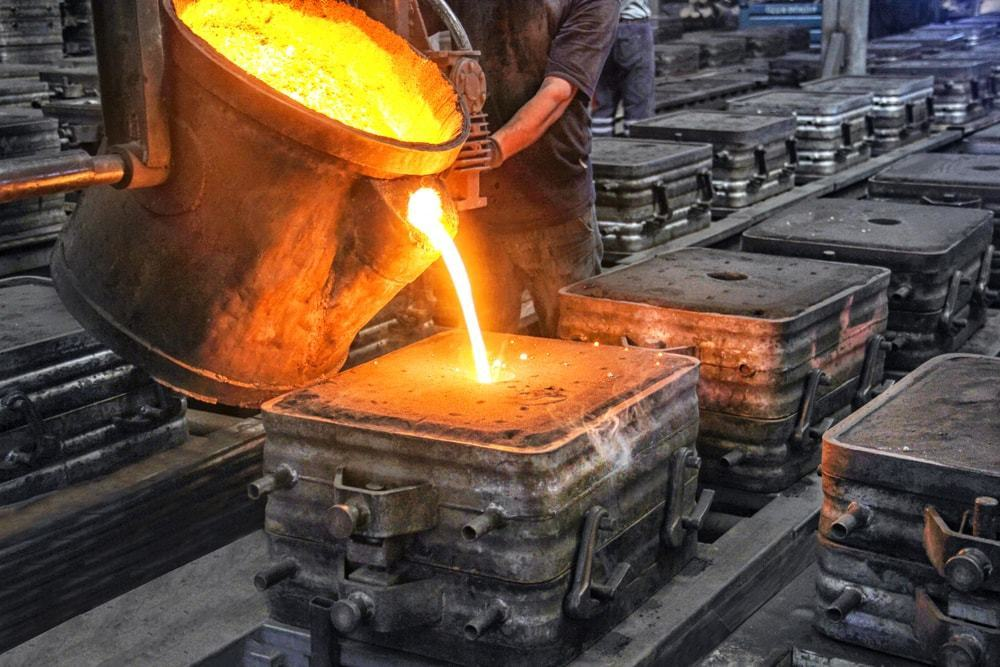
One example of a casting application is sand casting, which uses sand as the mold material. A pattern, which is a replica of the final product, is created as the first step of the process. This pattern is placed into a mold box, and sand is packed around it to create a cavity. The pattern is then removed, and molten metal is poured into the cavity. After the metal solidifies, the sand mold is broken apart to remove the finished part.
Pros of Sand Casting Low tooling costs: Suitable for prototypes and small batch production
- Great design flexibility: Ideal for large or complex forms.
- Applicable to wide material: Applicable to many types of ferrous and non-ferrous metals.
- Cons Surface finish: Generally rough, may need machining.
- Dimensional accuracy: Not as accurate as other casting processes
- Speed: Production is slower because creating molds takes time and require cooling.
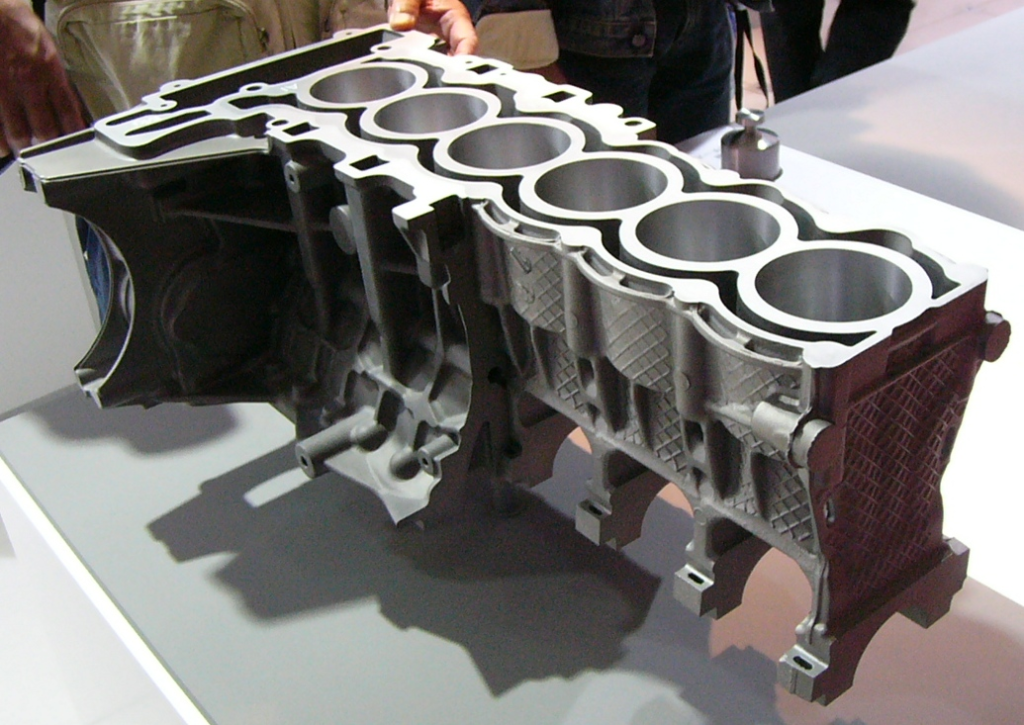
Typical Applications Automotive engine blocks
Automotive engine blocks are among the most critical components in vehicle manufacturing, requiring precision, durability, and efficiency in production. Casting plays a central role in creating these large, complex parts, as it allows manufacturers to achieve the required strength and intricate internal geometries needed for cooling and lubrication systems. Materials such as cast iron, aluminum, and sometimes compacted graphite iron are commonly used, each selected based on performance requirements like weight reduction, heat resistance, or durability. By leveraging casting methods, automakers can produce engine blocks at scale while balancing cost, performance, and reliability.
- Agricultural machinery parts
- Marine and mining equipment
- Pipe fittings
- Heavy industrial components
Sand casting is a common choice for large parts that do not need to be tolerant or high-quality surface finish.
What Is Die Casting?
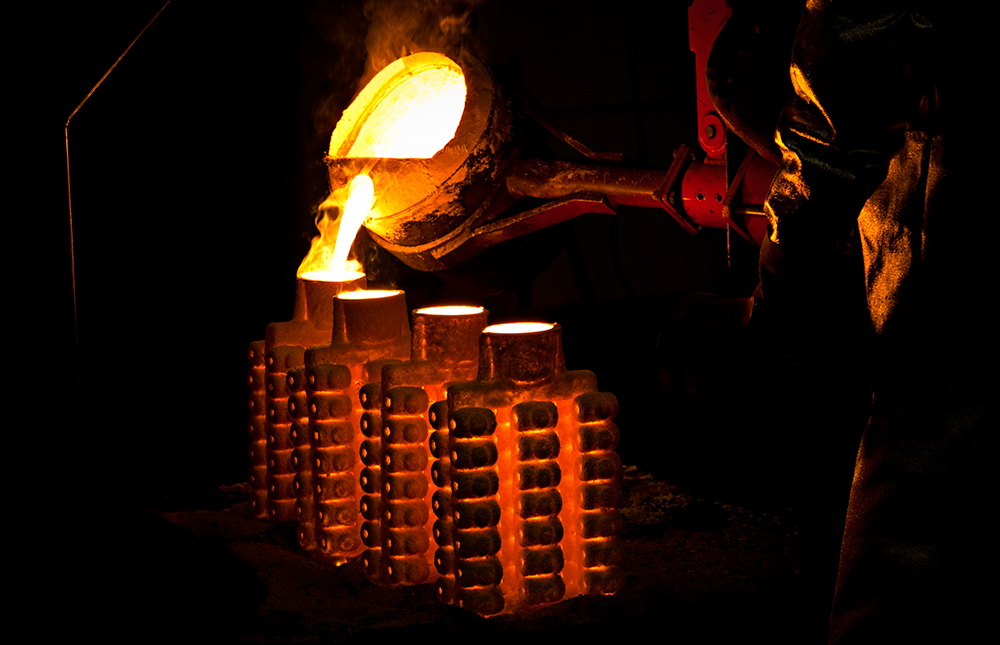
Die Casting In die casting, molten metal is injected into a steel mold, or die, under high pressure. The mold is recycled and can be many thousands of castings in total. It is often used for high-volume production, and it is also an excellent method for producing complex designs with smooth surface finishes.
This process is especially favored in industries where high-volume production and tight tolerances are essential, such as automotive, aerospace, consumer electronics, and industrial machinery. Materials commonly used include aluminum, zinc, and magnesium alloys, each offering distinct benefits like lightweight strength, corrosion resistance, or cost-effectiveness.
One of the greatest advantages of die casting is its ability to combine efficiency with versatility. From small, delicate components to larger, more durable parts, die casting provides manufacturers with a solution that reduces waste, shortens production cycles, and ensures long-lasting reliability. In today’s competitive market, die casting stands as a cornerstone technology for high-performance, mass-produced metal components.
Die casting is categorized into two main types.
- Hot chamber die casting: This is for metals having the lower melting points, e.g., zinc, magnesium.
- Cold-chamber die casting: For higher melting point metals like aluminum.
- Die Casting Benefits Excellent Dimensional Precision: For parts with stringent tolerance requirements.
- Fast production: Short cycle time enables mass production
- Smooth surface finishes: Usually, no further machining is required.
- Consistency: The same thing is the same thing. The same thing is repeated.
- Drawbacks High tooling costs initially: Not suitable for expensive volume runs
- Dealing on non-ferrous metals: Typically aluminum, magnesium and zinc.
- Limited part size: Ideal for smaller parts.
Applications Automotive transmission housings
One of the most significant applications of die casting is in the production of automotive transmission housings. These housings serve as the protective casing for a vehicle’s transmission system, holding gears, shafts, and other critical components in place. Die casting is the preferred method because it allows manufacturers to produce housings with high dimensional accuracy, complex geometries, and excellent structural integrity.
Aluminum alloys are commonly used in this application due to their lightweight nature, which improves vehicle fuel efficiency without compromising strength. The process also ensures smooth surfaces and consistent quality, reducing the need for extensive machining. By using die casting, automotive manufacturers can achieve durability, performance, and cost-effectiveness in mass production, making it an indispensable process in modern vehicle design.
But we have some more affordable, simpler systems, such as consumer electronics enclosures.
- Aerospace components
- Power tool parts
- Industrial brackets
It uses for projects where mass production of small or medium size high precision components needed.
What is Investment Casting?
Investment Casting Investment casting (also known as lost-wax casting) begins with the creation of a wax model of the part to be created. It is covered in a ceramic shell that hardens like a mold. The wax is subsequently melted away, leaving an empty space that molten metal is poured into. The ceramic is then broken away to free the finished part once it has solidified.
This technique is especially valuable when intricate designs, tight tolerances, and smooth finishes are required. Unlike sand casting or die casting, investment casting minimizes the need for secondary machining because of its ability to reproduce fine details directly from the wax model. It is widely used for aerospace, automotive, medical, and industrial applications, where precision and reliability are critical.
Investment casting is versatile, supporting a broad range of alloys including steel, aluminum, titanium, and superalloys. For manufacturers, it provides the balance of design freedom, material flexibility, and performance required for high-quality, complex parts.
- Benefits of Investment Casting High dimensional accuracy: Good for complex shapes.
- Great surface finish: Minimize or eliminate longing post-processing.
- Choice of versatile material(s): Both ferrous and non-ferrous metals
- Less waste: Material usage is very efficient.
Disadvantages Higher cost of each unit: Especially for larger or thicker parts.
- Extended production cycle: Several steps increase lead times.
- Not good for large components: Size limit depends on how a mold is made.
Typical Applications Aircraft engine parts
- Medical and dental devices
- Firearm parts
- Of industrial valves and fittings
- Precision gears
This process is typically selected when components need complexity, accuracy, and high-quality surface finishes.
Technical Comparison Table
| Feature | Sand Casting | Die Casting | Investment Casting |
| Surface Finish | Rough | Smooth | Very Smooth |
| Dimensional Accuracy | Low | High | Very High |
| Tooling Cost | Low | High | Moderate |
| Production Volume | Low to Medium | High | Low to Medium |
| Material Compatibility | Ferrous & Non-ferrous | Non-ferrous only | Ferrous & Non-ferrous |
| Suitable for Complex Parts | Yes | Moderate | Excellent |
| Typical Lead Time | Moderate | Fast | Long |
| Ideal Part Size | Medium to Large | Small to Medium | Small to Medium |
| Common Industries | Automotive, Construction | Electronics, Automotive | Aerospace, Medi |
Choosing the Right Casting Method
Selecting the appropriate casting method is a crucial step in manufacturing, as it directly affects the performance, cost, and efficiency of the final product. Each casting process—whether sand casting, die casting, investment casting, or lost-wax casting—has unique strengths and limitations. The right choice depends on factors such as the complexity of the design, required dimensional accuracy, production volume, surface finish expectations, and the type of metal or alloy being used.
The best casting method is determined by many factors:
Sand Casting
- Variable production numbers
- Budget-conscious projects
- Complexity of design that does not need fine details
When to Choose Die Casting
- High-volume production
- The parts that need smooth finish and high precision
- Thin-walled designs
- Non-ferrous metals based on aluminum, zinc or magnesium
When To Use Investment Casting Complex geometries with tight tolerances
Investment casting is the preferred choice when a project demands intricate shapes, fine details, and high dimensional accuracy that other casting methods may struggle to achieve. This process uses wax patterns and ceramic molds, allowing manufacturers to replicate even the most complex internal and external geometries with minimal machining required afterward.
- Production in low and medium volumes
- Parts in need of good surface finish
- Space, defense or medical devices
The choice of method should be guided by a detailed cost-benefit analysis, complemented by a consideration of the complexity of the design, the material used and scale of production.
Industry Applications
Each type of casting process has a particular place in the field:
Five Industries That Use Cast Metal Parts Automotive: Use sand casting for engine blocks, die casting for gearbox housings, and investment casting for fuel injector components.
- Aerospace: Investment casting for turbine fins, die casting for bracket clamps.
- Construction: Heavy-duty: sand casting, angle brackets.
- Medical: Orthopedic implants, surgical tools, investment casting.
- Consumer Goods: Electronics casing die casting, decorative hardware investment casting.
Environmental Considerations
With sustainability on the rise, manufacturers are carefully assessing the environmental effects of casting techniques.
- Process: For Sand Casting, recycled sand can help reduce its environmental footprint.
- High material utilization, but at higher energy consumption.
- Investment Casting: Very little waste, but ceramic and wax based, so need to be disposed of correctly.
Conclusion
Sand, die, and investment all have their own benefits when it comes to your project. Sand casting is ideal for large, low-cost components that do not demand tight tolerances. Die casting is particularly well-suited to high volume production of precision components. For complex, small-to-medium parts, investment casting can provide superior detail and surface finish.
Having this knowledge of the pros and cons of each process enables engineers and manufacturers to make intelligent decisions that balance quality, expense and production speed. Choosing the appropriate casting method is of the highest importance regardless of whether you are fabricating industrial machinery, consumer products, or aerospace components.



