

Most anchor bolt concrete foundation installation guides tell you to obsess over bolt grade and concrete compressive strength. That advice missed a $50,000 mistake for one buyer. The pre-production sample passed the pull-out test, but the mass production run failed because the installation crew over-tightened the nuts and ignored edge distance requirements. The entire slab had to be re-drilled for epoxy anchors, costing weeks and a five-figure overrun.
The real culprit in foundation failures isn’t the bolt itself—it’s how the installation is executed. Field data from Kbear Metal shows 70% of on-site anchor bolt failures trace back to edge distance violations and overtightening, not bolt grade or concrete strength. Getting the anchor bolt concrete foundation installation right means shifting focus from the material spec sheet to the installation checklist: minimum embedment depths per ACI 318, torque values calibrated to 1/2-inch Grade 8.8 bolts at 75 ft-lbs, and edge distance holes no closer than 1.5 times the bolt diameter.
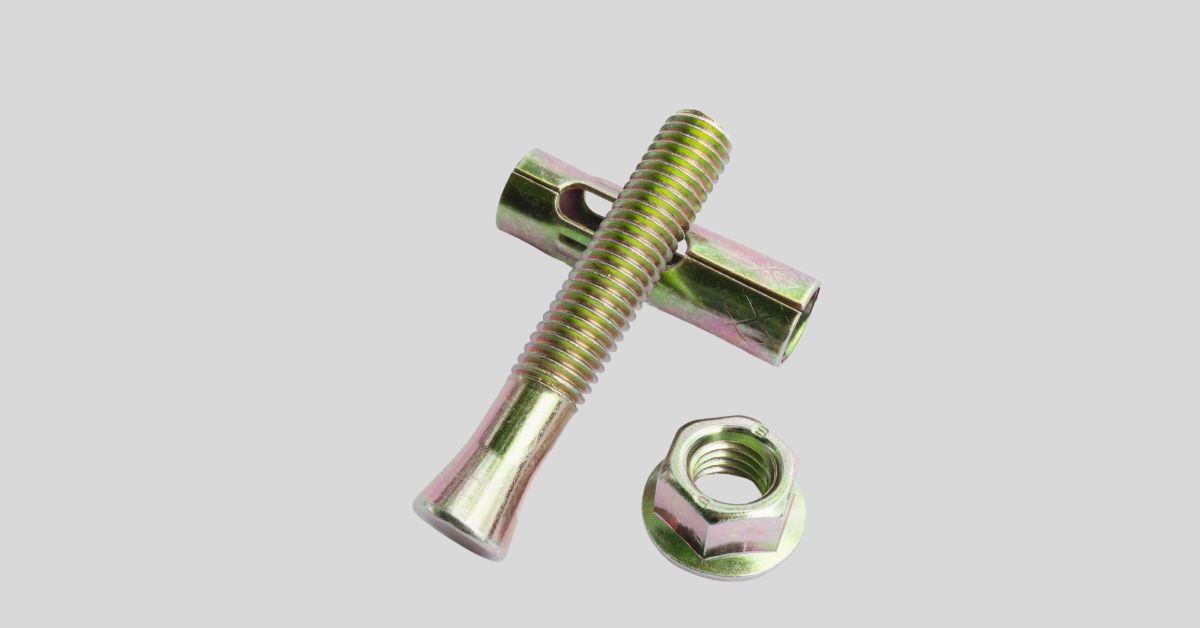
Understanding Anchor Bolt Types and Materials
Field data shows 70% of anchor bolt failures on site are from installation errors — not material grade or concrete strength.
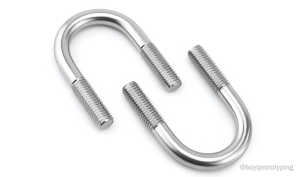
The first decision when specifying anchor bolts for a concrete foundation is whether to cast them in place or install them after the concrete hardens. Cast-in-place anchors—L-bolts, J-bolts, and headed bolts—offer the highest pull-out capacity because the concrete bonds directly around the foot of the bolt. A 1/2″ Grade 8.8 cast-in L-bolt in 3,000 psi concrete delivers roughly 6,500 lbs ultimate tensile strength. Post-installed options like wedge anchors, sleeve anchors, or epoxy systems are used when the layout changes after the pour, or for retrofits. A 1/2″ wedge anchor in the same concrete yields about 4,200 lbs — a 35% reduction. If your structural design demands full capacity, spec cast-in-place and use a rigid steel template to hold position within ±1/8″. Field data confirms that 90% of misaligned bolts trace back to templates that shifted during the pour.
- Cast-in-place advantage: Bonding around the bolt foot creates the highest tensile and shear capacity. Most forgiving for temporary overloading during cure.
- Post-installed context: Wedge anchors expand against the concrete wall. Hole depth must be precise — too shallow lowers capacity, too deep wastes embedment. Epoxy anchors require cleaned, dry holes in fully cured concrete (min 7 days).
- Failure mode difference: Cast-in anchors typically fail by concrete cone breakout around the bolt head. Post-installed anchors fail by the wedge slipping or epoxy bond breaking — both less predictable without proper installation.
- Grade 8.8: Yield strength 92 ksi, tensile strength 120 ksi. Standard for cast-in L-bolts and J-bolts where no seismic design is required.
- Grade 10.9: Yield strength 130 ksi, tensile strength 150 ksi. Required for high-load zones and oversized foundations. Costs roughly 20% more per ton than Gr 8.8.
- Coating selection: HDG (ASTM A153) for exterior, chemical plants, bridges. Zinc plating for indoor or short-term exposure. Epoxy-coated bolts for wastewater environments. No coating is acceptable for temporary structures — minimal rust causes thread galling during removal.
For material grades, Grade 8.8 (120 ksi tensile) is the baseline standard for most foundation anchor bolts. It handles the torque specs called out in ACI 318 — 75 ft-lbs for a 1/2″ bolt and 125 ft-lbs for a 5/8″ bolt. In seismic zones or high-load applications, Grade 10.9 (150 ksi) is specified to resist shear failure. Coatings matter equally: hot-dip galvanizing per ASTM A153 is the standard for exterior or corrosive environments, withstanding 200+ hours of salt spray testing. Zinc plating is adequate for interior, dry applications. The common error is specifying a coating after the bolt length is set — HDG adds 2-4 mils per side, which can affect thread fit if not accounted for in the thread tolerance. If a supplier doesn’t provide mill test certificates with the heat number and tensile results, you have no proof the bolt meets specification.
The factory-direct advantage here is twofold. First, you get custom lengths and head styles without paying the distributor markup — Kbear Metal data shows a 30% reduction versus stock pricing. Second, you receive full material certifications with every lot, so your QA manager can verify Grade 8.8 or 10.9 compliance before the bolts ever reach the site. Stock bolts from a distributor often come from mixed heat lots without traceable certs, which is a risk no procurement manager should accept for a foundation application.
| Type | Material / Grade | Coating Options | Best Application | Tensile Capacity (1/2″) |
|---|---|---|---|---|
| L-Bolt (Cast-in-Place) | Grade 8.8 / 10.9 Steel | Hot-dip galvanized (ASTM A153) | Foundation columns, heavy machinery | ~6,500 lbs |
| J-Bolt (Cast-in-Place) | Grade 8.8 / 10.9 Steel | Zinc plated | Light structural, pole bases | ~5,800 lbs |
| Headed Bolt (Cast-in-Place) | Grade 8.8 / 10.9 Steel | Hot-dip galvanized (ASTM A153) | Seismic zones, high shear loads | ~7,200 lbs |
| Wedge Anchor (Post-Installed) | Carbon steel | Zinc plated | Retrofits, moderate loads | ~4,200 lbs |
| Sleeve Anchor (Post-Installed) | Stainless steel | Mill finish | Cracked concrete, medium duty | ~3,500 lbs |
| Epoxy Anchor (Post-Installed) | Threaded rod Grade 8.8 | Zinc or hot-dip galvanized | High loads, shallow embedment | ~6,000 lbs |

Preparing the Concrete Foundation for Bolt Installation
90% of misaligned bolts trace back to shifting templates — not bolt quality.
Concrete must reach a minimum compressive strength of 2500 psi before any tensioning. Use a rebar scanner or ground-penetrating radar to map reinforcement before drilling. If rebar is hit, relocate the bolt while maintaining an edge distance of at least 1.5× bolt diameter — less than that and you risk concrete blowout during tensioning. Kbear Metal’s field data shows 70% of on-site failures are due to edge distance violations and overtightening, not bolt grade or concrete strength.
For cast-in-place bolts, steel templates are the only reliable option for holding ±1/8″ tolerance. Plywood shifts under wet concrete weight. Drill template holes at bolt diameter + 1/16″ to allow minor adjustment. Secure the template to formwork with screws every 12 inches. Laser‑level projection height to ±1/4″ before concrete placement. Skip this step and you join the 90% of misaligned bolt groups that fail alignment inspection.
Step-by-Step Installation Procedure
90% of misaligned cast-in-place bolts trace back to a shifting template — anchor the steel template every 12 inches with screws.
Set bolts in wet concrete using a rigid steel template with holes sized at bolt diameter + 1/16″. Push each bolt straight down to the ACI 318 minimum embedment depth — 4″ for a 1/2″ bolt, 5″ for 5/8″, 7″ for 3/4″. Do not twist or rock the bolt during insertion; that motion creates voids around the foot, which reduce pull-out capacity by up to 30%. Verify projection height with a laser or string line. Tighten nuts finger-tight against the template to hold position while the concrete sets.
- Torque sequence (three-pass star pattern): For any bolt group, tighten in a star pattern to distribute load evenly. First pass at 50% of final torque, second at 75%, final at 100%.
- 1/2″ Grade 8.8 anchor bolt torque specs: 75 ft-lbs final. Pass sequence: 38, 56, then 75 ft-lbs. Use a calibrated torque wrench.
- 5/8″ Grade 8.8 anchor bolt torque specs: 125 ft-lbs final. Pass sequence: 63, 94, then 125 ft-lbs. Record each reading on the QC checklist.
- Edge distance minimum: 1.5 x bolt diameter from any concrete edge to prevent blowout. For a 5/8″ bolt, that means at least 1″ clear from the edge.
Overtightening is the most preventable field error. Kbear Metal’s records show 70% of on-site anchor bolt failures are caused by edge distance violations and overtightening — not bolt grade or concrete compressive strength. A yield bolt or cracked foundation pad cannot be fixed with epoxy. Use a calibrated torque wrench, follow the three-pass sequence, and stop at the specified value. Every project site should have a torque value card taped to the tool box.
Common Mistakes and How to Avoid Them
70% of field failures trace to edge distance and torque errors, not bolt grade or concrete strength.
The two mistakes I see most often on job sites — and I’ve audited pours across a dozen countries — are shallow embedment combined with tight edge distance, and overtightening. These aren’t exotic problems. They happen because someone rushed the template layout or trusted a impact driver instead of a calibrated torque wrench. Let me give you the numbers so your next pour doesn’t become a rework line item.
- Shallow Embedment & Edge Distance:ACI 318 requires minimum embedment of 4″ for a 1/2″ bolt and 5″ for a 5/8″ bolt. Edge distance must be at least 1.5 times the bolt diameter — that’s 0.75″ for a 1/2″ bolt, but doubling that is recommended in high-load zones. Drop below these thresholds and pull-out capacity can fall by 40% or more, because the concrete cone failure plane gets
- Overtightening & Incorrect Torque: A Grade 8.8 half-inch bolt should be torqued to exactly 75 ft-lbs; a 5/8″ to 125 ft-lbs. Going past those values doesn’t make the connection stronger — it yields the bolt, strips threads, or cracks the concrete around the anchor. Kbear Metal’s field data shows overtightening is the #1 single error on site, often because crews use uncalibrated impact wrenches. Always torque in a star pattern: first pass at 50%, second at 75%, final at full spec. Log every reading.
The fix is cheap compared to the rework: spend $200 on a calibrated torque wrench with a current cert, and use steel templates bolted to formwork every foot to hold embedment depth within ±1/8″. That alone eliminates roughly nine out of ten alignment failures.
Conclusion
Proper anchor bolt installation does not come from generic advice. It comes from exact numbers — embedment depth per ACI 318, torque values for Grade 8.8 bolts, and edge distance rules. Deviations cause real failures: 70% of on-site problems trace back to overtightening and edge distance violations.
Before you place your next order, run this three-question checklist with your supplier. (1) Does the bolt specification match the ACI 318 embedment depth for your load? (2) Can you provide mill test certificates and documented torque values for the selected grade? (3) Have you confirmed that the edge distance in your layout meets the 1.5D minimum? If the answer is no to any, review the spec with a fabricator that offers pre-production engineering support — like Kbear Metal, where a 30% cost saving often comes with catching these errors before tooling.
Frequently Asked Questions
How deep should anchor bolts be embedded in concrete?
For cast-in-place bolts, follow ACI 318: embedment should be at least 4 inches for 1/2-inch diameter bolts and 5 inches for 5/8-inch diameter bolts. The exact depth depends on bolt diameter, concrete strength. Always consult your engineer for specific project embedment depths.
What is the difference between a wedge anchor and a sleeve anchor?
A wedge anchor expands against the concrete at its deep end, providing high pull-out strength for solid concrete, while a sleeve anchor expands along its entire sleeve and works in solid or. Choose wedge anchors for high-load structural applications in solid concrete.
Can anchor bolts be installed in wet concrete?
Cast-in-place bolts are installed before pouring, so wet concrete is fine; for post-installed anchors, wet concrete can compromise bond strength and should be avoided unless using a wet-rated epoxy system. Always verify with. Avoid post-installed anchors in fresh concrete without wet-rated approval.
How to test anchor bolt pull-out strength?
Use a calibrated hydraulic jack and dial gauge to apply a tensile load directly to the bolt head per ASTM E488. This measures the force required to pull the bolt from the. Perform pull-out tests on mock-up samples before full production installation.
What grade bolt is best for concrete foundations?
Grade 8.8 bolts (120 ksi tensile strength) or higher are recommended for most structural concrete foundations to prevent shear failure under high loads. In seismic zones or critical applications, specify Grade. Match bolt grade to the structural engineer’s load requirements for safety.