


Fasteners are crucial elements across various industries, enabling the assembly of everything from massive buildings to small electronic devices. Their importance lies in their ability to secure components efficiently and reliably. With many types tailored to specific functions, materials, and environments, understanding which fastener to use is essential for ensuring safety, durability, and ease of maintenance.
Fasteners come in a wide range of designs, including bolts, screws, nuts, rivets, washers, and pins—each engineered to meet unique mechanical and environmental requirements. The choice of a fastener isn’t just about size or shape; factors such as load-bearing capacity, corrosion resistance, vibration tolerance, and material compatibility all come into play. For instance, stainless steel fasteners are prized for their strength and corrosion resistance, making them ideal for marine or outdoor use, while nylon fasteners may be used in electronics to reduce electrical conductivity.
Industries like automotive, aerospace, construction, and manufacturing depend heavily on fasteners to keep parts aligned, distribute loads evenly, and allow for disassembly and maintenance. The right fastener can significantly improve performance and longevity, while the wrong choice can lead to costly failures.
At Kbear Metal, we understand the critical role fasteners play in modern engineering and manufacturing. That’s why we offer a wide selection of high-quality fastener solutions tailored to meet your project’s unique specifications. Whether you’re building heavy machinery or assembling precision instruments, our expertise ensures you get the right fastening components every time.
This guide provides an in-depth look at common fasteners, explaining their detailed definitions as well as their typical benefits and applications.
What Are Fasteners?
Fasteners are hardware devices designed to mechanically join or affix two or more objects. They are typically made from durable materials such as steel, aluminum, titanium, or specialized alloys to ensure strength and longevity.
Common types include screws, bolts, nuts, rivets, and washers, each serving specific functional needs. Fasteners are typically made from strong, durable materials like steel, aluminum, titanium, or corrosion-resistant alloys to ensure reliability and long-term performance, even in harsh environments. Their versatility allows for both permanent and temporary connections, depending on the application. Selecting the right fastener is crucial for ensuring structural integrity, safety, and ease of assembly or maintenance.
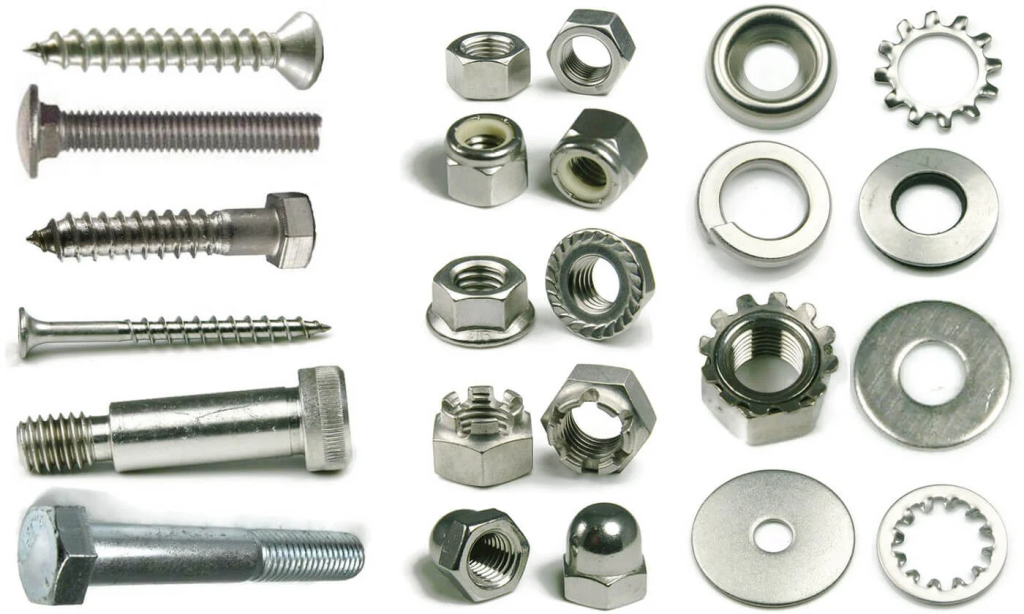
Exploring the Different types of Fasteners
Fasteners are essential components used to join or secure parts together in various applications. They come in many types, each designed for specific functions and materials. Common fasteners include screws, bolts, nuts, washers, rivets, and clips. Screws and bolts typically create strong, removable joints, while rivets offer permanent fastening. Washers help distribute load and prevent damage to surfaces. Clips and clamps provide quick, temporary connections. Fasteners vary in size, shape, and material—ranging from steel and aluminum to specialized alloys—allowing them to meet diverse requirements across industries like construction, automotive, aerospace, and electronics. Understanding these types helps select the right fastener for any project.
Bolts
- Definition and Features:
Bolts are heavy-duty, externally threaded fasteners typically featuring a large, often hexagonal head. They are designed to work in conjunction with nuts or tapped holes, forming strong, load-bearing joints. Usually made from robust materials like steel or stainless steel, bolts are intended for applications requiring high tensile strength. The head size and shape allow for tightening with wrenches or sockets, providing significant clamping force. They are often used in structural, industrial, and heavy machinery applications. - Benefits:
- Provide exceptionally strong, reliable connections capable of withstanding high loads and stresses.
- Made from corrosion-resistant materials like stainless steel, increasing longevity in harsh environments.
- Capable of frequent assembly and disassembly, facilitating maintenance and repairs.
- Suitable for joining large or heavy components, ensuring safety and stability over time.
- Applications:
- Structural frameworks in buildings and bridges.
- Machinery and equipment assembly in manufacturing plants.
- Automotive and transportation industries, including car frames and chassis.
- Heavy-duty outdoor constructions subject to weathering and environmental stresses.

Screws
- Definition and Features:
Screws are threaded fasteners with tapered shafts designed to cut into and hold fast into soft or hard materials directly, with no need for nuts in many cases. They come in various head styles—slotted, Phillips, Torx, etc.—and are tailored for specific materials like wood, metal, or drywall. Their threads and sharp tips allow easy insertion and a firm hold, with some types providing self-tapping features for quick installation. - Benefits:
- Offer versatile fastening solutions suitable for a wide array of materials and projects.
- Fast and convenient installation using hand tools or power drills.
- Coated options provide resistance to corrosion and environmental damage.
- Reusable and easy to remove, allowing adjustments without damaging the components.
- Applications:
- Woodworking and furniture assembly.
- Drywall installation and fastening.
- Electronics casing and appliance assembly.
- Mounting fixtures and fixtures into plastic or metal surfaces.

Nuts
- Definition and Features:
Nuts are internally threaded fasteners with standard shapes like hexagonal for ease of tightening with wrenches. They are designed to work with bolts or threaded rods, creating a secure and adjustable connection. Made from various materials such as steel, brass, or nylon, nuts can be plain or coated for corrosion resistance. High-quality nuts often feature locking mechanisms to prevent loosening under vibration. - Benefits:
- Reusable and allow for easy assembly, disassembly, and adjustments.
- Provide secure, tight connections in conjunction with bolts.
- Resistant to environmental factors through coatings and suitable materials.
- Enable the construction of complex, multi-layer assemblies.
- Applications:
- Machinery and engine components.
- Structural steel framework and bridges.
- Automotive parts and repair assemblies.
- Furniture and household fixtures requiring adjustable joints.

Washers
- Definition and Features:
Washers are flat, circular discs typically made of metal, plastic, or rubber that sit between the fastener head or nut and the surface to be fastened. They serve primarily to distribute the load of the fastener evenly across the contact surface, protecting delicate materials and preventing damage. Lock washers often feature serrated or split designs to prevent loosening caused by vibration. - Benefits:
- Distribute pressure evenly to reduce stress and prevent material deformation.
- Protect surfaces from damage caused by tightening forces.
- Help prevent loosening due to vibrations, especially when using lock washers.
- Add stability and longevity to fastened joints.
- Applications:
- Automotive and machinery assembly for even load distribution.
- Furniture and cabinetry work to protect surfaces.
- Electrical and electronic components where gentle fastening is needed.
- Structural steel and construction projects requiring vibration resistance.
Anchors and Expansion Fasteners
- Definition and Features:
Anchors and expansion fasteners are specially designed to secure objects into solid masonry or hollow walls such as concrete, brick, or block. They work by expanding or deforming within a drilled hole, grabbing the surrounding material to provide a secure hold. Types include expansion bolts, sleeve anchors, and toggle bolts, each optimized for different thicknesses and load capacities. - Benefits:
- Provide extremely strong and secure anchoring in difficult substrates.
- Expand to fill the cavity of the hole, ensuring stability under load.
- Support heavy fixtures like shelves, electrical panels, and machinery.
- Facilitate easy installation with minimal specialized tools.
- Applications:
- Mounting heavy fixtures, shelves, and cabinets into masonry walls.
- Installing electrical and plumbing fixtures in concrete or brick.
- Securing outdoor signage, lighting, or structural supports.
- Fixing heavy equipment in industrial environments.
Rivets
- Definition and Features:
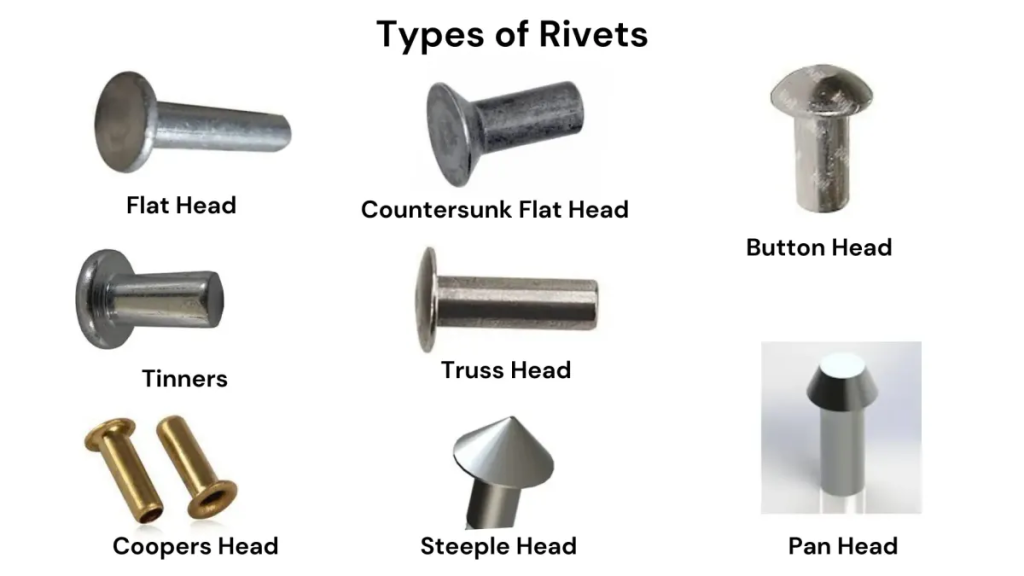
Rivets are permanent fasteners that join materials by deforming the tail end of the rivet after it has been inserted into pre-drilled holes. Their deformation creates a permanent, high-strength connection resistant to vibrations and harsh conditions. Some types, like blind rivets, can be installed from only one side, making them suitable for inaccessible areas. - Benefits:
- Offer permanent, tamper-proof bonds suitable for critical applications.
- Capable of withstanding extreme conditions like vibration, heat, and corrosion.
- Quick to install, especially with pneumatic or manual rivet guns.
- Support lightweight yet durable constructions, especially in aerospace and automotive industries.
- Applications:
- Aircraft and spacecraft manufacturing.
- Shipbuilding and steel structures.
- Automotive body assembling.
- Metal fabrication and architectural frameworks.

Clips and Clamps
- Definition and Features:
Clips and clamps are fasteners designed to hold, organize, or secure cables, hoses, panels, or small parts. They come in a variety of forms—spring clips, pipe clamps, cable ties, and fixed tension clamps—each designed for different applications requiring temporary or permanent fixation. - Benefits:
- Easy to install and remove, providing flexibility in maintenance.
- Reusable and adjustable, reducing ongoing costs.
- Help organize wiring, hoses, and panels, reducing clutter and damage risk.
- Provide secure, vibration-resistant fastening in moving or dynamic environments.
- Applications:
- Automotive wiring harness management.
- Plumbing and electrical installations.
- Securing hoses in machinery and appliances.
- DIY repairs, electronics projects, and interior organization.
Conclusion
Choosing the right http://Fasteners depends heavily on understanding each type’s unique features, strengths, and best-fit applications. Proper selection not only ensures safety and structural integrity but also enhances longevity, reduces maintenance, and improves efficiency in all your projects. Whether you need heavy-duty bolts for structural safety, screws for woodworking, rivets for permanent bonds, or clips for cable management, knowing their separate benefits and uses allows for smarter, more durable assemblies. If you have a specific project or application in mind, don’t hesitate to ask for tailored advice—happy fastening!
With years of expertise and advanced manufacturing capabilities, Kbear Metal offers tailored solutions to match your exact project requirements. Whether you need heavy-duty bolts for structural safety, precision screws for intricate assembly, or durable rivets for permanent bonds, we provide fasteners that combine strength, reliability, and longevity. Our team is ready to help you choose the best fastening solutions that fit your specific application, ensuring optimal performance and safety.
For any project—large or small—trust Kbear Metal to deliver exceptional products and expert guidance. Contact us today to learn more about how our fasteners can help you build smarter, safer, and more efficient assemblies.



