

grade 8 8 vs 12 is the first checkpoint buyers should lock before they approve a supplier, budget, or production slot. The operator on the heat-treat line watches the hardness tester readout every shift. He knows that a batch of grade 8.8 vs 12.9 bolts coming out at 41 HRC instead of 35 means the quench temperature drifted, and those fasteners will snap differently under load. Most buyers never see that readout. They get a sales call with tensile values and a price per kilo, then wonder why a $50K order failed six weeks after installation because the pre-production sample matched but the mass production run carried a different core hardness.
That gap between sample approval and production reality is where most joint failures start. The property class number stamped on the head tells you the target tensile — roughly 800 MPa for 8.8 and 1220 MPa for 12.9 — but it doesn’t tell you if the supplier controlled the quench, skipped the post-plating bake, or used cut threads instead of rolled ones. Those details determine whether your joint holds or cracks at the thread root without warning.
Tensile Strength vs. Real-World Shear Failure
A property class number like 8.8 or 12.9 is defined by ISO 898-1 and describes tensile strength, yield strength, hardness, and elongation. The common mistake is reading ‘12.9 is stronger’ and assuming it is safer for every load direction. Shear strength is roughly 60% of tensile strength for both classes, which means upgrading the grade does not change shear behavior proportionally; it only makes the failure more sudden.
ISO 898-1 Property Class Comparison
ISO 898-1 defines metric property classes: grade 8.8 delivers about 800 MPa tensile and ~640 MPa yield, with a core hardness of 22-34 HRC and roughly 12% elongation. Grade 12.9 reaches ~1220 MPa tensile and ~1100 MPa yield, with a core hardness of 39-44 HRC and about 8% elongation. Proof load sits at roughly 90% of yield for both classes.
Buyers should use these numbers as the starting point for design, not the final word. A grade 12.9 bolt requires higher preload than an M12 grade 8.8 — reference torque jumps from around 95 Nm to about 160 Nm for the same size — and the torque-to-tension relationship must be recalculated whenever the property class changes.
Why Shear Charts Mislead Buyers
A shear force on the joint does not automatically become safer with grade 12.9. Because single shear capacity equals approximately 60% of ultimate tensile strength times the tensile stress area for both classes, paying for a higher property class does not increase side-load resistance.
The only fix for a shear-critical joint is larger diameter bolts, more fasteners in the pattern, or a different joint geometry altogether.
Why 12.9 Bolts Snap in the Field
Plated 12.9 bolts that skip the bake-out can crack 24-72 hours after installation.
Field failures of grade 12.9 bolts are rarely caused by simple overload. The most common hidden cause is hydrogen embrittlement: electroplating introduces hydrogen into the steel, and a hardened 12.9 microstructure is vulnerable to cracking at the thread root. The fracture often appears hours or days after installation, which makes the bolt look defective when the real issue is process control at the plating step.
Hydrogen Embrittlement and Mandatory Bake-Out
ASTM B633 requires a post-plating bake at 190–230°C for 4 hours to drive hydrogen out of high-strength fasteners. This step is not optional for 12.9, and a factory-direct manufacturer like Kbear Metal should be able to document the bake-out for each batch. If a low-cost supplier skips this step, the result is delayed fracture: the bolt pops under normal load with no visible necking.
Physical Signs of a Brittle 12.9 Failure
The classic field clues are a head that pops off, a crack starting at the thread root, and zero plastic deformation at the break surface. Compare that with an 8.8 overload, which stretches and necks before separating. Brittle fracture leaves no warning, which is why 12.9 should only be used where the full load path is understood and preload is controlled.
Substitution Pain: When the Wrong Grade Wrecks the Joint
Substituting bolt grades without re-engineering the joint creates failure modes in both directions.
A common cost-saving move is swapping a specified grade for whatever is on the shelf. That decision backfires in two distinct ways, and both end with a failed joint.
When 8.8 Replaces 12.9: Loosening and Stretch
If the design calls for a 12.9 bolt at 160 Nm (M12 reference) and an 8.8 goes in instead, the proof load drops from roughly 990 MPa to 576 MPa. The bolt yields under the same preload, stretches permanently, and clamp force disappears. Heavy equipment mounts and concrete anchor bolts are classic examples: the first sign is fastener loosening, followed by fatigue cracking at the first engaged thread. The bolt may not snap at installation, but it fails weeks later under cyclic loading.
When 12.9 Replaces 8.8: Brittle Cracking
Going the other direction is just as dangerous. A 12.9 bolt torqued to an 8.8 spec delivers far less preload than intended, but its hardened microstructure (39-44 HRC vs 22-34 HRC) cannot absorb minor misalignment or side loads without cracking at the thread root. Press tooling and structural connections that see vibration or off-axis loading are high-risk applications: a 12.9 bolt can fracture without visible necking, sending the tool or structure into unplanned downtime.
Real Applications Where Substitution Backfires
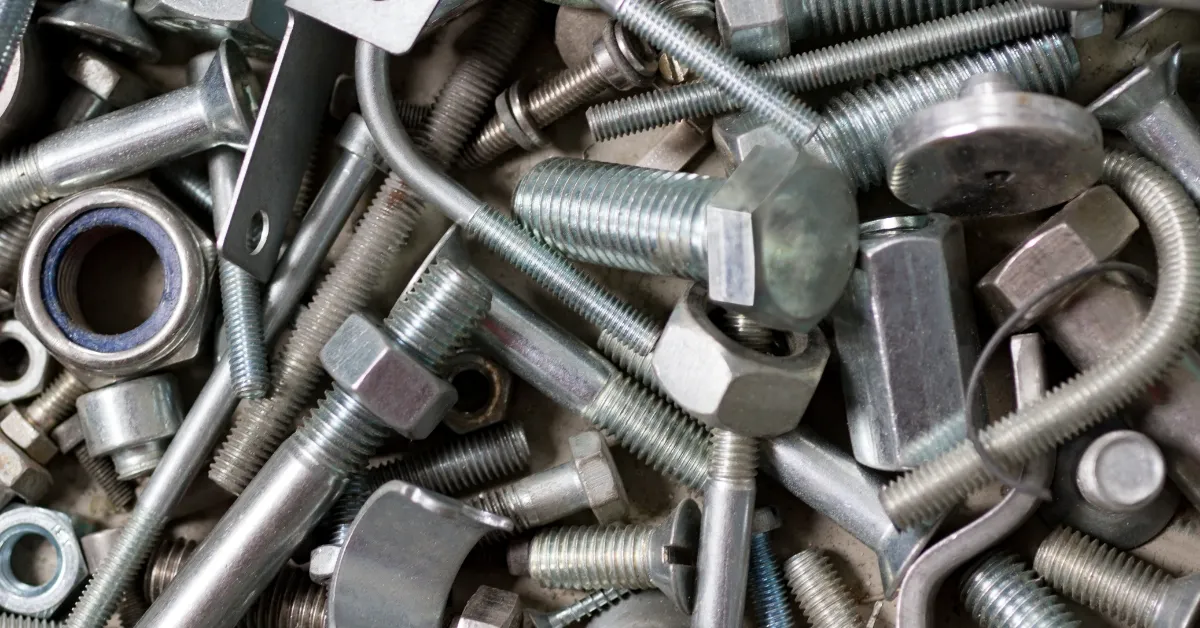
How to Buy 8.8 vs 12.9 Without Getting Burned
A factory-direct supplier documents the bake-out; a trader cannot.
PO Checklist for High-Strength Bolts
A reliable fastener order starts with the purchase order, not the invoice. Buyers who specify only ‘grade 12.9 bolts’ on the PO invite substitutions in plating quality and thread forming method. The checklist below covers what should appear on every high-strength bolt order.
- Property class marking: ‘8.8’ or ‘12.9’ must be embossed on the head per ISO 898-1. Lot traceability ties each batch back to the heat number.
- Coating specification: If plated, require ASTM B633 with documented bake-out at 190-230°C for 4 hours. No bake-out = reject the lot.
- Thread forming method: Specify rolled threads rather than cut threads. Rolled thread roots have no sharp stress riser; cut threads on hardened 12.9 concentrate cracks.
- Test documentation: Batch tensile test report and material certificate confirming yield, tensile, and hardness per ISO 898-1.
- Packaging and labeling: Import compliance requires clear grade marking, country of origin, and lot numbers on each carton.
Conclusion
Selecting grade 8.8 vs 12.9 is a joint-engineering decision, not a price-per-kilogram comparison. The tensile number alone won’t prevent failure — the load mode, plating process, and thread forming method determine whether the bolt holds or snaps. A 12.9 bolt that skips the ASTM B633 bake-out is a latent failure waiting to crack 24 hours after installation.
- Shear strength is 60% of tensile for both grades; upgrading to 12.9 does not improve side-load resistance.
- Plated 12.9 bolts require a 190–230°C bake for 4 hours to prevent hydrogen embrittlement.
- Rolled threads eliminate stress risers; cut threads on hardened 12.9 accelerate cracking.
- Reference torque: M12 8.8 = 95 Nm; M12 12.9 = 160 Nm — adjust for coating and lubrication.
Benchmark your supplier against ISO 898-1 and ASTM B633. If they cannot provide batch tensile reports, bake-out documentation, and mill certificates, you are carrying the risk. Request a factory-direct quote for custom high-strength bolts with full traceability from Kbear Metal — a single partner that controls the process from raw material to final torque test.
Frequently Asked Questions
What is the difference between grade 8.8 and 12.9 bolts?
Grade 8.8 has about 800 MPa tensile strength and 640 MPa yield; grade 12.9 has about 1220 MPa tensile and 1100 MPa yield. The key difference is that. Choose 12.9 only when your joint is tension-critical and you control plating and preload.
Can I replace a 12.9 bolt with an 8.8 bolt?
Only if you re-engineer the joint. An 8.8 bolt has lower proof load and needs different torque, so using it without recalculation risks loosening or shear failure under the same load. Always recalculate torque and joint strength before substituting grades.
Why do grade 12.9 bolts snap?
Most field snaps come from hydrogen embrittlement from electroplating or wrong preload, not normal overload. The hardened microstructure of 12.9 is especially sensitive to hydrogen, so plated bolts must be. Specify a post-plate bake-out on your purchase order to avoid brittle snaps.
How do you identify a grade 12.9 bolt?
Metric 12.9 socket head cap screws are usually marked with ‘12.9’ on the head. Hardness testing verifies 39-44 HRC, which is the only reliable way to confirm grade if. Use a portable hardness tester to verify incoming 12.9 bolts from any supplier.
What torque should I use for grade 8.8 vs 12.9 bolts?
Torque depends on size, thread pitch, coating, and lubrication. As a reference, an M12 grade 8.8 bolt typically torques to about 80 Nm, while a grade 12.9 of the. Confirm torque values with your fastener supplier for your exact coating and lube.