• English
    • العربية
    • မြန်မာစာ
    • 中文(漢字)
    • Français
    • ქართული
    • Deutsch
    • ગુજરાતી
    • Bahasa Indonesia
    • Italiano
    • 日本語
    • Қазақ тілі
    • 한국어
    • Latviešu valoda
    • Lietuvių kalba
    • Bahasa Melayu
    • پارسی
    • Polski
    • Português
    • Română
    • Русский
    • Slovenščina
    • Español
    • ภาษาไทย
    • Türkçe
    • удмурт кыл
    • Українська
    • Tiếng Việt
HP40 Centrifugal Casting | 25Cr-35Ni Reformer Tube Alloy — Kbear Metal
HP40 CENTRIFUGAL CASTING · SINCE 1989

HP40 Centrifugal Casting: 25Cr-35Ni Heat-Resistant Alloy for Reformer Tubes & High-Temperature Service

Kbear Metal is an expert HP40 centrifugal casting supplier producing 25Cr-35Ni heat-resistant cast alloy tubes for hydrogen reformers, methanol converters, ammonia plant catalyst chambers, and high-temperature petrochemical service. ASTM A608 grade HP, cast to ±0.5 mm OD tolerance, with EN 10204 3.1 mill certificates per heat.

25/35
Cr / Ni Composition
1,100°C
Max Service Temp
A608
ASTM Standard
±0.5mm
OD Tolerance
35y
Since 198935+ years HP-grade casting
A608
ASTM A608 Grade HPStandard compliance
PMI
PMI VerifiedSpectrometer every heat
EN3.1
EN 10204 3.1Mill cert per batch

Four HP40 product families produced under one roof

Centrifugally cast HP40 in the geometries petrochemical procurement teams source most often.
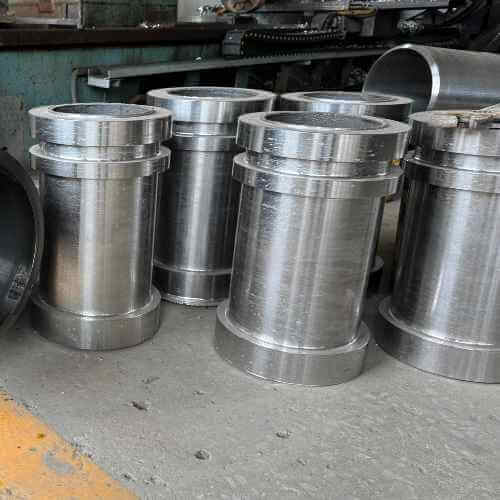
HP40 reformer tubes — centrifugally cast
// 01 · Reformer Tubes
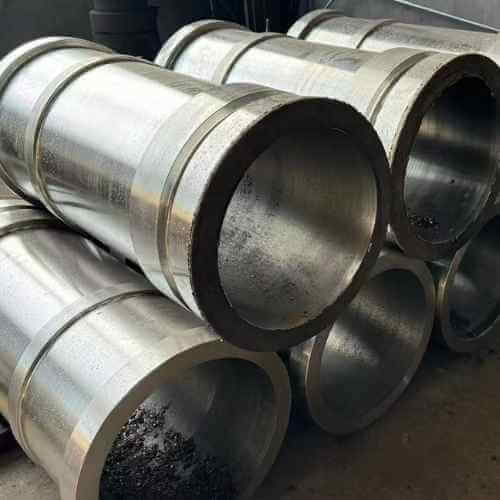
HP40 Hydrogen Reformer Tubes
SMR catalyst tubes for hydrogen and methanol plants. OD 80-350 mm, length up to 14 m single-piece.
HP40 furnace tubes
// 02 · Furnace Tubes
HP40 Heating Furnace Tubes
Process furnace tubes for metallurgical heating, calcination, and high-temperature pyrolysis service.
HP40 sleeves and rings
// 03 · Sleeves & Rings
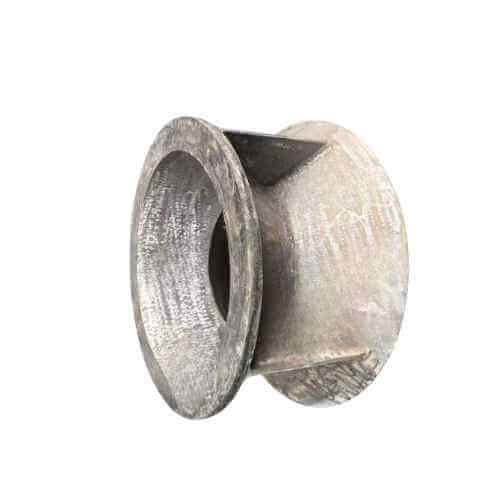
HP40 Heat-Resistant Sleeves
Roller shells, sleeves, and rings for heat-treatment furnace internals and high-temp bearing service.
HP40 custom castings
// 04 · Custom HP40
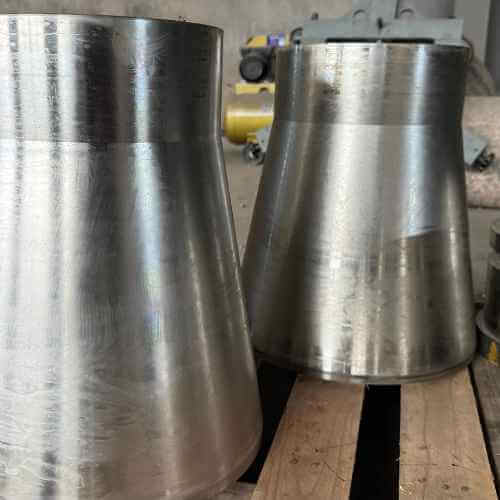
Custom HP40 Castings
Engineered HP40 components from buyer CAD drawings. Flanged, tapered, and asymmetric profiles.

HP grade variants — HP40 and its niobium-modified derivatives

Eight HP-family alloy variants centrifugally cast in our foundry. Material verified by spectrometer on every melt.

// HP40
Standard 25Cr-35NiSMR baseline alloy
// HP-Nb
25Cr-35Ni + 1.5% Nb+15-25% creep strength
// HP-Mod
HP-Nb + Ti microalloyThin-wall designs
// HP-MA
HP Micro-Add (Ti, Zr, REM)Highest creep performance
// HP-Si
HP + Si additionImproved oxidation resistance
// HP-W
HP + TungstenHigh-stress severe service
// HP-AC
Anti-Coking HPAluminized inner surface
// Custom HP
Buyer-spec chemistryProject-specific composition

HP40 vs HP-Nb vs HP-Mod: when to choose which

Three HP-grade variants — choose by service temperature, creep target, and budget.

HP40 Standard

Baseline 25Cr-35Ni
Composition25Cr-35Ni
Max Wall Temp1,050°C
Tensile Strength440 MPa
Creep Rupture (10⁵h, 950°C)16 MPa
Cost Index1.0x baseline
Best ForStandard SMR · Methanol

HP-Nb Modified

+1.5% Niobium
Composition25Cr-35Ni-Nb
Max Wall Temp1,150°C
Tensile Strength470 MPa
Creep Rupture (10⁵h, 950°C)20 MPa
Cost Index1.10x
Best ForHigh-severity SMR · Ammonia

HP-Mod Microalloy

Nb + Ti microalloy
CompositionHP-Nb-Ti
Max Wall Temp1,150°C
Tensile Strength490 MPa
Creep Rupture (10⁵h, 950°C)22 MPa
Cost Index1.18x
Best ForThin-wall · Weight-critical
Need help choosing HP40 vs HP-Nb for your project? Send your service conditions (temp, pressure, design life) — alloy recommendation in 48 hours.
Discuss Alloy Selection →

Where HP40 centrifugal castings ship to service

Eight HP40 service applications across petrochemical, fertilizer, and high-temperature industries.

// 01

SMR Hydrogen Plants

Steam methane reforming catalyst chamber tubes for refinery hydrogen production.

// 950°C wall temp
// 02

Ammonia Synthesis

Primary reformer tubes for ammonia plant feedstock generation. 14 m single-piece.

// 14m length
// 03

Methanol Converters

Methanol synthesis loop tubes operating at 850-950°C with syngas exposure.

// CO-CO2 service
// 04

DRI Reformers

Direct-reduction iron plant reformer tubes for HBI/DRI feedstock production.

// Carb-resistant
// 05

Process Furnace Tubes

Heating furnace tubes for petrochemical pyrolysis and catalytic reformation.

// 850-1,050°C
// 06

Heat Treatment Furnaces

Roller hearths, walking-beam furnace tubes, and atmosphere-furnace internals.

// Wear + heat
// 07

Petrochemical Pyrolysis

Pyrolysis tube applications outside primary ethylene cracking (lower temp HK40).

// Lower-temp
// 08

Specialty Chemical

High-temp specialty chemical reactor tubes — catalyst regeneration, sulfur recovery.

// Custom service

HP40 melt-to-machine in four controlled stages

Four-stage condensed view — full eight-step process documented in our pillar page.

01

Chemistry & Melt

Cr/Ni/C target chemistry verified by ladle spectrometer before centrifugal pour.

02

Centrifugal Cast

Spinning mold at 600-1,200 RPM. Impurities migrate to ID and are machined away.

03

Solution Anneal

Heat treat at 1,150°C for time scaled to wall thickness, followed by rapid quench.

04

NDT & Machine

100% UT inspection, hydrostatic pressure test, then OD/ID finish-machining.

HP40 chemistry verified by spectrometer — every melt, every batch

The common failure mode for HP-grade castings is off-spec chemistry — wrong Ni content, low Nb addition, or contaminated melt. Our spectrometer on the furnace floor catches chemistry errors before pour. Every shipped tube carries an EN 10204 3.1 mill certificate traceable to the ladle sample.

A608
ASTM A608Grade HP / HK
3.1
EN 10204 3.1Mill certificate
PMI
PMI Re-VerifyOn shipped batch
SGS
SGS / BV / TÜV3rd-party witnessed
01

Spectrometer Ladle Sample

Chemistry verified before pour. Cr, Ni, C, Nb, Si, Mn all in target range. Re-melt if off-spec.

02

PMI Re-Verification

X-ray fluorescence on shipped tube confirms chemistry remained on-spec through heat treatment.

03

Mechanical Testing

Tensile, yield, elongation tested on test heat sample. Per ASTM A608 / A370 procedures.

04

Creep-Rupture Data

Long-term creep-rupture data available for HP-Nb tubes — per API 530 / ECSC-NESC database.

05

Heat Number Trace

Every tube stamped with heat number traceable through ladle sample to raw material certs.

Three reasons EPC buyers source HP40 castings from us

Procurement teams sourcing HP-grade castings face three risks — alloy substitution, undocumented chemistry, and inconsistent creep performance. We address all three.

// 01

PMI verified, not just claimed

X-ray fluorescence chemistry on every coil and every shipped batch. No HK40-as-HP40 substitution — common with low-cost suppliers cutting Ni content.

// 02

Niobium addition documented

HP-Nb tubes confirmed at minimum 1.0% Nb (target 1.5%). Mill cert lists actual Nb wt% per heat number — no "Nb modified" claims without supporting chemistry.

// 03

Creep data available

Long-term creep-rupture test data on HP-Nb test heats. Useful for refineries running tube-life prediction (RBI / RLA) modeling.

Want a sample HP40 mill certificate? Sample EN 10204 3.1 cert + PMI report + mechanical test data sent for evaluation.
Request Doc Sample →

Buyer questions on HP40 chemistry, properties, and service

Common questions from refinery procurement engineers, EPC project buyers, and reformer-tube design specialists.

What is HP40 alloy?
HP40 is a centrifugally cast heat-resistant alloy with nominal composition 25% chromium, 35% nickel, balance iron — designated as "Grade HP" under ASTM A608 (Iron-Chromium-Nickel Heat-Resistant Castings for General Application). The high nickel content provides excellent creep strength and oxidation resistance at temperatures up to 1,050°C. The "40" suffix is industry shorthand reflecting the carbon level (approximately 0.40% C target).
What's the difference between HP40 and HP-Nb?
HP-Nb (also called HP modified or HP-Nb modified) is HP40 with the addition of approximately 1.5% niobium. The niobium precipitates as Nb-carbides during high-temperature service, stabilizing the microstructure and improving creep-rupture life by 15-25% at temperatures above 950°C. Maximum service temperature increases from 1,050°C (HP40) to 1,150°C (HP-Nb). Niobium addition adds approximately 10% to the alloy cost.
What ASTM standard covers HP40 centrifugal castings?
ASTM A608 / A608M (Standard Specification for Centrifugally Cast Iron-Chromium-Nickel High Alloy Tubing for Pressure Application at High Temperatures) is the primary standard. HP40 falls under Grade HP within this standard. Related standards: ASTM A351 for static castings, ASTM A790 for duplex stainless tubes, ASTM A335 for ferritic tubes. EN equivalent: EN 10295 (1.4837 grade).
What is the typical service life of HP40 reformer tubes?
Design life for HP40 reformer tubes is typically 100,000 hours (approximately 11.5 years of continuous operation) at design temperature and stress. Actual service life depends on operating conditions — feedstock contamination, temperature excursions, thermal cycling. Standard practice in refinery operations is risk-based inspection (RBI) with periodic remaining-life assessment (RLA) using replica metallography to estimate remaining creep life.
What heat treatment is applied to HP40 castings?
Solution annealing at approximately 1,150°C followed by rapid cooling is standard for HP40 castings going into reformer service. Hold time at temperature is scaled to wall thickness (typically 1 hour per 25 mm of wall). The heat treatment dissolves coarse primary carbides and promotes a finer secondary carbide network during service, which provides creep strength. Documented thermal profile (time-temperature curve) issued with every batch.
Can HP40 castings be welded?
Yes, HP40 castings can be welded using matching alloy filler material (typically HP40 filler rod or wire) under controlled conditions. Best practice is GTAW (TIG welding) with preheat 200-300°C and slow cooling. Post-weld heat treatment generally not required for HP40 itself but may be specified for joints to relieve residual stress. We supply tubes pre-welded with pigtail connections or as separate pieces for site welding by buyer fabrication contractor.
What chemistry tolerance do you hold on HP40 castings?
Per ASTM A608 Grade HP: Cr 24-28%, Ni 33-37%, C 0.35-0.75%, Si max 2.0%, Mn max 2.0%, P max 0.04%, S max 0.04%. We typically target tighter ranges than ASTM minimums: Cr 25-26%, Ni 34-35%, C 0.38-0.45%. For HP-Nb grade: additional Nb 1.0-1.5% target. Actual chemistry from each heat reported on EN 10204 3.1 mill certificate.
What surface finish is achievable on HP40 cast tubes?
As-cast OD surface from centrifugal casting is typically Ra 6.3-12.5 μm (250-500 μin). After OD machining, standard finish is Ra 1.6-3.2 μm (63-125 μin). ID finish after rough machining (to remove impurity layer) is typically Ra 3.2-6.3 μm. Mirror polish (Ra below 0.8 μm) available for specific applications but adds significant cost — rarely needed for reformer service.
Do you provide creep-rupture test data for HP40?
Yes. Long-term creep-rupture test data available on our HP40 and HP-Nb test heats. Typical data points: 950°C wall temp / 16 MPa stress / 100,000 hour rupture life (HP40); 950°C / 20 MPa / 100,000 hour (HP-Nb). Data conforms to API 530 design methodology. We can supply specific creep data on request for customers running remaining-life assessment (RLA) modeling.
What MOQ applies to HP40 castings?
No fixed piece-count MOQ. For HP40 reformer tubes with existing standard tooling: orders from 1 tube ship from stock. New custom tooling (non-standard OD/ID): project economical at 12-20 tubes of same geometry. Spare-parts orders for refinery / hydrogen plant maintenance ship at any quantity from existing tooling library. Bulk catalyst-charge orders (200-400 tubes) get production-line priority.

Get Free Offer Now!

Thanks for your contacting. Kbear team will get you back in 24 hours.