• English
    • العربية
    • မြန်မာစာ
    • 中文(漢字)
    • Français
    • ქართული
    • Deutsch
    • ગુજરાતી
    • Bahasa Indonesia
    • Italiano
    • 日本語
    • Қазақ тілі
    • 한국어
    • Latviešu valoda
    • Lietuvių kalba
    • Bahasa Melayu
    • پارسی
    • Polski
    • Português
    • Română
    • Русский
    • Slovenščina
    • Español
    • ภาษาไทย
    • Türkçe
    • удмурт кыл
    • Українська
    • Tiếng Việt
Stainless Steel Centrifugal Casting | 304H 316L 310 321H — Kbear Metal
STAINLESS STEEL CENTRIFUGAL CASTING · SINCE 1989

Premier Stainless Steel Centrifugal Casting: 304H · 316L · 310 · 321H for Process & Chemical Service

Kbear Metal is a trusted stainless steel centrifugal casting supplier producing 304H, 316L, 310, 321H, and duplex grades for chemical process piping, marine equipment, food processing, and high-temperature applications. ASTM A351, ASTM A744, and EN 10295 standards. Mill certificates per heat with PMI verification.

7
Stainless Grades
900°C
Max Service Temp
A351
ASTM Standard
±0.5mm
OD Tolerance
35y
Since 1989Stainless casting production
A351
ASTM A351 / A744Stainless casting standards
PMI
PMI VerifiedSpectrometer every heat
EN3.1
EN 10204 3.1Mill cert per batch

Four stainless steel product families produced under one roof

Centrifugally cast stainless tubes, rings, sleeves, and custom castings in austenitic and duplex grades.
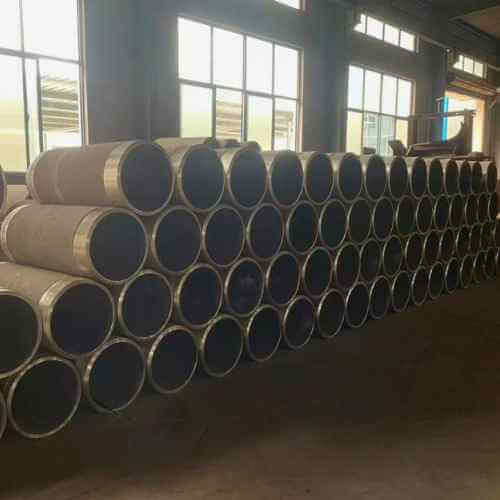
Stainless steel centrifugal cast tubes
// 01 · Process Tubes
Stainless Process Tubes
304H, 316L, 310 process tubes for chemical, petrochemical, food processing piping systems.
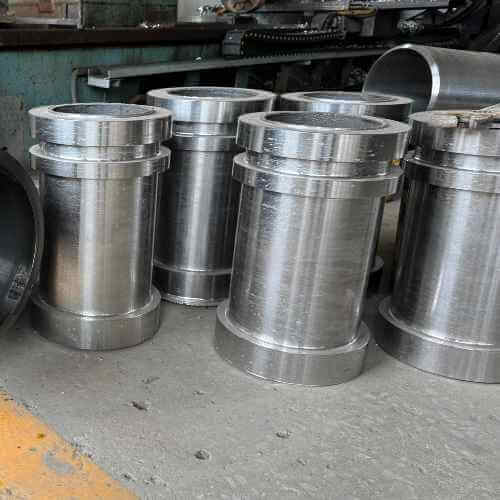
Stainless steel rings and sleeves
// 02 · Rings & Sleeves
Stainless Rings & Sleeves
Bearing rings, slide sleeves, pump housings in 304/316/duplex grades for high-temperature service.
High-temperature stainless tubes
// 03 · High-Temp 310 / 321H
Heat-Resistant Stainless Tubes
310 and 321H tubes for service up to 900°C — oxidation-resistant austenitic stainless grades.
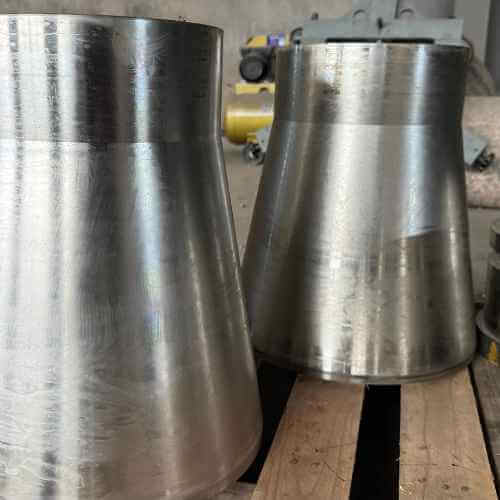
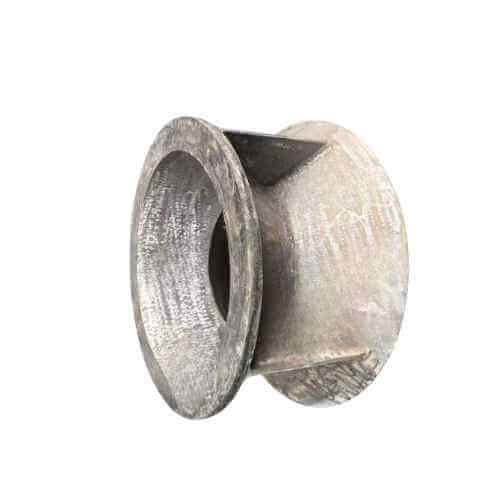
Custom stainless castings
// 04 · Custom Stainless
Custom Stainless Castings
Engineered stainless components from buyer CAD — flanged, tapered, asymmetric shapes.

Eight stainless steel grades centrifugally cast

Austenitic 300-series, heat-resistant, and duplex grades — verified by spectrometer on every melt.

// 304H
18Cr-8Ni (high C)Standard process & structural
// 316L
17Cr-12Ni-2.5Mo (low C)Corrosion-resistant chemical
// 310
25Cr-20NiHigh-temp oxidation-resistant
// 321H
18Cr-9Ni-TiStabilized for high-temp service
// 347H
18Cr-10Ni-NbNiobium-stabilized variant
// 309
23Cr-13NiHeat-resistant intermediate
// 2205
Duplex 22Cr-5NiChloride-resistant marine
// 2507
Super Duplex 25Cr-7NiSevere corrosion service

304H vs 316L vs 310: when to choose which stainless grade

Three austenitic stainless grades cover most B2B applications — selected by service temperature, corrosion environment, and budget.

304H Standard

18Cr-8Ni · General service
Composition18Cr-8Ni
Max Service Temp800°C
Tensile Strength485 MPa
Carbon Content0.04-0.08%
Cost Index1.0x baseline
Best ForStandard process · Structural

316L Low-Carbon

17Cr-12Ni-2.5Mo
Composition17Cr-12Ni-Mo
Max Service Temp800°C
Tensile Strength450 MPa
Carbon Content≤0.03% (L grade)
Cost Index1.30x
Best ForChemical · Marine · Pharma

310 Heat-Resistant

25Cr-20Ni
Composition25Cr-20Ni
Max Service Temp900°C
Tensile Strength510 MPa
Oxidation ResistanceExcellent
Cost Index1.45x
Best ForHigh-temp · Furnace · HRSG
Need help picking the right stainless grade?Send service conditions — temp, fluid, pressure — alloy recommendation in 48 hours.
Discuss Grade Selection →

Where stainless centrifugal castings ship to service

Eight applications across chemical, food, marine, and high-temperature industries.

// 01

Chemical Process Piping

304/316 process tubes for chemical plant piping systems with corrosive fluids.

// 316L
// 02

Pharmaceutical Equipment

316L tubes for pharmaceutical and biotech process equipment requiring electropolished surfaces.

// EP finish
// 03

Food Processing

304H/316L tubes for food/beverage processing — dairy, brewing, food handling lines.

// Sanitary
// 04

High-Temp Furnace

310 / 321H tubes for furnace internals operating at 800-900°C in heat treatment.

// 310 · 321H
// 05

HRSG & Power

Heat recovery steam generator tubes, superheater supports in 321H stabilized grade.

// 321H
// 06

Marine Equipment

Duplex 2205 / super duplex 2507 for chloride-resistant marine pumps and seawater handling.

// Duplex
// 07

Desalination Plants

Duplex stainless for reverse-osmosis and MSF desalination plant high-pressure pump components.

// 2507
// 08

Process Equipment

Pump housings, valve bodies, and process equipment components in stainless centrifugal grades.

// Custom

Stainless centrifugal melt-to-machine in four stages

Four-stage condensed view of stainless production. Full eight-step process documented on the pillar page.

01

Melt & Verify

Induction melt at 1,500-1,550°C. Spectrometer verifies Cr/Ni/Mo/C before pour.

02

Centrifugal Cast

Spinning mold at 400-1,000 RPM. Dense outer wall, impurities to ID for machining.

03

Solution Anneal

Heat treat at 1,050°C, then rapid quench to prevent carbide precipitation.

04

NDT & Machine

100% UT inspection, dye penetrant, then OD/ID finish-machining to drawing.

Stainless chemistry verified by PMI — every heat, every batch

The common failure mode for stainless castings is grade substitution — 304 shipped as 316, or low-Cr passed as 310. Our X-ray fluorescence PMI verifies grade on every coil and every shipped batch, eliminating the substitution risk.

A351
ASTM A351Austenitic stainless
A744
ASTM A744Corrosion-resistant
3.1
EN 10204 3.1Mill cert per heat
SGS
SGS / BV witnessed3rd-party available
01

PMI Grade Verification

X-ray fluorescence on every coil and shipped batch. No grade substitution.

02

Spectrometer Chemistry

Ladle sample verifies Cr/Ni/Mo/C before pour. Re-melt if off-spec.

03

Intergranular Test

ASTM A262 sensitization test for L-grade and stabilized stainless on request.

04

Surface Inspection

Dye penetrant on every casting. ID surface inspection per ASTM E165.

05

Mill Certificate

EN 10204 3.1 with chemistry, mechanical properties, heat number per batch.

Three reasons EPC and process plant buyers source stainless castings from us

Procurement teams sourcing stainless centrifugal castings face three common risks — we address all three.

// 01

PMI verified, no grade substitution

Every shipped batch X-ray verified. 316L stays 316L from melt to crate — no quietly substituted 304 with similar appearance.

// 02

Solution anneal documented

Thermal profile (time-temperature) included with every batch. Important for L-grade and stabilized stainless to confirm sensitization prevention.

// 03

Duplex experience

2205 and 2507 super duplex regularly cast. Phase balance verified by metallography. Useful for marine and desalination buyers.

Want a sample stainless mill certificate?Sample EN 10204 3.1 cert + PMI report sent for evaluation.
Request Doc Sample →

Buyer questions on stainless chemistry, properties, and service

Common questions from process plant procurement engineers and EPC project buyers.

What's the difference between 304H and 316L for centrifugal castings?
304H is 18Cr-8Ni with controlled higher carbon content (0.04-0.08%) for elevated-temperature creep service up to 800°C. 316L is 17Cr-12Ni-2.5Mo with low carbon (max 0.03%) providing better corrosion resistance against chlorides and acids — critical for chemical, pharmaceutical, and marine applications. 316L costs approximately 30% more than 304H due to molybdenum addition. Select 304H for general structural and elevated-temp; 316L for corrosive service.
What ASTM standard covers stainless centrifugal castings?
ASTM A351 / A351M (Castings, Austenitic, for Pressure-Containing Parts) is the primary standard for stainless centrifugal castings in pressure service. ASTM A744 covers corrosion-resistant iron-chromium-nickel alloys. ASTM A608 covers heat-resistant Fe-Cr-Ni for higher-temperature service. EN equivalent: EN 10295 (heat-resistant) and EN 10283 (corrosion-resistant) for centrifugal castings sold into EU markets.
Do you cast duplex and super duplex stainless?
Yes. We routinely cast 2205 duplex (22Cr-5Ni-3Mo-N) and 2507 super duplex (25Cr-7Ni-4Mo-N). Phase balance (target 50% austenite / 50% ferrite) verified by metallography on test samples. Solution heat treatment at 1,050-1,100°C followed by water quench preserves duplex microstructure. Common applications: marine pumps, desalination plant components, oil & gas downhole equipment.
What's the maximum service temperature for stainless centrifugal castings?
Depends on grade. 304/304H up to 800°C. 316/316L up to 800°C (lower at oxidizing conditions due to Mo). 310 up to 900°C with good oxidation resistance. 321H (stabilized with Ti) up to 870°C resists chromium-carbide precipitation. 347H (Nb-stabilized) similar. Above 900°C, transition to heat-resistant alloys (HK40, HP40, Inconel) is recommended.
Can you supply electropolished ID for pharma/biotech applications?
Yes. 316L stainless castings can be supplied with electropolished ID surfaces meeting ASME BPE (Bioprocessing Equipment) standards. Standard EP surface finish Ra below 0.5 μm. Typical applications: pharmaceutical clean piping, biotech reactor vessels, and high-purity gas distribution. We coordinate with electropolishing service providers; certified EP finish reports issued per batch.
What's the price difference between 304H and 316L?
316L costs approximately 25-35% more than 304H per kilogram due to molybdenum content (2-3% Mo addition). 310 grade costs approximately 40-50% more than 304H due to higher Ni content (20% vs 8%). Duplex 2205 costs approximately 30-40% more than 316L. Super duplex 2507 costs approximately 60-80% more than 316L. Final pricing depends on alloy market conditions and order size.
Can you provide PMI verification reports for incoming inspection?
Yes. X-ray fluorescence (XRF) PMI testing on every shipped batch — Cr, Ni, Mo, Mn, Si, Cu, Ti, Nb measured. PMI reports include element percentages and grade confirmation. Useful for buyer incoming inspection programs and supplier audit compliance. Third-party PMI verification by SGS or BV available on request for high-value orders.
What's the typical lead time for stainless centrifugal castings?
Standard stainless tubes (304H, 316L, 310): 25-35 days from confirmed PO. Custom-spec castings with new mold tooling: 40-55 days. Duplex grades: 30-45 days. Electropolished pharma grade: add 10-15 days for EP processing. Heat treatment and NDT testing included in lead time. Sea freight to US/EU: add 30-45 days.
What heat treatment do you apply to stainless castings?
Solution annealing at 1,050°C followed by rapid water quench is standard for austenitic stainless. Prevents chromium-carbide precipitation (sensitization) and maintains corrosion resistance. For duplex grades: 1,050-1,100°C solution treatment to preserve 50/50 austenite/ferrite phase balance. Documented thermal profile included with every batch. Stress-relief annealing available on request for machining-sensitive applications.
Can you certify castings for sour service (NACE MR0175)?
Yes. Duplex 2205 and super duplex 2507 castings can be certified to NACE MR0175 / ISO 15156 for sour service (H2S-containing) applications in oil & gas. Hardness limits maintained below 28 HRC for sulfide-stress-cracking resistance. Test certificates with NACE compliance statement issued per batch. Common for downhole equipment and sour-service production hardware.

Get Free Offer Now!

Thanks for your contacting. Kbear team will get you back in 24 hours.