

stainless steel fastener rust is the first checkpoint buyers should lock before they approve a supplier, budget, or production slot. The operator on the grinding line sees it before the quality inspector does. A worn wheel leaves a fine dust of carbon steel embedded in the surface of every 304 fastener in the batch. That dust looks like nothing under shop lighting. Three weeks after installation on a coastal boardwalk, it turns into red streaks that the buyer blames on counterfeit material or a bad alloy. That $50,000 order burns down to a dispute over what stainless steel fastener rust actually means.
Most brown rust on new 304 fasteners is not the alloy corroding. It is embedded iron particles from grinding, dirty handling, or tooling contamination during fabrication. The chromium oxide passive layer is intact underneath. Passivation dissolves those particles and restores the surface for about $50 to $150 per batch. But passivation does nothing against chloride pitting, which is a different failure mode entirely and one that requires a material upgrade to fix.
Chloride ions from saltwater break through the passive layer on standard 304 and create self-sustaining pits that keep corroding even if you clean the surface stain off. ASTM B117 salt spray testing puts 304 at roughly 200 hours before red rust appears. Grade 316 with its molybdenum content holds past 1,000 hours for roughly a $120 premium per thousand M10 bolts — an upgrade that pays for itself when replacement labor costs ten times that figure after pitting failure.
Why Most 304 Fastener Rust Is Not Corrosion
Most brown rust on new 304 fasteners is embedded carbon steel, not the alloy breaking down.
When a procurement manager opens a container of 304 bolts for a coastal boardwalk project and sees brown streaks three weeks later, the first instinct is to blame the material. But in roughly half of these cases, the rust is not coming from the fastener itself. It comes from carbon steel particles embedded in the surface during manufacturing.
Embedded Iron: The Source of False Positives
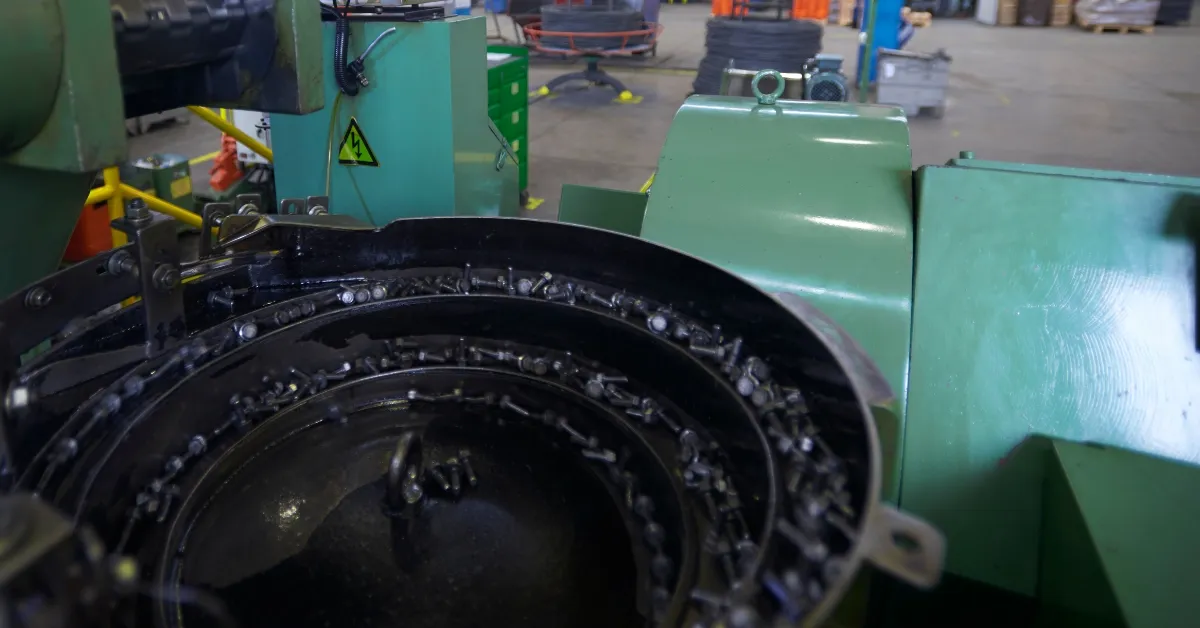
Fastener production involves grinding, thread rolling, and handling on shared shop floors. Worn grinding wheels or dirty tooling can transfer microscopic carbon steel particles onto stainless surfaces. These particles oxidize rapidly in humid air, producing red-brown stains that look identical to pitting corrosion. The alloy underneath remains intact.
This is why visual sample approval fails so often. A pre-production sample made with clean tooling passes inspection. The production run uses the same machine after it has ground carbon steel parts, and every fastener picks up contamination. The buyer sees rust and assumes counterfeit material or a bad supplier — but the real failure was process control.
Chloride Pitting: The Real Corrosion Mechanism
Actual chloride pitting behaves differently. Chloride ions from saltwater penetrate the chromium oxide passive layer at weak points — typically at thread roots, under bolt heads, or in crevices where water pools. Once a pit forms, its interior becomes acidic (pH drops to 2–3) and self-sustaining. Cleaning the surface stain does nothing; the pit continues growing inward.
The distinction matters for cost decisions. ASTM A967 passivation costs $50–150 per batch and dissolves embedded iron particles, restoring cosmetic appearance. But passivation adds no molybdenum — it cannot stop chloride pitting on 304 exposed to saltwater.
Real Cost of 304 vs 316 Fasteners
The $120 upgrade to 316 pays for itself the first time a fastener doesn’t need replacing.
ASTM B117 Salt Spray Benchmarks
The standard cost comparison stops at material price per kilogram. That misses the real math. ASTM B117 salt spray testing puts 304 at roughly 200 hours before red rust appears. 316 with its 2–3% molybdenum content passes 1,000 hours and keeps going. For a coastal handrail or deck fitting exposed to salt spray, that gap determines whether you replace fasteners every two years or once in a decade.
Passivation Cost Limits
ASTM A967 passivation costs $50–150 per batch and removes embedded iron particles left by grinding wheels or dirty handling. That fixes the brown stains you see on new fasteners. It does not add molybdenum, so passivated 304 still pits in continuous saltwater. The pit interior stays acidic and corrodes deeper even if you clean the surface stain.
Replacement vs Upgrade Math
For 1,000 M10 bolts, expect roughly $400 for 304 and $520 for 316 — a $120 premium. If those bolts go into a marina pier or a coastal structural connection, pitting failure means cutting out corroded fasteners, ordering replacements, and paying labor for reinstallation. Replacement downtime typically exceeds ten times that $120 savings. Kbear Metal’s engineering review team flags this trade-off during pre-production analysis, because specifying the wrong grade on paper costs far more than upgrading before the line starts.
| Feature | 304: Cost & Performance | 316: Cost & Performance | Cost Impact (per 1,000 M10 bolts) |
|---|---|---|---|
| Material Grade | 304: Cost & Performance | 316: Cost & Performance | Key driver of corrosion resistance |
| Molybdenum Content | 304: 0% | 316: 2–3% | Key driver of corrosion resistance |
| ASTM B117 Salt Spray (Red Rust) | 304: ~200 hours | 316: >1,000 hours | 316 lasts 5x longer in test |
| Material Cost per kg | 304: Baseline | 316: 20–30% more | ~$120 premium per 1,000 bolts |
| Replacement Risk (Labor + Downtime) | 304: High (pitting failure) | 316: Low | Failure cost >10x material savings |
304 vs 316 for Saltwater: Which Grade Wins?
If salt can reach the fastener, spec 316.
The decision between 304 and 316 for saltwater exposure comes down to one element: molybdenum. 304 contains roughly 18% chromium and 8% nickel. That combination resists oxidation in normal air, but chloride ions from saltwater break through the passive layer. The result is pitting corrosion that starts at microscopic crevices and grows deeper over time.
Composition and Pitting Resistance
316 adds 2–3% molybdenum to the mix. That small addition changes everything. Molybdenum stabilizes the chromium oxide layer against chloride attack. ASTM B117 salt spray testing puts 304 at roughly 200 hours before red rust appears. The same test on 316 exceeds 1,000 hours. For a fastener holding a deck cleat or a handrail bracket, that gap separates a five-year service life from a twenty-year one.
Application Rule: If Salt Can Reach It, Use 316
This rule simplifies every material decision for coastal or marine hardware. Exposed fasteners — rails, deck fittings, cleats, electronics mounts, structural brackets — need 316. Interior cabinetry hardware, sealed components inside dry environments, and inland freshwater applications can use 304 without issue. The line is physical: if wind-driven spray or condensation can deposit chlorides on the metal surface, upgrade to 316.
How to Prevent Fastener Rust Without Overpaying
Passivation fixes surface rust from embedded iron, not chloride pitting.
Thread Profile: Coarse Beats Fine
Thread geometry directly affects crevice corrosion risk in saltwater. UNC coarse threads have wider valleys and less surface area where water can get trapped by capillary action. UNF fine threads pack more thread turns per inch, which means tighter gaps that hold chlorides longer. In extended wet service, that difference matters. A simple spec change from fine to coarse thread costs nothing but can extend fastener life noticeably in coastal installations. For buyers sourcing fasteners through a one-stop metal fabrication services provider like Kbear Metal, this is a low-effort adjustment that should be written into the part drawing before production.
Drainage and Maintenance
The cheapest corrosion fix is making sure water does not sit on the fastener. Design bolt heads so they are not recessed in pockets where moisture collects. Use sealing washers under the head and nut to block water entry at the joint interface. In coastal environments, schedule freshwater rinsing—even quarterly—to flush away salt deposits before they concentrate enough to initiate pitting on 304-grade material. These steps cost almost nothing compared to replacing a corroded assembly, yet most procurement specs ignore them entirely.
How to Source Saltwater-Grade Fasteners Safely
XRF spot checks at $5–15 per fastener are the only way to confirm 316 grade.
Visual inspection cannot tell 304 from 316. The grades look identical, and counterfeit 316 is a real supply chain risk: some factories coat low-grade 304 to pass a magnet test. Only positive material identification (PMI) with an XRF gun showing a molybdenum peak at 2–3% confirms the grade. Spot checks cost $5–15 per fastener, and bulk orders from certified suppliers should include XRF reports at no extra charge.
Demand Lot-Specific Certificates
A mill test certificate (MTC) is not enough if it covers a different heat number. Require lot-specific material test reports that trace back to the exact melt batch used for your order. For projects where structural integrity depends on corrosion resistance — marine hardware, coastal railings, chemical plant fasteners — also request a PMI/XRF report showing molybdenum content per lot. If a supplier cannot provide these documents, treat the quote as unverified.
Sample vs Production Run Consistency
A clean pre-production sample can still hide batch contamination. Most brown rust on new 304 fasteners is embedded carbon steel particles from grinding wheels or dirty handling, not alloy corrosion. That is why visual sample approval fails: a clean sample can be followed by a production run contaminated by worn tooling. Verify that the production run uses dedicated stainless steel tooling and that the supplier has a documented cleaning procedure between material changes.
Apply the Same Discipline as Metal Parts Quality Control
Use the same incoming inspection standards you would apply to any custom metal parts order: check material certificates per lot, confirm inspection plans, and require corrective action reports if rust appears after installation. For structural connection parts like anchor bolts or precast accessories, apply the same review used in concrete connection quality inspection — because fastener failure in saltwater often starts at thread roots where chlorides concentrate.
Conclusion
The article covered the two faces of fastener rust — embedded iron from dirty tooling and chloride pitting that eats through the alloy. Passivation handles one. Only a material upgrade to 316 handles the other. That distinction is where most buyers get burned, because visual inspection and magnet tests tell you nothing about what’s happening under the surface.
- 304 hits red rust at ~200 salt spray hours; 316 exceeds 1,000.
- $120 premium per thousand M10 bolts avoids a replacement cost that runs over $1,200.
- XRF spot checks at $5–15 per fastener are the only way to confirm molybdenum content.
Before you approve your next fastener order for a coastal or marine project, take the spec sheet and compare it against ASTM B117 benchmarks and total landed cost over five years. Review how Kbear Metal approaches material selection and quality documentation across its one-stop fabrication services — from stamping to custom fasteners — to see whether your supplier applies the same engineering discipline to your hardware that they apply to structural metal parts.
Frequently Asked Questions
What documents should a 316 fastener supplier provide?
At minimum, a mill test certificate and a lot-specific material test report confirming molybdenum content. A PMI or XRF report is also recommended to verify the alloy before shipment. Always request these documents before approving the batch.
Do stainless steel fasteners need extra coating for saltwater?
Usually no, because coatings can trap chlorides and cause dimension issues. The correct fix is to upgrade from 304 to 316 stainless steel, which has inherent corrosion resistance. Spec 316 instead of adding a coating.
How should marine-grade fasteners be packed for ocean freight?
Use VCI paper, sealed moisture barrier bags, desiccants, and clear labeling. Require photos of the packing process to confirm compliance before shipment. Inspect packing photos before the container leaves the factory.
Why did my 304 bolts rust even though they passed a magnet test?
The magnet test only indicates whether the alloy is magnetic, not its corrosion resistance. Most 304 and 316 austenitic stainless steels are non-magnetic, so rust is caused by chloride pitting or. Use a PMI test or material certificate instead of a magnet.
Can 304 and 316 fasteners be mixed in one assembly?
304 and 316 are close in galvanic potential, so mixing them is generally safe. The bigger risk is mixing stainless with carbon steel fasteners, which causes rapid galvanic corrosion in saltwater. Avoid mixing stainless with carbon steel in marine environments.