


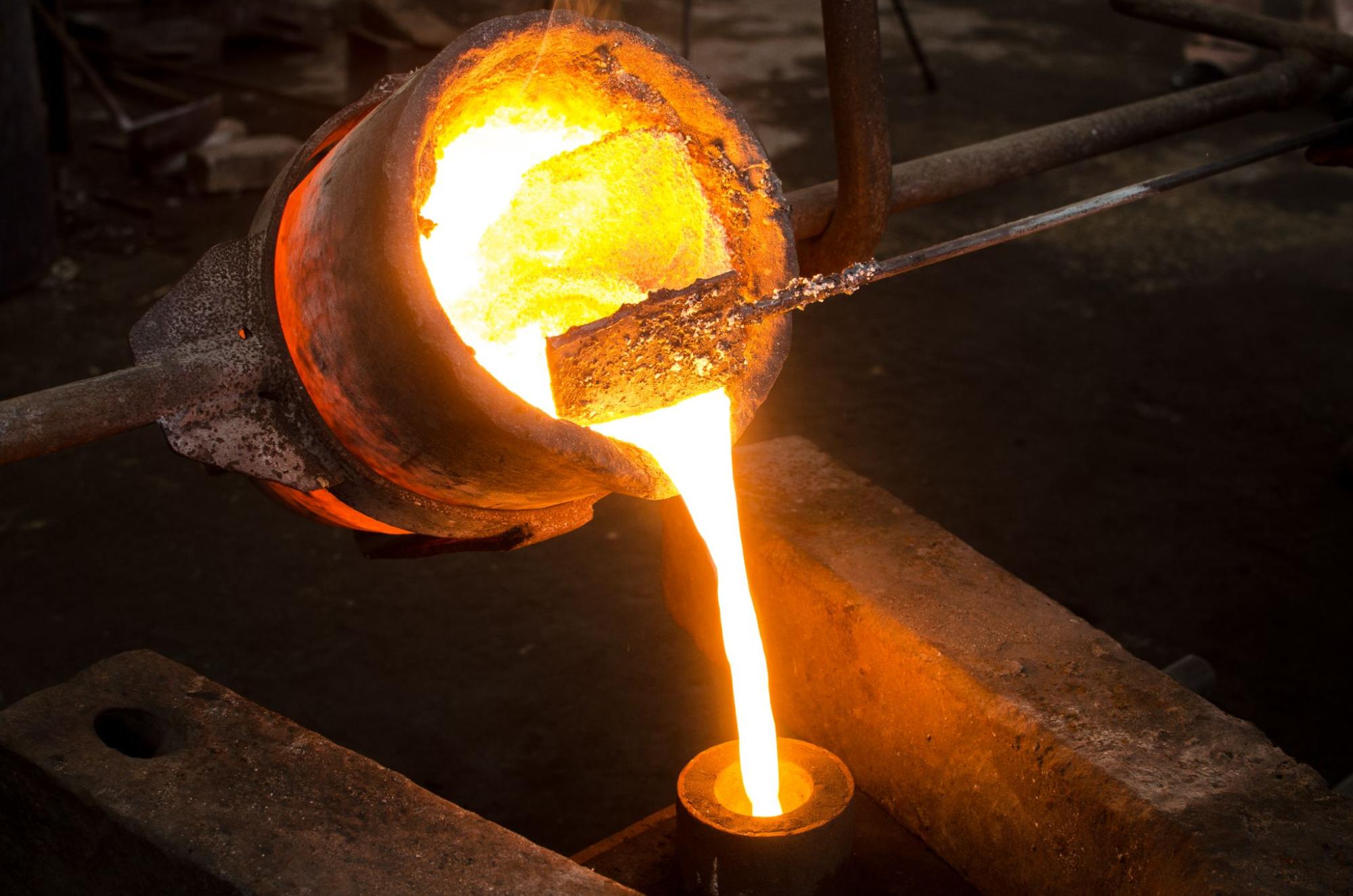
Cooling rates play a very important role in the quality, strength, and final performance of the product. The cooling phase in casting is not just about passing molten metal from a liquid to solid state but is an important step which affects the microstructure, dimensional accuracy, and mechanical properties of the casting. Understanding the effects of cooling rates and managing them appropriately can mean the difference between a flawless product and one plagued by defects.
This blog explores the effect of cooling rates on casting quality, including how they influence the final product and techniques to optimize them.
What Are Cooling Rates in Casting?
Cooling rate is defined as the rate at which molten metal loses heat and solidifies within the mold. The factors that affect cooling rates include:
- Type of Metal: Various metals have different thermal properties that influence the cooling rate.
- Mold Material: Materials such as sand and graphite insulate the metal, causing it to cool slowly, whereas metal molds dissipate heat rapidly for faster cooling.
- Casting Method: The technique used in casting, whether die casting, sand casting, or investment casting, has a different cooling rate.
- Size and Shape: Larger castings or those with thick sections cool more slowly than smaller or thinner parts.

Why Do Cooling Rates Matter?
Cooling rates significantly impact many aspects of casting quality, including:
1. Microstructure Formation
The cooling rate directly impacts the formation of the metal’s internal structure:
- Rapid Cooling: Produces fine grains, which increases strength and hardness.
- Slow Cooling: Encourages the growth of coarse grains, which may reduce strength but improve ductility.
2. Mechanical Properties
- The speed of cooling determines properties like:
- Tensile Strength: Quenching results in stronger but often more brittle materials.
- Impact Resistance: Slow cooling promotes toughness and energy absorption
3. Dimensional Integrity
Cooling rates will affect shrinkage, so the dimensional integrity of a casting may be affected by improper cooling rates. Shrinkage can cause warping or deformation and inconsistency in dimensions due to unequal shrinkage.
4. Defect Formation
Cooling rates contribute to the formation of defects such as:
- Porosity: quenching can trap gases inside the metal.
- Hot Tears: Uneven cooling and contraction may cause cracks or tears on the metal.
- Segregation: A slower cooling rate can lead to the differential distribution of alloying elements.

Control of Cooling Rate
Attaining the correct cooling rate is essential to providing good quality castings. These are the techniques used for the regulation of cooling rates:
1. Mold Design and Material Selection
Metal Molds: They facilitate fast transfer of heat for faster cooling.
Insulating Molds: Sand and ceramic molds decelerate cooling in order to prevent thermal shock.
Chills: Placing metal inserts inside the molds can increase the rate of cooling in certain sections.
2. Alloy Composition
Silicon, magnesium, and copper alloying elements can influence thermal conductivity and solidification rates. Alloys of different compositions may be chosen to obtain a given cooling condition.
3. Controlled Cooling Systems
- Forced Air Cooling: Use fans or blowers to cool castings rapidly.
- Water Jackets: Water is circulated around the mold to ensure uniform cooling.
- Heat Treatment: Post-casting thermal treatments can improve microstructures that have been damaged by non-uniform cooling.
4. Simulation Software
Advanced software is used in modern casting processes to simulate cooling rates and predict defects. This enables manufacturers to optimize the design of the mold and process parameters before actual production.

Case Studies: Cooling Rates in Various Casting Methods
1. Die Casting
Die casting uses metal molds, which allow for fast cooling. This is useful in producing strong, dimensionally accurate parts with fine grain structures. However, the high cooling rates also make die casting susceptible to porosity if gases are trapped during solidification.
2. Sand Casting
In sand casting, the slow cooling rates that occur due to the insulating nature of sand avoid thermal stress and deformation, which makes it suitable for larger and complex shapes. However, it may produce coarse grains and reduce the strength of the part.
3. Investment Casting
Investment casting balances both cooling rates and quality. The ceramic mold allows a moderate cooling rate, giving precision and smooth finishes and avoiding warping and other defects.
Challenges in Managing Cooling Rates
Controlling cooling rates presents several challenges, including:
- Uneven Cooling: Different sections of the casting may cool at varying rates, leading to internal stresses and deformation.
- Material Constraints: Some alloys are more sensitive to cooling rates, requiring precise control to avoid defects.
- Production Costs: Implementing advanced cooling systems can increase production expenses.

Solutions:
Optimize mold design for uniform cooling.
Use simulation tools to identify potential cooling issues before production.
Invest in automated systems to monitor and control cooling rates.
Why Cooling Rates Are Important to Sustainability
Optimizing cooling rates contributes more than just quality; it also impacts the environmental sustainability of casting. Efficient cooling reduces energy consumption, waste of materials, and the use of molds. This contributes to making casting processes environmentally friendly.
Why Choose Kbear Metal for Exceptional Castings?
We, at Kbear Metal, realize that the cooling rates play the most important role in order to achieve good castings. Hence, here’s why you need us for your next casting requirement:
- Advanced technology: Our latest facilities would give the precise control over the cooling rates.
- Decades of experience: We design casting methods for all types of industries.
- Customized: We design molds and the process based on the specific needs for cooling rates.
- Sustainability Commitment: Our operations are centered upon environmentally friendly practices and optimal cooling methods.
Conclusion
Cooling rates are vital factors in the metal casting process, determining the last product’s microstructure and its mechanical properties and its overall quality. It hence requires a proper understanding about the materials, methods as well as the design aspects.
Get in touch with Kbear Metal if you need high-quality and dependable castings. Precision, performance, and perfection customized according to your needs-those are what we promise from our expertise and excellence. Discuss your next casting project today.



