


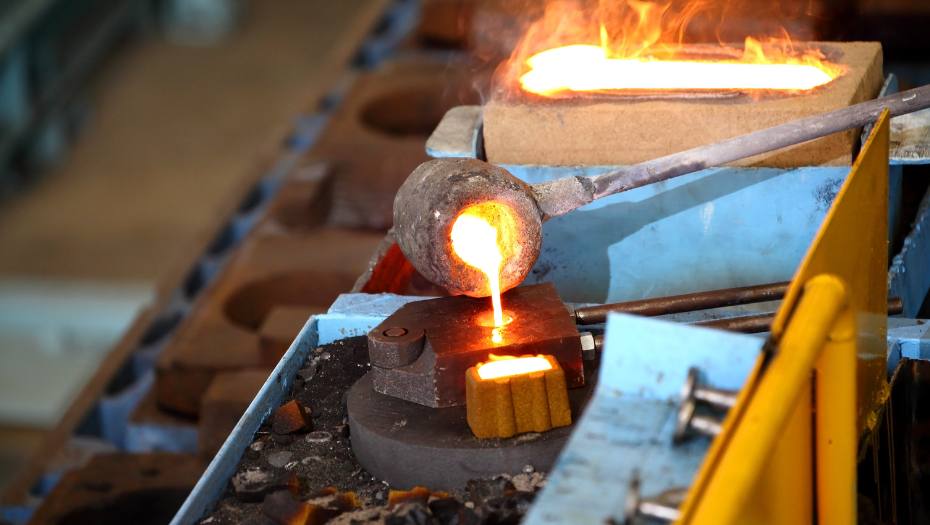
Metal casting is one of the most widely used processes across industries to make precise and durable components. Lost wax casting (also known as investment casting, precision casting, or lost wax process) is one of several metal forming methods used to manufacture individual parts or large series. So when and why should you use lost-wax casting to make your metal pieces? This blog breaks down what that process looks like, its benefits and drawbacks, and the best scenarios for using lost-wax casting that will guide your decision on whether or not it’s the right fit for what you’re working on.

What Is Lost-Wax Casting?
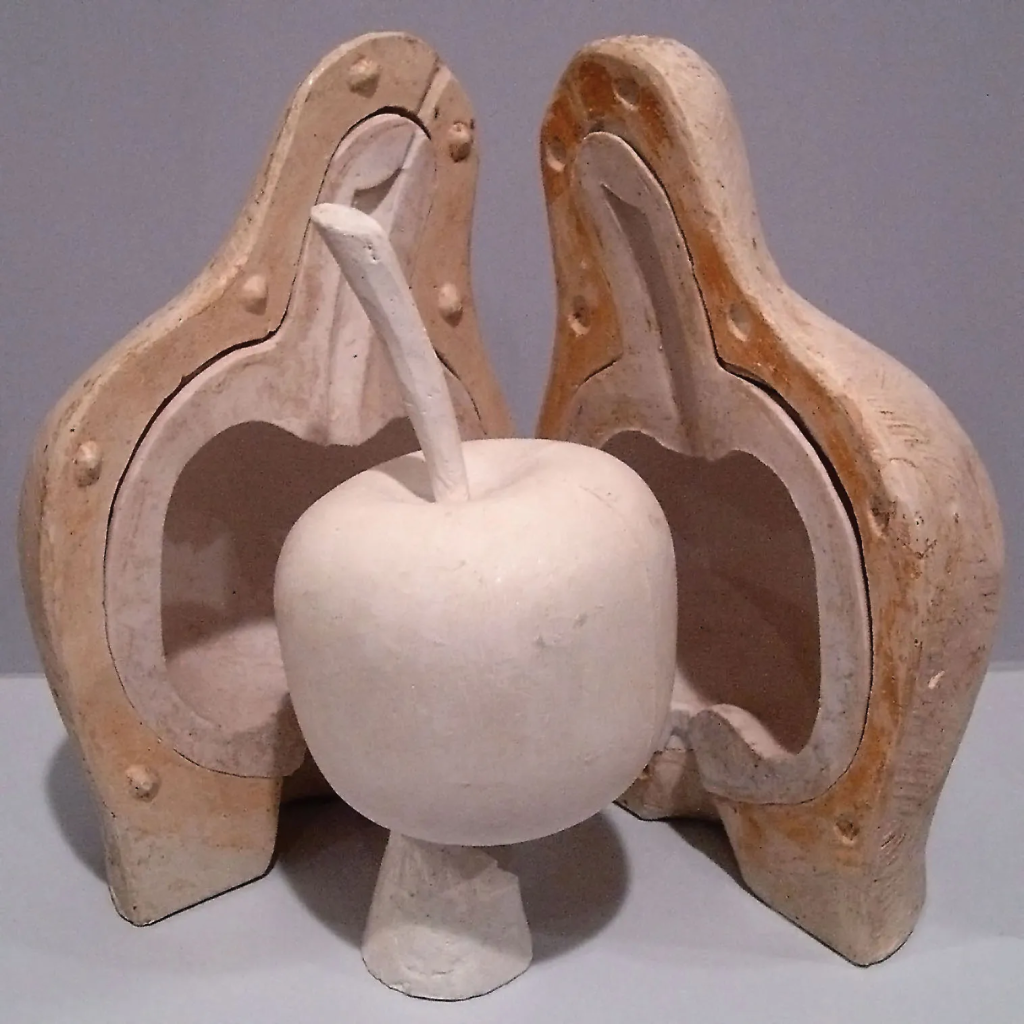
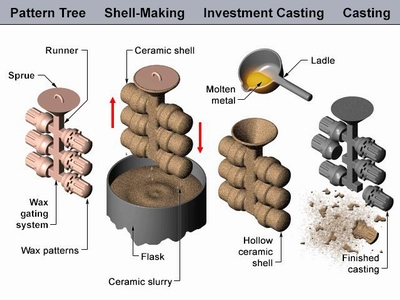
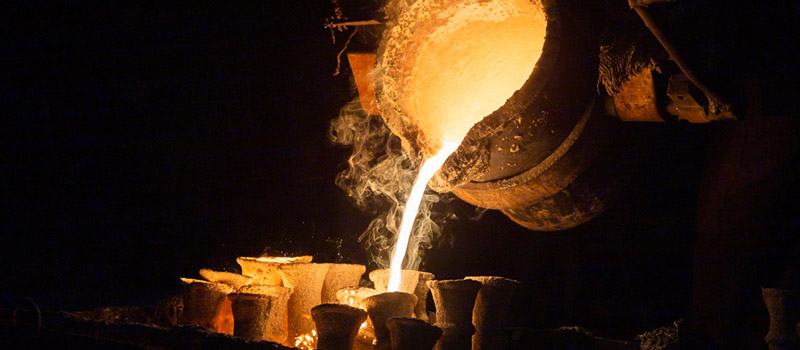
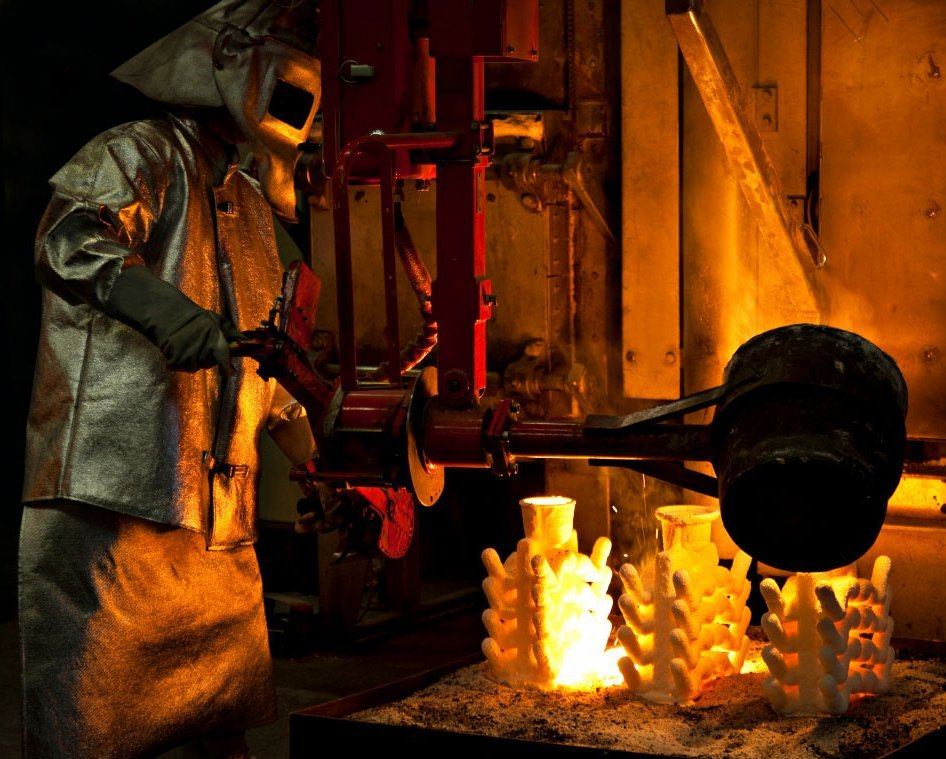
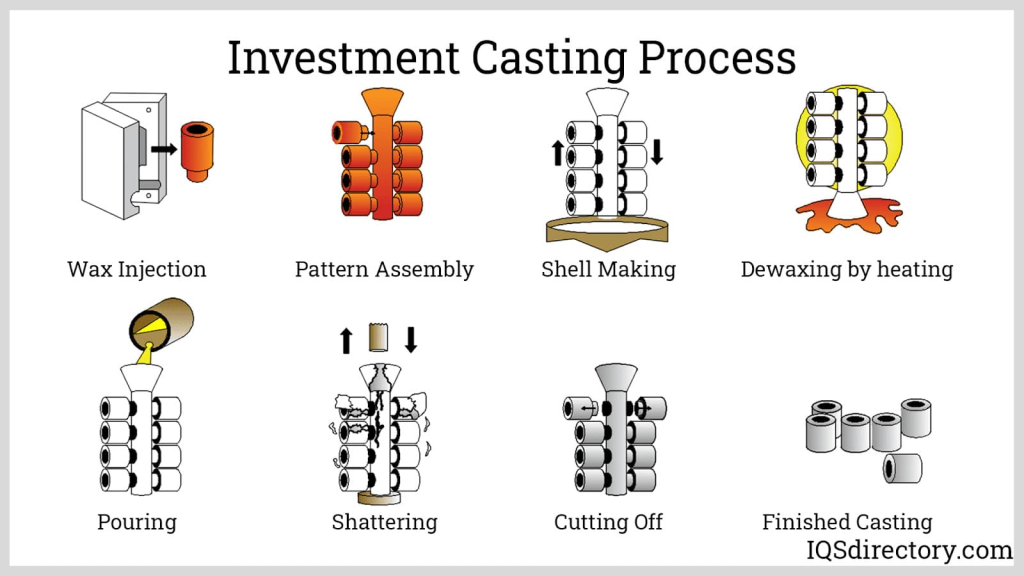
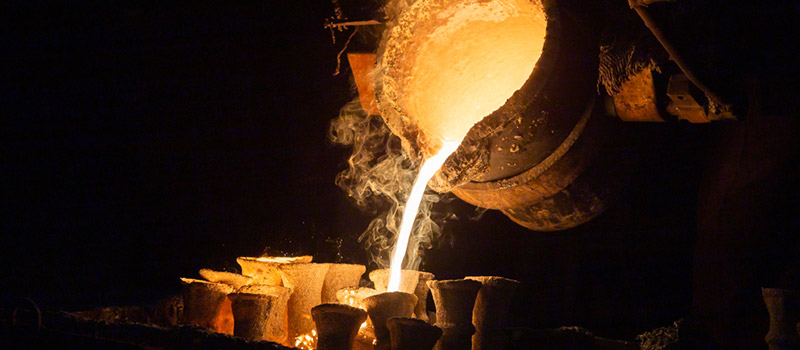
Lost-wax casting is an ancient precision casting method that has been used for thousands of years. It starts through the formation of a wax model of the needed part. A ceramic shell is then applied around that model to create a mold. Once the ceramic shell is hardened, the wax is poured out (hence “lost-wax”), molten metal is poured in to fill the formed hollow mold. After the metal has set, the ceramic shell is smashed to reveal a highly detailed metal component.
Benefits of Lost-Wax Casting
Lost-wax casting, also known as investment casting, has stood the test of time as one of the most effective and versatile manufacturing methods for producing complex metal components. Its ability to create highly detailed and precise parts makes it invaluable in industries ranging from aerospace and automotive to jewelry and medical devices. The process delivers several key benefits, including exceptional accuracy, smooth surface finishes, and the capacity to reproduce intricate geometries that would be difficult or impossible with other casting methods. Additionally, lost-wax casting minimizes machining requirements, reduces material waste, and allows for the use of a wide variety of metals and alloys. These advantages make it a go-to process for high-performance applications where quality, efficiency, and design flexibility are critical.
1.Rare Precision and Detail
Use of the lost-wax casting process enables the production of parts with very fine detail, close tolerances, and smooth surfaces. 避免材料“zit”年由其一般怜悯只适合于复杂的几何是不容易利用其他铸造方法获得。
2.Wide Material Compatibility
The process suits to a wide variety of ferrous and non-ferrous metals, including:
- Stainless steel
- Carbon steel
- Aluminum
- Bronze
- Brass
- Cobalt and nickel alloys
This adaptability makes it suitable for components that want specific material properties.
3.Near-Net Shape Production
In general, parts obtained by way of lost-wax casting need very little if any further machining, saving a great deal of time and cost in the production.
4.Strong Mechanical Properties
Due to the fine and uniform grain structure generated as a result of the investment casting process, the final components typically display improved strength, toughness, and abrasion resistance.
5.Design Freedom
Lost-wax casting bolsters complex internal geometry, thin features, and undercuts. This allows them to design with zero constraints of traditional machining limitations.
Drawbacks of Lost-Wax Casting
While lost-wax casting offers numerous advantages in terms of precision and versatility, it is not without its limitations. The process can be more time-consuming and expensive than other casting methods, especially when producing large parts or handling high-volume production runs. The intricate mold-making steps and burnout processes add complexity, requiring specialized equipment and skilled labor. Additionally, size constraints and potential issues with porosity or shrinkage in thicker sections may limit its suitability for certain applications. For manufacturers, understanding these drawbacks is essential when deciding whether lost-wax casting is the most practical and cost-effective solution for their needs.
1.Higher Costs for Large Parts
Investment casting can be costly for larger parts because of the materials used and the labor-intensive process.
2.Longer Lead Times
Production timelines can extend due to the many steps, including wax pattern creation, shell building, burnout, and finally, metal casting.
3.Not God for High-Volume Low-Complex Parts
If you plan to produce simple shapes in volume, the cost-effective solutions are die casting or sand casting.
When to Use Lost-Wax Casting
Lost-wax casting is best suited for projects where precision, complexity, and fine surface finishes are essential. This method shines when producing intricate components with delicate geometries that would be challenging or impossible to achieve with other casting techniques. It is commonly used in industries such as aerospace, automotive, jewelry, and medical devices, where accuracy and performance are critical. While it may not be the most economical choice for large-scale or simple castings, it excels in applications that demand detail, customization, and reliability. Knowing when to use lost-wax casting ensures optimal results and cost-effectiveness in manufacturing.
1.You Need Complex Geometries
For parts that have complex features such as fine holes, detailed texturing, or intricate internal channels, lost-wax casting is probably the best option. Its accuracy makes it ideal for reproducing even the most difficult designs accurately.
2.Surface Finish and Visual Quality Are Important
If your component will be visible or used in applications where surface finish is a critical matter —medical tools, jewelry, and decorative parts—lost-wax casting yields a considerably better finishing than sand-casting or die-casting.
3.The Material Performance Is Important
Lost-wax casting enables the use of high-performance alloys, which provide high mechanical properties, or corrosion resistance, or thermal stability. This is particularly valuable in aerospace, automotive, and medical sectors.
4.You Require Tight Tolerances
Lost-wax casting provides tolerance down to ±0.005 inches per inch for parts requiring dimensional accuracy. This accuracy enables a lower or no secondary machining.
5.Small to Medium Production Volume
Lost-wax casting works best for small to medium production runs, where the cost of tooling can be spread across a reasonable quantity of parts. The cost-per-part can become prohibitive at larger volumes.
Lost-Wax Casting: Industry Use Cases
Lost-wax casting, also known as investment casting, has carved out a vital role across multiple industries due to its ability to produce highly detailed and dimensionally accurate components. This process is not limited to one field—it finds widespread use in aerospace, automotive, jewelry, energy, and medical device manufacturing, among others. Its precision and versatility make it especially valuable in applications where performance, durability, and design complexity are critical. By exploring the diverse industry use cases of lost-wax casting, it becomes clear why this ancient technique continues to serve as a modern solution for advanced manufacturing needs.
Aerospace
- Turbine blades
- Structural components
- Engine parts
Investment casting offers desired performance, low weight, and dimensional control which are all requirements for aerospace components.
Medical
- Surgical tools
- Orthopedic implants
- Prosthetic components
Because of this, and the precision and biocompatibility of lost-wax casting materials, they find many applications in the medical field.
Automotive
- Engine parts
- Transmission components
- Exhaust systems
For specialized high-performance automotive parts, investment casting is used, as it produces durable parts that require precision.
Industrial Machinery
- Pumps and valves
- Gears and sprockets
- High-stress mechanical parts
Lost-wax casting provides durable, high-strength parts in demanding industrial applications.
Jewelry and Art
- Demi-fine rings, bracelets, and pendants
- Sculptures and figurines
The aesthetic quality and detail that can be achieved make this technique popular for decorative pieces.
Comparative Analysis: Other Casting Techniques
When evaluating casting methods, it is essential to compare lost-wax casting with alternative techniques such as sand casting, die casting, and permanent mold casting. Each method offers unique advantages and limitations depending on the required precision, production volume, cost, and material properties. While lost-wax casting excels in achieving fine detail and producing complex geometries, other methods may provide better efficiency for high-volume runs or lower costs for large parts. By examining how lost-wax casting measures up against these other techniques, manufacturers can make informed choices that balance accuracy, durability, and overall production efficiency.
| Feature | Lost-Wax Casting | Sand Casting | Die Casting |
| Surface Finish | Excellent | Poor to Fair | Good |
| Dimensional Accuracy | Very High | Low | High |
| Tooling Cost | Moderate | Low | High |
| Suitable Volume | Low to Medium | Low to Medium | High |
| Complexity of Design | Very High | Moderate | High |
| Material Range | Very Wide | Very Wide | Limited |
| Typical Lead Time | Long | Moderate | Short |
Is Lost-Wax Casting the Best Choice for Your Project?
- Evaluate the Part Complexity: Does your component have fine details, internal features, or undercuts?
- Assess the Surface Finish Requirement: Is a smooth, finished appearance absolutely required?
- Conduct a Materials Analysis: Is the application calling for high-performance alloys?
- Estimate Volume and Budget: Is the volume of units sufficient to justify the tooling and production costs?
Identify Performance Requirements: Is the component going to see stress, corrosion or elevated temperatures?
If your answer is yes to most of these questions, lost-wax casting may be the best way forward.
Conclusion
A manufacturing technique sits at the top, by almost any metric: lost-wax casting, which, virtually unmatched in precision, surface finish, and geometry validity, is a tremendous and flexible means of producing parts. Although it comes with greater expense and longer lead times compared to some other casting methods, it often makes up for these limitations in critical applications.
From aerospace components to medical tools to industrial machinery and high-end consumer products, lost-wax casting is a trusted method for producing quality metal parts. If your project involves high accuracy, durability, and aesthetic quality requirements, opting for lost-wax casting could potentially be the difference between high performance and high value versus the low end of the scale.
References
Davis, J. R. (Ed.). (1996). ASM Specialty Handbook: Casting. ASM International.
Groover, M. P. (2010). Fundamentals of Modern Manufacturing: Materials, Processes, and Systems. Wiley.
Beeley, P. (2001). Foundry Technology. Butterworth-Heinemann.
Totten, G. E. (2006). Handbook of Metallurgical Process Design. Marcel Dekker.
Investment Casting Institute. (n.d.). Fundamentals of Investment Casting https://www.investmentcasting.org Retrieved from
Instructor: a NADCA (North American Die Casting Association). Casting Process Comparisons. https://www.diecasting.org Retrieved on October 2023.



