


Metal support angle brackets are arguably one of the most common yet critically important components in support systems across nearly every modern industry. Simple in form—typically an L-shaped piece of metal—their function is indispensable. They are employed extensively in construction, high-end furniture fabrication, and demanding industrial applications to provide essential structural stability, reinforcement, and comprehensive support. Due to their inherent strength, reliable geometry, and exceptional versatility, angle brackets are an absolute must-have in any project where reliable and durable connections between perpendicular surfaces are required.
The effectiveness of an angle bracket lies in its ability to resist both shear forces (forces parallel to the surface) and tensile forces (pulling forces away from the joint), transforming a weak, two-dimensional connection into a robust, three-dimensional anchor. This comprehensive exploration will delve into the profound importance, diverse types, numerous advantages, and wide-ranging uses of angle brackets, confirming their central role in contemporary engineering and construction practices.
1. Metal Support System Angle Brackets and Their Significance
The fundamental significance of angle brackets is derived from their dual capability: to reinforce existing structures and to facilitate new, load-bearing connections.
a. Structural Integrity and Reinforcement
Angle brackets are not merely fasteners; they are structural components engineered to manage and mitigate stress:
- Weight Distribution: Their fixed, 90-degree geometry is crucial for distributing weight evenly across a joint, effectively preventing concentrated stress points that could lead to structural failure, particularly in applications like shelving or framework where loads can be asymmetrical.
- Targeted Support: They provide essential, localized support and rigidity for critical connection points in various structures, including beams, horizontal ledges, and frame corners. This targeted reinforcement ensures that the overall structure maintains its intended shape and load-bearing capacity even under dynamic or heavy static loads.
b. Flexibility in Use Cases
The simplicity of the angle bracket allows for its deployment across an incredibly broad spectrum of applications, making it a universal tool for connection:
- Industry Agnostic: Angle brackets are essential for diverse types of industries, serving as standard reinforcement in commercial construction (securing roof trusses and wall studs), specialized connectors in high-tolerance automotive assembly, and discreet yet strong joints in furniture manufacturing.
- Project Versatility: They are equally indispensable for small-scale projects—forming the basis of DIY workbenches and simple shelving—as they are for large, complex endeavors like commercial building support systems and heavy industrial infrastructure, where they secure machinery to foundations.
c. Durability and Load Bearing Capacity
The lifespan and performance of an angle bracket are determined by the quality of its material and finish:
- Robust Construction Materials: The best angle brackets are constructed of high-grade, durable materials, most commonly stainless steel (for corrosion resistance and strength), aluminum (for a high strength-to-weight ratio and general corrosion resistance), and carbon steel (for sheer strength and cost-effectiveness).
- Environmental Resistance: Through galvanization, powder coating, or specialized finishes, these materials are made highly resistant to harsh weather conditions, chemical corrosion, and intense mechanical stress, ensuring the connection remains sound over the entire service life of the structure.

2. Types of Angle Brackets
Angle brackets have evolved beyond the simple L-shape, diversifying into several key types, each optimized for specific functional or aesthetic requirements.
a. Standard L-Brackets (or Corner Braces)
- Primary Function: These are the archetypal angle brackets, generally used for simple, direct structural support where two perpendicular surfaces meet. They provide necessary triangulation and stability to a 90-degree corner.
- Ideal Application: They are excellent for quickly and reliably securing two perpendicular components together, such as reinforcing a table leg joint or joining two pieces of wood in a simple frame structure.
b. Heavy-Duty Angle Brackets
- Enhanced Capacity: These brackets are constructed from significantly thicker gauge metal and often feature a gusset—a triangular piece of material added at the junction—to enhance rigidity and load distribution. They are rated for exceptionally heavy loads.
- Design Characteristics: They utilize tougher metal alloys and typically incorporate more mounting points (pre-drilled holes) to allow for greater distribution of the load across multiple fasteners and into the connected materials, making them suitable for industrial shelving and structural timber connections.
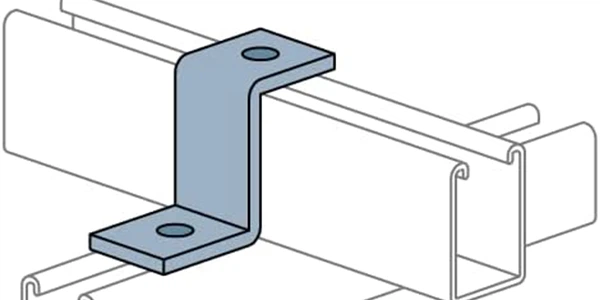
c. Adjustable and Slotted Angle Brackets
- Flexible Orientation: These brackets feature slots instead of standard circular holes, enabling adjustable mounting orientations and minor post-installation positional adjustments. This is crucial when mounting to non-square structures or when precise alignment is challenging.
- Customizable Use: They are highly suitable for user-customizable installations, temporary structures, or dynamic applications like shelving systems that may need height adjustments or custom configurations over time.
d. Decorative and Specialty Angle Brackets
- Aesthetic Focus: While retaining structural function, these brackets are primarily designed to enhance the aesthetic appeal of furniture, cabinetry, or architectural designs. They are often visible components, integrated into the design motif.
- Finishes and Form: They come in a wide variety of finishes, including highly polished brass, matte black oxide, chrome plating, or even intricate scrollwork. These are favored in high-end furniture and restoration projects where the hardware must contribute to the overall luxury look.
3. Advantages of Utilizing Angle Brackets
The adoption of angle brackets provides operational, financial, and safety advantages that streamline both manufacturing and construction processes.
a. Easy Installation and Versatility
The design of angle brackets is optimized for speed and simplicity:
- Simplified Mounting: Most brackets are designed for easy installation with pre-drilled holes, requiring only basic tools and standard fasteners. This dramatically reduces the time and skill required for assembly.
- Fastener Compatibility: They are universally compatible with a wide variety of fasteners, including wood screws, machine bolts, anchor bolts, and specialized weld threads. This adaptability ensures they can be securely affixed to metal, wood, concrete, or composite materials.
b. Cost-Effective Structural Solution
Angle brackets offer a powerful return on investment by simplifying complex processes:
- Fabrication Alternatives: They offer dependable structural support without requiring complicated, expensive, or time-consuming welding, specialized bending, or extensive on-site fabrication.
- Labor Savings: By allowing less skilled labor to quickly and accurately create strong joints, they lower labor costs in both on-site construction and in-factory manufacturing and assembly processes.
c. Improved Safety and Stability
The rigid reinforcement provided by angle brackets is a direct contributor to the safety of structures:
- Reinforcement Against Stress: They fundamentally reinforce structures against lateral movement, twisting, or catastrophic failure under load. They stabilize joints, transforming structures that might otherwise rack or wobble into solid, immovable frames.
- Critical in High-Stress Use-Cases: They are critically important in infrastructure designed to be quake-resistant, as they connect structural components in a way that allows for limited movement while maintaining integrity, or in installations subject to high vibrational stress, such as machinery mounting.
d. Space Optimization and Modular Design
Angle brackets are essential tools for modern, efficient design:
- Rational Use of Space: They allow for the quick, secure, and customizable construction of internal storage and shelving systems, enabling the rational and efficient use of vertical and horizontal space in commercial and industrial settings.
- Modular Applications: They are ideal for creating modular and space-saving designs in furniture and industrial applications, as they permit components to be securely attached and detached with relative ease, facilitating transportation and reconfiguration.
4. Use Cases of Angle Brackets in Different Sectors
The ubiquitous nature of the angle bracket is best illustrated by its essential functions across various high-value industries.
a. Construction and Engineering
Angle brackets are standard stock items in nearly every construction project:
- Structural Connections: They are used to strengthen critical joints in structural timber frames, connect non-load-bearing walls, and secure light-duty support beams and purlins.
- Finishing and Foundations: They are crucial in framing drywall, installing windows and doors, and securing base plates to foundation supports, ensuring that all components are squared and immovably fixed.
b. Furniture Manufacturing and Joinery
In furniture, the angle bracket provides strength without bulk:
- Component Fortification: They fortify the internal joints of high-stress furniture items like tables, chairs, cupboards, and especially bed frames, where they are essential for resisting the shear forces of daily use.
- Assembly and Modules: They are commonly used for knock-down or modular furniture assembly, where they provide a simple, repeatable, and strong connection that allows the user to assemble the piece while guaranteeing structural integrity.
c. Automotive and Machinery
Angle brackets are crucial for holding high-vibration and heavy components:
- Component Holding: They are used to rigidly hold heavy, secondary parts in vehicle and industrial machine assembly, such as securing control panels, bracketry for fluid lines, or mounting components within an engine bay.
- Vibration Isolation: When combined with dampening materials, their rigidity helps insulate and stabilize mechanical systems against vibrations, preventing component fatigue and loosening of connections on moving mechanical systems.
d. DIY and Home Improvement Projects
For the consumer, angle brackets represent accessible, professional-grade reliability:
- Home Assembly: They have wide application in the construction of simple shelving units, robust workbenches, and various home renovation tasks, providing a professional level of structural integrity to amateur builds.
- Overhead Support: They offer dependable support for wall-mounted or overhead installations, such as securing cabinets, mounting large electronics, or installing curtain rods with confidence.
Conclusion
The metal bracing system is fundamentally reliant on the humble yet powerful angle bracket. In its simplest form, the angle bracket provides an unmatched combination of strength, simplicity, and enduring stability. Whether utilized in heavy-duty construction, precision furniture fabrication, complex industrial machinery, or straightforward DIY projects, these brackets are the foundational elements that ensure dependable structural integrity across countless applications.
The evolution of the angle bracket has seen advancements in material science—leading to tougher, lighter alloys and superior anti-corrosion finishes—and design, incorporating features like slots and gussets for specialized needs. As modern engineering continues to prioritize modularity, efficiency, and resilience against environmental stresses, the angle bracket, with its robust and uncomplicated geometry, remains an extensive and indispensable fixture in all modern support systems, cementing its role as the unsung hero of connected structures.
References
- [Bossard] Bossard Group. What is an Angle Bracket? [Online]. Available at: https://www.bossard.com/ch/en/knowledge/fasteners/what-is-an-angle-bracket/
- [BTM Manufacturing] BTM Manufacturing. Metal Angle Brackets: Types, Materials, & Uses. [Online]. Available at: https://www.btm-mfg.com/blog/metal-angle-brackets-types-materials-uses
- [Pro Weld] Pro Weld, Inc. Types of Angle Brackets in Construction. [Online]. Available at: https://proweldinc.com/types-of-angle-brackets-in-construction/
- [Sure-Lok] Sure-Lok, Inc. Guide to Metal Angle Brackets: Materials, Types, and Applications. [Online]. Available at: https://sure-lok.com/blog/metal-angle-brackets-guide/



