


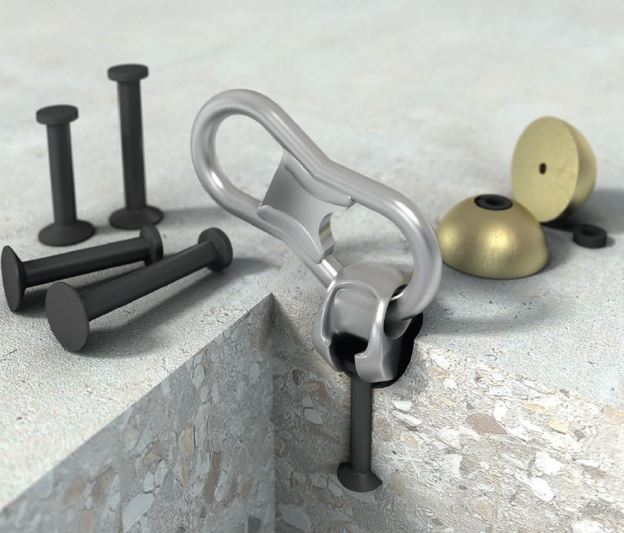
Concrete and lifting anchors are two essential anchor types used in construction and heavy lifting applications. Although both perform the task of holding things down, they differ basically in their purpose and design. Differences between the two relate to safety and effectiveness in a given project.

Concrete: Overview
Concrete anchors are attachment systems utilized for attaching an object or a structure to concrete. They are typically applied in any construction, infrastructure works, and renovation projects.
Key Features:
- Primary: Drives static loads, for example, connecting beams, railings or machinery to concrete.
- Types of Anchors: Wedge anchors, sleeve anchors, drop-in anchors and chemical anchors. These are designed with particular loads and applications.
- Design: Normally cylindrical with a mechanism that grips the concrete, thus providing a firm hold
- Load Capacity: Focus is on bearing pull-out force, shear forces, and, more generally, within the limits of static loads.
Applications:
- Mounting handrails and light fixtures or machinery.
- Wall or floor anchoring of structural elements.
- Shelving or bracket installation.

Lifting Anchors: An Introduction
Lifting anchors are special fasteners used to simplify the safe lifting and manipulation of precast concrete members such as beams, panels, and slabs.
Key Features:
- Lifters Purpose: Engineered to withstand dynamic loads and stress while making a lift, transportation, and placing the precast members.
- Types: Spherical head lifters, lifting loop lifters, flat lifters, or bespoke designs for specific requirements.
- Design: Reinforced construction with steel or alloy for heavy-duty purposes to provide stability.
- Load Capacity: Supports significant loads and dynamic forces.
Applications:
- Lifting and relocating precast concrete elements.
- Temporary handling of constructional elements.
- Safety of crane and rigging operations.

Key Differences
| Feature | Concrete Anchors | Lifting Anchors |
| Primary Purpose | Securing objects to concrete. | Lifting and handling precast concrete elements. |
| Load Type | Static loads (shear and pull-out). | Dynamic and heavy loads. |
| Design | Cylindrical with gripping mechanisms. | Robust with reinforced construction. |
| Applications | Permanent installations like handrails or beams. | Temporary use in lifting and transportation. |
| Safety Features | Focused on anchoring securely. | Engineered for stability under heavy stress. |
Both anchors are crucial in their positions, and the correct choice ensures safety, efficiency, and successful project realization. Always consult with experts or follow engineering specifications to determine the proper anchor for the intended application.
Installation Best Practices: Concrete Anchors vs. Lifting Anchors
Proper installation is essential for both concrete and lifting anchors to function and act safely. Concrete anchors comprise the proper selection of anchor type, accurate drilling into the right holes in the concrete, and an anchoring process through mechanical expansion, adhesive bonding, or threading. A proper grip will depend on accurate hole depth, alignment, and torque application.
Installation for lifting anchors begins on-site in the precast phase. Anchors are cast in place at their final position in fresh concrete with specialized recess formers or supports, which ensure proper alignment. Proper placement is important so that loads are evenly distributed and stability during lifting operations is maintained. Each of these processes involves sticking to safety guidelines such as the correct use of tools, good inspections, and load testing where it’s applicable to ensure reliability and efficiency.
Common Mistakes to Avoid When Using Concrete and Lifting Anchors
When anchors are involved in the construction or lifting operation, then utmost accuracy and stringency become a must. Concrete anchors for permanent installation or lifting anchors for temporary transport- considering the possible pitfalls is worthwhile enough to ensure safety, performance, and how long your project will last. Here are some of the most common mistakes to avoid:
- Wrong Anchor Selection: Poor selection of the wrong type of anchors for the job; static versus dynamic loads can be a weak point. Ensure that you choose an anchor that can handle the loads required and the type of application.
- Incorrect Anchoring: Failure to put anchors right, including hole depth or misaligned anchors, weakens the anchor. Observe correct installation procedures.
- Overloads for Anchors: Overloading anchors beyond their rated capacity readily puts them to failure, especially in lifting operations. Stay within the design load.
- Lack of Load Testing: Overlooked anchors are not tested and become unsafe anchors. Always test load strength.
- Forgetting Conditions: Moisture or higher temperatures may affect the anchor’s performance. Always use anchors designed for environments where anchors will be used.
- Not Following Guidelines: Failure to follow manufacturer guidelines will cause poor installation of anchors. Be sure to follow a procedure recommended by manufacturers.
- Not Planning for Future Needs: The inability to predict changes in a future project, like moving from temporary anchors to permanent ones, may cause project delays or increased costs.

Where to Buy Concrete and Lifting Anchors?
Kbear Metal is the trusted supplier in the industry for quality concrete and lifting anchors. We have reliable kinds of anchors that meet various construction and manufacturing projects’ needs. For permanent installations, durable concrete anchors are needed, while sound lifting anchors are required to ensure the safe and efficient handling of precast concrete elements.
At Kbear Metal, quality, safety, and customer satisfaction come first. Our products are designed to withstand the challenging conditions that will ensure performance and reliability over the long haul. With helpful expert guidance and competitive pricing, we simplify the task of finding just the right anchor for your project. When selecting where to get your concrete and lifting anchors, turn to Kbear Metal for products that deliver exceptional value and peace of mind.
Why Choose Us?
Guaranteed On-Time Delivery: We guarantee that your order will arrive precisely when you need it, thanks to a streamlined supply chain, which will prevent delays in your project.
Extensive Quality Control: To guarantee that every product satisfies industry standards, it is put through a rigorous quality examination prior to shipment.
Total Transparency: We provide comprehensive quality inspection reports and real-time shipment images for each order, keeping you updated at every stage.
One-on-One Customer Service: At our organization, we offer you individualized customer care. You can rely on us to respond to your quote request within eight hours.
Conclusion
Choosing the right anchors is crucial for the success and safety of any construction or lifting project. Whether you require concrete anchors for permanent, secure installations or lifting anchors for temporary handling of precast elements, understanding their differences ensures you select the most suitable solution. At Kbear Metal, we provide high-quality anchors designed to meet your project’s unique needs, backed by our commitment to safety, durability, and expert support. Trust Kbear Metal to deliver reliable products that help you achieve your goals with confidence and precision.



