


Sand casting, the oldest known metal forming technique, spans thousands of years and has endured that long for a reason. Even with the advent of more technologically superior casting techniques such as investment casting and die casting, sand casting is still commonplace in today’s manufacturing. This process is still a reliable and adaptable method for manufacturing metal components, particularly in those industries that emphasize adaptability, cost effectiveness, and scalability.
In this blog, we shall explore why sand casting continues to be a dependable and preferred option in modern manufacturing. We will examine its benefits, real-life applications, material compatibility, and how it continues to adapt to modern industry needs.
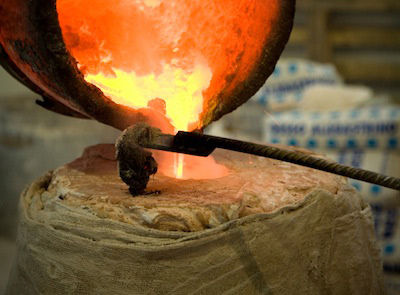
What Is Sand Casting?
Sand casting involves creating a mold out of sand, into which molten metal is poured to form a part. The mold is formed by packing sand around a pattern of the desired shape. Once the pattern is removed, a cavity remains, which is filled with liquid metal. After cooling and solidification, the mold is broken away, revealing the cast part.
This process, also referred to as sand mold casting, is widely used because of its simplicity, cost-effectiveness, and ability to accommodate both small and large components. It is especially preferred for its flexibility in handling different shapes, sizes, and complex geometries, making it one of the most versatile casting methods in manufacturing.
This is also referred to as sand mold casting and is preferred for its ease and flexibility for accommodating different shapes and sizes.
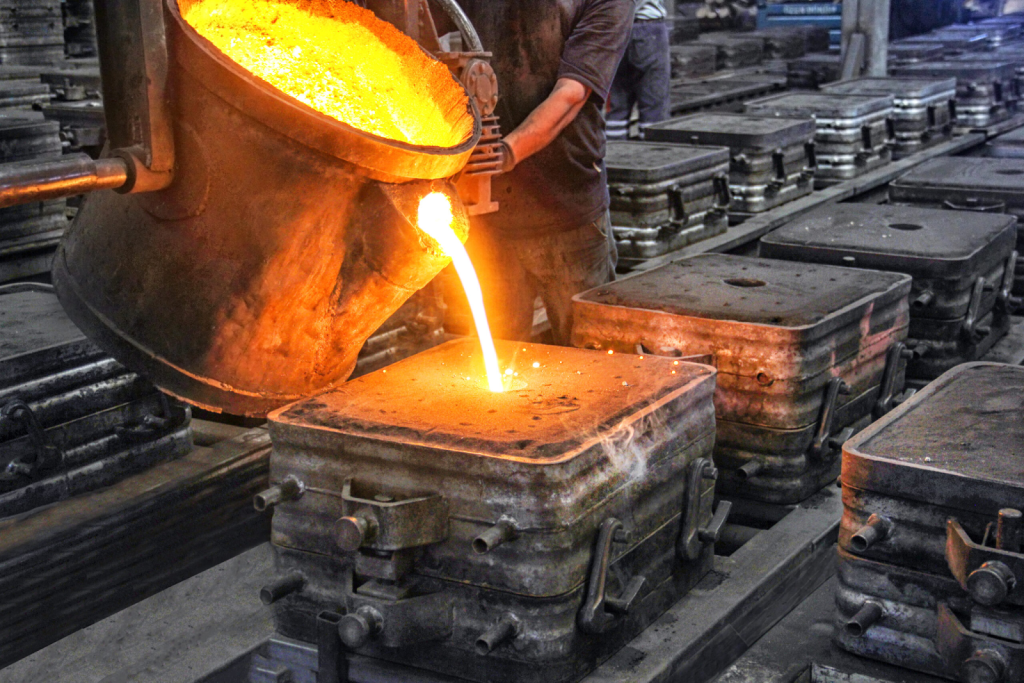
Benefits of Sand Casting
Sand casting has remained one of the most widely used metal casting methods for centuries due to its adaptability and practicality. Its ability to produce parts of various sizes, from small intricate components to massive industrial machinery parts, makes it invaluable across industries. Beyond its flexibility, sand casting is relatively low in cost compared to other casting methods, while still delivering reliable strength and durability. This process also allows manufacturers to work with a wide variety of metals and alloys, offering design freedom and material versatility. Overall, sand casting provides a balance of efficiency, affordability, and performance that makes it a preferred choice in modern manufacturing.
1. Economical Production
One of the greatest benefits of sand casting is that it has a low cost of production. The main mold material is sand, and it is very cheap and easily available. Tooling and equipment expenses are also relatively low in comparison with techniques such as die casting or investment casting.
2. Versatile Design Options
Sand casting is able to handle intricate geometries and large parts that may be hard or costly to cast using other casting processes. The mold design flexibility enables manufacturers to cast parts with complex inner cavities, undercuts, and non-uniform wall thicknesses.
3. Broad Range of Metals
This process is suitable for nearly any metal alloy, both ferrous and non-ferrous like:
- Gray iron
- Ductile iron
- Aluminum
- Brass
- Bronze
- Steel
This widespread material compatibility renders sand casting appropriate for many industries and uses.
4. Large Component Scalability
Sand casting is especially appropriate for manufacturing large metal pieces like engine blocks, structural components, and industrial machinery cases. The size of the mold is only determined by the size of the foundry, so it is perfect for heavy-duty and large components.
5. Low-Volume Production Compatibility
While some casting methods are only cost-effective at high volumes, sand casting is well-suited for both low and medium-volume production. This makes it a good option for custom parts, prototypes, and specialty manufacturing.
6. Quick Turnaround Time
The relatively simple mold-making process allows for faster prototyping and production cycles compared to other precision casting methods.
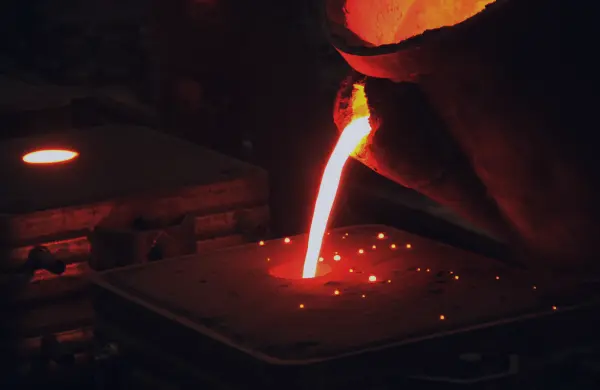
Sand Casting in Modern Applications
Old as it is, sand casting is not obsolete. It is still a fundamental component of contemporary manufacturing across many industries.
Although sand casting is one of the oldest known metalworking processes, it continues to play a vital role in modern manufacturing. Today, industries such as automotive, aerospace, energy, construction, and heavy machinery rely on sand casting to produce both standard and specialized components. Its ability to handle large-scale production as well as custom, low-volume orders makes it highly adaptable to today’s diverse manufacturing needs.
Modern advancements, such as improved sand binders, precision molding techniques, and computer-aided design (CAD), have significantly increased the accuracy, surface finish, and repeatability of sand-cast parts. This balance of tradition and innovation ensures that sand casting remains a cost-effective and versatile solution for producing complex, durable, and high-performance components across a wide range of applications.
Automotive
Sand casting is commonplace for the production of engine blocks, cylinder heads, manifolds, and other engine components because of the capability to cast with complicated geometries and high-performance materials.
Aerospace
Although more sophisticated techniques are generally applied to high-accuracy parts, sand casting is utilized in large, less-critical aerospace components.
Construction
Structural components, brackets, supports, and ornamental architectural details are typically manufactured with sand casting.
Oil & Gas
Heavy-duty valves like valve bodies, pump housing, and flanges are often manufactured through sand casting for its strength and durability.
Agricultural and Heavy Equipment
Sand casting is utilized to manufacture gears, pulleys, and frames for tractors, combines, and other heavy equipment.

Modern Innovations in Sand Casting
While sand casting has ancient origins, modern technology has transformed it into a highly precise and efficient manufacturing process. One of the biggest innovations is the integration of computer-aided design (CAD) and computer-aided manufacturing (CAM), which allows engineers to create highly detailed patterns and simulate mold filling before production even begins. This reduces trial-and-error and ensures greater accuracy.
Though the fundamental rules of sand casting remain unchanged, the process has advanced through technology improvement. The upgrades have enhanced quality, efficiency, and uniformity.
Computer-Aided Design (CAD)
Computer-aided design (CAD) software makes it possible to accurately design a pattern and simulate it, and engineers can predict metal flow, cooling rate, and defects even before manufacturing.
Additive Manufacturing (3D Printing)
3D printing is currently employed to print patterns or molds directly, decreasing lead times and enabling quick prototyping and intricate designs.
Enhanced Sand Quality and Binders
Advancements in higher-quality sand and stronger binders have enhanced mold strength and surface finish, minimizing the necessity for secondary machining.
Automation and Robotics
Automation is currently employed by modern foundries to improve repeatability, decrease labor costs, and speed up production.
Sand Casting Challenges
Although it has numerous advantages, sand casting does have some disadvantages:
- Surface Finish: Sand casting generally produces a coarser surface finish than die casting or investment casting.
- Tolerances: Dimensional tolerance is typically less, necessitating further machining for accurate parts.
- Labor-Intensive: Conventional sand casting can be labor-intensive, although automation is minimizing this.
But continuous development is slowly alleviating these drawbacks, further establishing sand casting’s place in contemporary manufacturing.
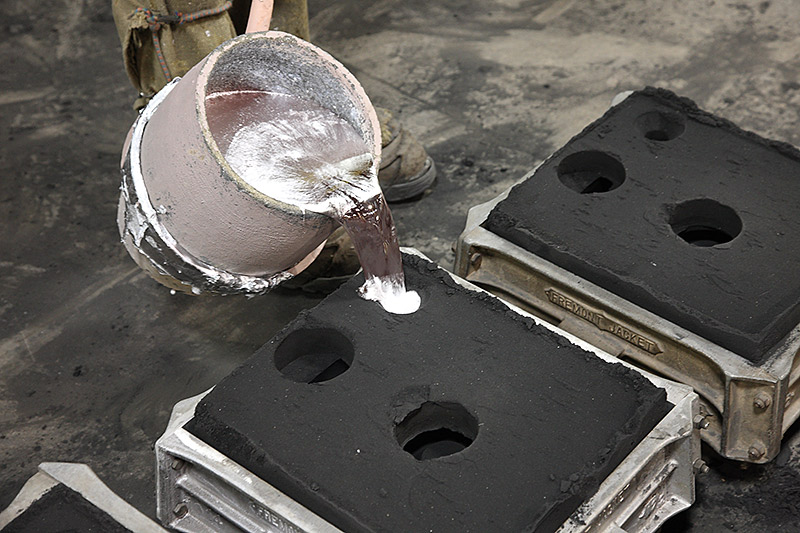
When to Use Sand Casting
Sand casting is one of the most adaptable and widely used casting methods, but it truly excels under specific conditions. Knowing when to choose sand casting helps manufacturers balance cost, efficiency, and performance. This process is particularly valuable when flexibility in size, material choice, and design complexity is required, making it a go-to option across multiple industries.
Sand casting is ideal when:
- You require large or heavy parts
- Your volume production is low to medium
- The part calls for a wide range of metal types
- Complex geometries or internal features are present
- Budget is an issue
It is a very good choice for prototyping, custom production, and situations where surface finish and extreme accuracy are not the highest concerns.
Conclusion
Sand casting is still a mainstay of metal production because of its versatility, affordability, and capacity to accommodate a variety of sizes and materials. It remains a highly valuable process in industries that require strength, flexibility, and reliability.
Although it might not always provide the greatest precision or finish in comparison to more modern methods, its benefits in scalability, customization, and material flexibility guarantee that sand casting will continue to be a reliable and vital manufacturing process far into the future. For most applications, particularly those involving large or intricate parts, sand casting remains the first choice.
Through the use of contemporary technologies such as CAD and 3D printing, this old process has been reworked to suit the demands of today’s fast production environment. Sand casting is testament to the fact that sometimes the oldest ways really are the best.
At Kbear Metal, we specialize in providing high-quality casting solutions, including sand casting, tailored to meet the diverse needs of industries worldwide. With our expertise, advanced processes, and commitment to excellence, we deliver durable and reliable components that enhance performance and reduce costs. Whether you need standard parts or fully customized casting solutions, Kbear Metal is your trusted partner in manufacturing innovation. With advanced facilities, skilled engineers, and a dedication to quality, Kbear Metal stands as a trusted partner in helping businesses secure reliable and cost-effective casting solutions. When it comes to durability, precision, and performance, you can count on Kbear Metal to cast your success.
References
Davis, J.R. (Ed.). (1996). ASM Specialty Handbook: Cast Irons. ASM International.
Heine, R.W., Loper, C.R., & Rosenthal, P.C. (1967). Principles of Metal Casting. McGraw-Hill.
Beeley, P. (2001). Foundry Technology (2nd ed.). Butterworth-Heinemann.
American Foundry Society. (n.d.). afsinc.org
Kalpakjian, S., & Schmid, S. (2013). Manufacturing Engineering and Technology (7th ed.). Pearson.



