


In the cutthroat manufacturing world, businesses are always on the lookout for how they can improve product performance, cut production costs, and achieve high quality and reliability. Custom casting is one good method of doing this. By adapting the casting process to the unique needs of a product or part, manufacturers can maximize design, material efficiency, structural strength, and functionality in general. In this comprehensive blog, we will explore how custom casting contributes to improved product performance and operational efficiency across industries.
Understanding Custom Casting
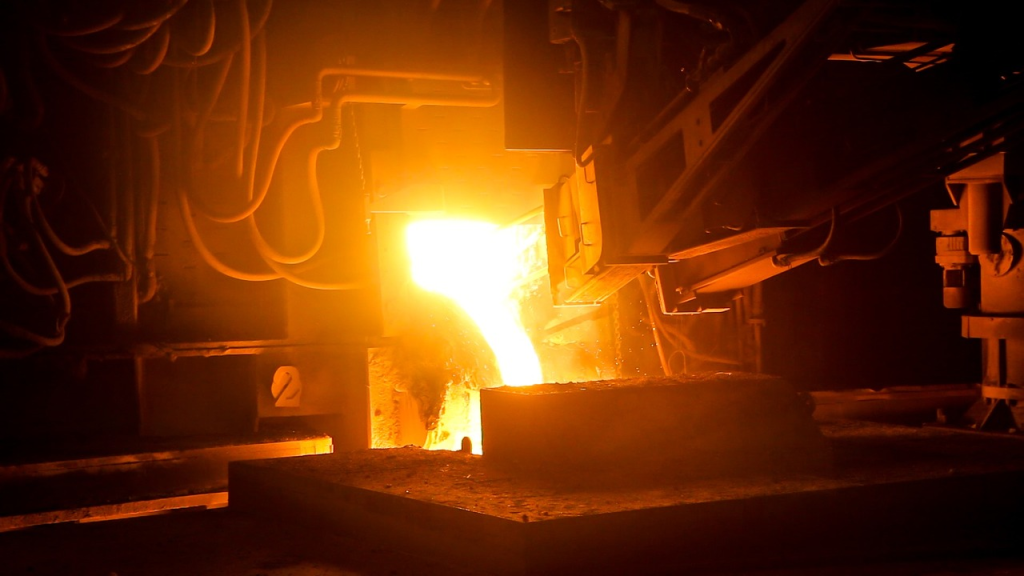
Custom casting is the process of designing and producing metal components that meet unique specifications rather than using standardized, off-the-shelf parts. It involves the careful selection of materials, casting methods, and mold designs to ensure the final component precisely aligns with the application’s performance demands.This approach allows manufacturers to create specialized parts that are stronger, more durable, and tailored for critical applications. Custom casting is particularly valuable in industries such as construction, automotive, aerospace, and heavy machinery, where precision and reliability are essential. By offering flexibility in design and performance, custom casting supports innovation and long-term cost efficiency.
One of the key advantages of custom casting is the ability to create parts that perform well under specific conditions, such as extreme heat, heavy loads, or corrosive environments. Industries like automotive, aerospace, construction, energy, and heavy machinery frequently depend on these specialized components to achieve superior performance and reliability. For example, aerospace companies may require lightweight yet strong parts, while construction equipment needs robust castings that can withstand continuous stress.
Moreover, custom casting provides greater design flexibility. Engineers can incorporate intricate shapes, specialized alloys, and unique surface finishes that would not be possible with conventional manufacturing. While it may involve higher upfront costs, the long-term benefits include improved efficiency, reduced maintenance, and extended lifespan of the equipment. Ultimately, custom casting supports innovation, ensures safety, and offers a cost-effective solution for industries with demanding standards.
Custom casting methods include:
- Sand Casting
- Investment (Lost-Wax) Casting
- Die Casting
- Permanent Mold Casting
- Centrifugal Casting
All these techniques support flexibility of form, material, and production in volume, hence suitable for manufacturing industries including the automotive, aerospace, marine, energy, and industrial machine industries.
1. Increased Design Flexibility
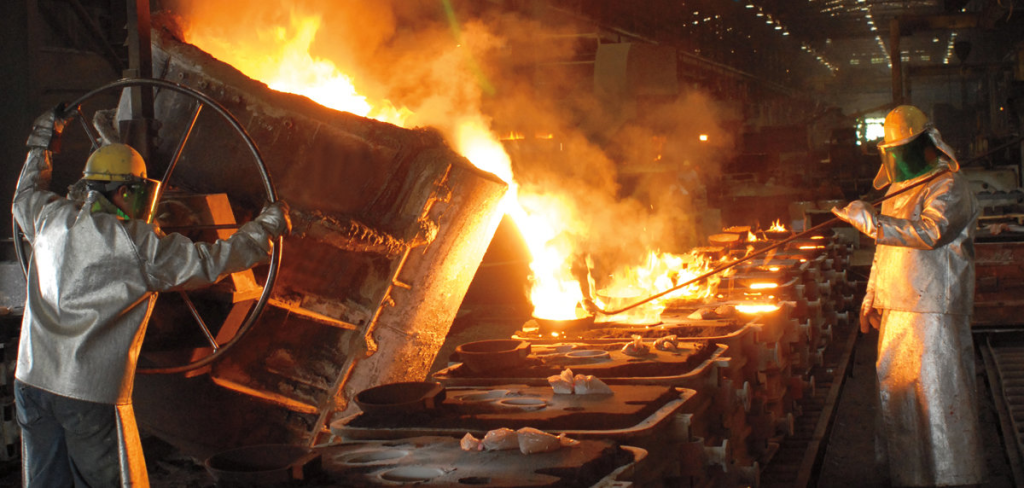
Custom casting allows for the production of intricate shapes and geometries impossible or challenging to obtain with machining or fabrication. Engineers are able to design components with internal cavities, thin-walled parts, and consolidated components with less assembly time and possible weak points.
This includes the ability to design internal cavities, thin-walled sections, and geometries that would otherwise be impossible—or extremely costly—to achieve through subtractive processes.
With custom casting, multiple parts can often be consolidated into a single, seamless component. This reduces assembly time, minimizes the risk of weak points at joints or welds, and improves overall product strength and performance. For industries such as automotive, aerospace, or industrial machinery, this flexibility not only enhances efficiency but also allows for innovative designs that optimize weight, functionality, and durability. In short, custom casting empowers engineers to turn ambitious design concepts into practical, high-performing components without the limitations of conventional methods.
Advantages:
- Removal of welds and fasteners
- Incorporated features like ribs, bosses, and cores
- Parts count reduction through consolidation of assemblies into one casting
By being designed exactly to functional specifications, parts can be lighter and stronger, enhancing overall performance.
2. Optimized Material Usage
Custom casting enables manufacturers to select the most appropriate materials for particular environments and mechanical requirements. Typical casting materials are aluminum, steel, bronze, ductile iron, and stainless steel, each with distinct properties.
Advantages:
- Enhanced strength-to-weight ratios
- Corrosion, wear, or heat resistance depending on application
- Cost savings through avoiding unnecessary material usage
Material choice in bespoke casting not merely optimizes performance but also enhances resource efficiency.
3. Enhanced Mechanical Properties
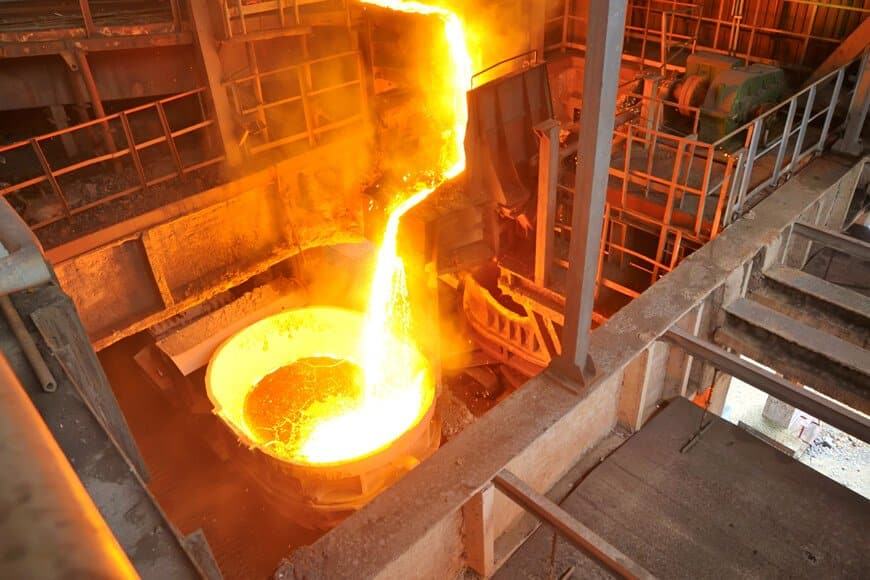
By having control over the casting process, bespoke parts may have better mechanical properties. Grain structure, directional solidification, and reduced porosity are all carefully controlled.
Techniques:
- Controlled cooling and solidification
- Heat treatment and alloying
- Utilization of risers, chills, and gating systems for maximum flow and fill
The end result is a part with greater fatigue resistance, impact strength, and dimensional stability—essential in high-stress applications such as aerospace and vehicle systems.
4. Minimized Waste and Rework
Accurate custom casting minimizes the chances of faults like shrinkage, voids, and inclusions. Furthermore, near-net-shape casting reduces excessive machining and post-processing to a great extent.
- Primary Benefits:
- Lower rejected parts
- Lower scrap percentages
- Less machining time and tool wear
This is directly translated into cost savings and quicker turnaround times, particularly relevant in large production runs.
5. Improved Thermal and Structural Performance
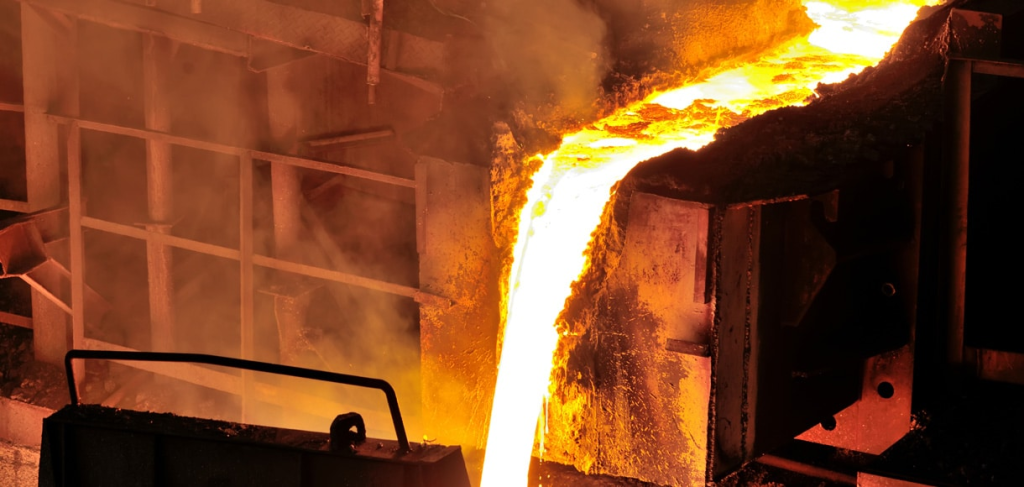
Engineered custom cast parts can be designed to control heat transfer and mechanical load distribution well. This is especially useful in parts such as engine blocks, turbine housings, and heat exchangers.
Advantages:
- Improved cooling and thermal conductivity
- Increased strength in regions subjected to high-stress loads
- Thermal fatigue and distortion prevention
By matching the design to the application’s thermal and structural requirements, manufacturers get more robust and durable products.

6. Cost Effectiveness at High and Low Production Volumes
Though tooling expense for certain types of casting processes (such as die casting) is high, the unit cost drops drastically in high volume productions. For low to mid-volume requirements, processes such as sand and investment casting provide economies with high accuracy.
Cost Factors Impacted:
- Tool reuse and mold
- Raw material cost savings
- Shorter lead times as a result of integrated production
For both high- and low-volume applications, custom casting provides scaleable solutions commensurate with budgetary limits without diminishing quality.
7. Improved Product Lifecycle
Long-lasting custom-cast parts tend to have extended service life as a result of superior material choices and stress management. Maintenance requirements are lessened and downtime is minimized.
Benefits:
- Lower frequency of replacement parts
- Lower maintenance costs
- Improved customer satisfaction
For businesses like mining, oil and gas, and transport, the ability to extend the lifespan of mission-critical parts has major financial and operational implications.
8. Application-Specific Customization
Custom casting provides the ability to incorporate special design features specific to the end-use application. If the objective is to minimize vibration in machinery, withstand corrosion in saltwater applications, or obtain medical-grade biocompatibility, the casting can be modified accordingly.
Examples:
- Non-magnetic alloys for use in medical imaging devices
- Wear-resistant alloys for farm machinery
- Lightweight aluminum alloys for aircraft components
- Customization to ensure every part operates best under its unique operating conditions.
9. Compatibility with State-of-the-Art Manufacturing Technology
The advances in digital manufacturing have further increased the potential of custom casting. CAD modeling, simulation tools, and 3D printing of molds and patterns enhance precision and ingenuity.
Advantages:
- Accelerated prototyping and design iteration
- Predictive analysis of performance and failure modes
- Effortless collaboration between design and production teams
These products simplify the journey from idea to finished product, minimizing development times and enhancing readiness for market.
10. Sustainability and Environmental Advantages
Custom casting can play a part in more sustainable manufacturing processes through:
- Less material loss
- Material that can be recycled
- Lower machine energy usage
Utilizing environment-friendly materials and reducing waste from production assists the environment and can be compliant with regulatory guidelines on sustainable production.
Case Study: Custom Cast Component for Hydraulic Systems
A major builder of construction equipment required a corrosion-resistant, high-strength component for a new hydraulic valve assembly. Off-the-shelf options were too heavy or not durable enough for extreme environments.
Solution:
- Material: High-strength stainless steel alloy
- Method: Investment casting for dimensional accuracy
- Design: Internal flow passages in one casting
Outcome:
- Decreased part weight by 30%
- Enhanced corrosion resistance
- Streamlined assembly from 5 parts to 1
- Reduced total cost of production by 20%
This illustration indicates the physical performance and efficiency advantage of custom casting in a rigorous application.
Conclusion
Custom casting is a versatile answer to enhancing product performance and production efficiency. With the application of material science, sophisticated casting processes, and design versatility, producers can create parts that are stronger, lighter, longer-lasting, and more appropriate for their purpose. No matter if you’re creating parts for car systems, aerospace assemblies, marine systems, or industrial equipment, custom casting offers a competitive advantage in terms of quality and economy.
From automotive systems requiring high-performance engine parts, to aerospace assemblies that demand lightweight yet extremely resilient components, to marine systems exposed to harsh environments, and heavy industrial equipment operating under constant stress—custom casting ensures that every part performs at its best. This tailored approach not only enhances the functionality and safety of the final product but also reduces downtime, improves energy efficiency, and contributes to cost savings over the long term.
As global industries evolve, the role of custom casting will only grow stronger. With increasing demand for sustainability and innovation, manufacturers are turning toward processes that minimize waste, conserve energy, and maximize product lifecycle value. Custom casting meets these challenges by allowing precise material utilization and design flexibility, helping companies reduce their environmental footprint without sacrificing quality or performance.
As technology keeps progressing, including custom casting in your manufacturing plan can set your company up for increased innovation, efficiency, and sustainability.
References
American Foundry Society. (2022). Casting Source Directory. https://www.afsinc.org
Davis, J.R. (2001). ASM Specialty Handbook: Cast Irons. ASM International.
Totten, G.E., & Mackenzie, D.S. (2003). Handbook of Aluminum: Vol. 1 Physical Metallurgy and Processes. CRC Press.
Callister, W.D. (2007). Materials Science and Engineering: An Introduction. Wiley.
ASTM International. (2020). Standards for Casting Materials and Processes.
Modern Casting Magazine. (2023). “Trends in Custom Metal Casting for Industrial Applications”.



