


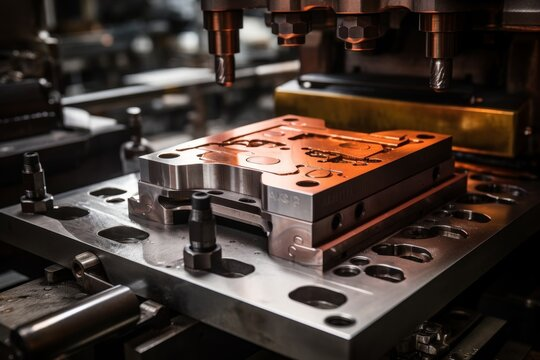
The Basics of Metal Stamping
Metal stamping is a manufacturing process used to convert flat metal sheets into specific shapes. It is a complex process that can include a number of metal forming techniques — blanking, punching, bending and piercing, to name a few.
With the rapid evolution of global markets, the demand for efficiently manufactured, high-volume production of complex parts has surged. Kbear Metal is committed to meeting these demands by offering scalable metal stamping solutions tailored to your project’s unique needs.
Whether you require prototypes or large-scale production runs, we combine cutting-edge equipment with stringent quality controls to ensure your stamped components are delivered on time and to the highest standards. Partnering with Kbear Metal means gaining a trusted ally in metal stamping who understands the importance of precision, reliability, and timely delivery in today’s competitive markets.
Kbear Metal offer metal stamping services to deliver components for industries in automotive, aerospace, medical, and other markets. As global markets evolve, there is an escalated need for quickly-produced large quantities of complex parts.

Stamping Basics
Stamping — also called pressing — involves placing flat sheet metal, in either coil or blank form, into a stamping press. In the press, a tool and die surface form the metal into the desired shape. Punching, blanking, bending, coining, embossing, and flanging are all stamping techniques used to shape the metal.
Before the material can be formed, stamping professionals must design the tooling via CAD/CAM engineering technology. These designs must be as precise as possible to ensure each punch and bend maintains proper clearance and, therefore, optimal part quality. A single tool 3D model can contain hundreds of parts, so the design process is often quite complex and time-consuming.
Once the tool’s design is established, a manufacturer can use a variety of machining, grinding, wire EDM and other manufacturing services to complete its production.
Types of Metal Stamping
There are three major types of metal stamping techniques: progressive, fourslide and deep draw.
Progressive Die Stamping
Progressive die stamping features a number of stations, each with a unique function.
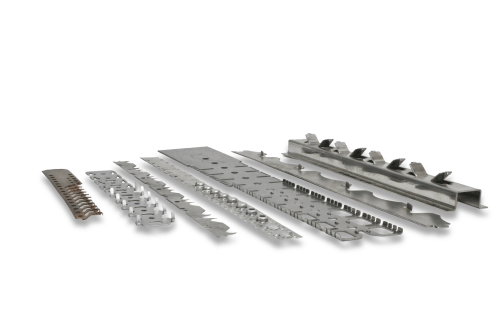
First, strip metal is feds through a progressive stamping press. The strip unrolls steadily from a coil and into the die press, where each station in the tool then performs a different cut, punch, or bend. The actions of each successive station add onto the work of the previous stations, resulting in a completed part.
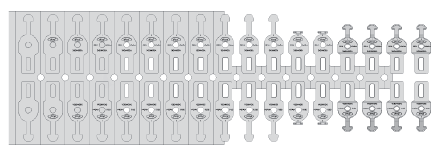
A manufacturer might have to repeatedly change the tool on a single press or occupy a number of presses, each performing one action required for a completed part. Even using multiple presses, secondary machining services were often required to truly complete a part. For that reason, progressive die stamping is the ideal solution for metal parts with complex geometry to meet:
- Faster turnaround
- Lower labor cost
- Shorter run length
- Higher repeatability
Fourslide Stamping
Fourslide, or multi-slide, involves horizontal alignment and four different slides; in other words, four tools are used simultaneously to shape the workpiece. This process allows for intricate cuts and complex bends to develop even the most complex parts.
Fourslide metal stamping can offer several advantages over traditional press stamping that make it an ideal choice for many applications. Some of these advantages include:
- Versatility for more complex parts
- More flexibility for design changes
As its name implies, a fourslide has four slides — meaning that up to four different tools, one per slide, can be used to achieve multiple bends simultaneously. As material feeds into a fourslide, it is bent in quick succession by each shaft that is equipped with a tool.
Deep Draw Stamping
Deep drawing involves pulling a sheet metal blank into the die via a punch, forming it into a shape. The method is referred to as “deep drawing” when the depth of the drawn part exceeds its diameter. This type of forming is ideal for creating components that need several series of diameters and is a cost-effective alternative to turning processes, which typically require using up more raw materials. Common applications and products made from deep drawing include:
- Automotive components
- Aircraft parts
- Electronic relays
- Utensils and cookware
Short Run Stamping
Short run metal stamping requires minimal upfront tooling expenses and can be an ideal solution for prototypes or small projects. After the blank is created, manufacturers use a combination of custom tooling components and die inserts to bend, punch or drill the part. The custom forming operations and smaller run size can result in a higher per-piece charge, but the absence of tooling costs can make short run more cost-efficient for many projects, especially those requiring fast turnaround.

Advantages and Disadvantages of Metal Stamping
| Advantages of Metal Stamping | Disadvantages of Metal Stamping |
| High Efficiency and Productivity | Initial Investment |
| Rapid production of large quantities, leading to higher productivity and lower costs per unit. | Substantial initial costs for tooling and machinery, which can be a barrier for smaller-scale productions. |
| Precision and Consistency | Limitations in Design Complexity |
| Produces parts with consistent quality and tight tolerances, crucial in many industries. | Some extremely intricate designs may not be feasible or require additional processes. |
| Versatility | Tool Wear and Maintenance |
| Suitable for a range of complexities, from simple to intricate parts, across various industries. | Regular maintenance and replacement of dies and punches are necessary, adding to costs and downtime. |
| Cost-Effectiveness | Material Limitations |
| Especially economical for high-volume production, with reduced waste and economies of scale. | Some materials may not be suitable due to properties like brittleness or low ductility. |
| Material Variety | Potential for Quality Issues |
| Compatible with various metals and alloys, offering flexibility in material selection. | Risk of defects such as warping or surface defects, necessitating strict quality control. |
Metal Stamping Design Processes
Metal stamping is a complex process that can include a number of metal forming processes —blanking, punching, bending, and piercing and more. Blanking: This process is about cutting the rough outline or shape of the product. This stage is about minimizing and avoiding burrs, which can drive up the cost of your part and extend lead time. The step is where you determine hole diameter, geometry/taper, the spacing between edge-to-hole and insert the first piercing.

Bending: When you are designing the bends into your stamped metal part, it is important to allow for enough material — make sure to design your part and its blank so that there is enough material to perform the bend. Some important factors to remember:
- If a bend is made too close to the hole, it can become deformed.
- Notches and tabs, as well as slots, should be designed with widths that are at least 1.5x the thickness of the material. If made any smaller, they can be difficult to create due to the force exerted on punches, causing them to break.
- Every corner in your blank design should have a radius that is at least half of the material thickness.
- To minimize instances and severity of burrs, avoid sharp corners and complex cutouts when possible. When such factors cannot be avoided, be sure to note burr direction in your design so they can be taken into account during stamping
Coining: This action is when the edges of a stamped metal part are struck to flatten or break the burr; this can create a much smoother edge in the coined area of the part geometry; this can also add additional strength to localized areas of the part and this can be utilized to avoid secondary process like deburring and grinding.
Bend Distortion/Bulge: The bulging caused by bend distortion can be as large as ½ the material thickness. As material thickness increases and bend radius decreases the distortion/bulge becomes more severe. Carrying Web and “Mismatch” Cut: This is when a very slight cut-in or bump-out on the part is required and is typically about .005” deep. This feature is not necessary when utilizing compound or transfer type tooling but is required when utilizing progressive die tooling.
What Industries Rely Heavily on Metal Stamping?
Automotive Industry
- Applications: Production of components like brackets, panels, and electrical connectors.
- Why Metal Stamping?: High-volume production capabilities and the ability to produce sturdy, precise parts that meet strict safety and quality standards.
Aerospace Industry
- Applications: Fabrication of structural components, engine parts, and fasteners.
- Why Metal Stamping?: The need for lightweight, high-strength parts that adhere to stringent industry regulations.
Electronics Industry
- Applications: Manufacturing of connectors, terminals, and enclosures.
- Why Metal Stamping?: Precision and the ability to work with various conductive materials essential for electronic components.
Medical Industry
- Applications: Production of surgical instruments, implants, and braces.
- Why Metal Stamping?: The requirement for precision, biocompatibility, and the ability to produce complex shapes.
Consumer Goods Industry
- Applications: Creation of appliances, tools, and hardware.
- Why Metal Stamping?: Versatility in producing a wide range of products with different sizes and complexity.
Industrial Machinery
- Applications: Components for machines, engines, and heavy equipment.
- Why Metal Stamping?: The demand for durable, high-quality parts that can withstand challenging industrial environments.
Conclusion
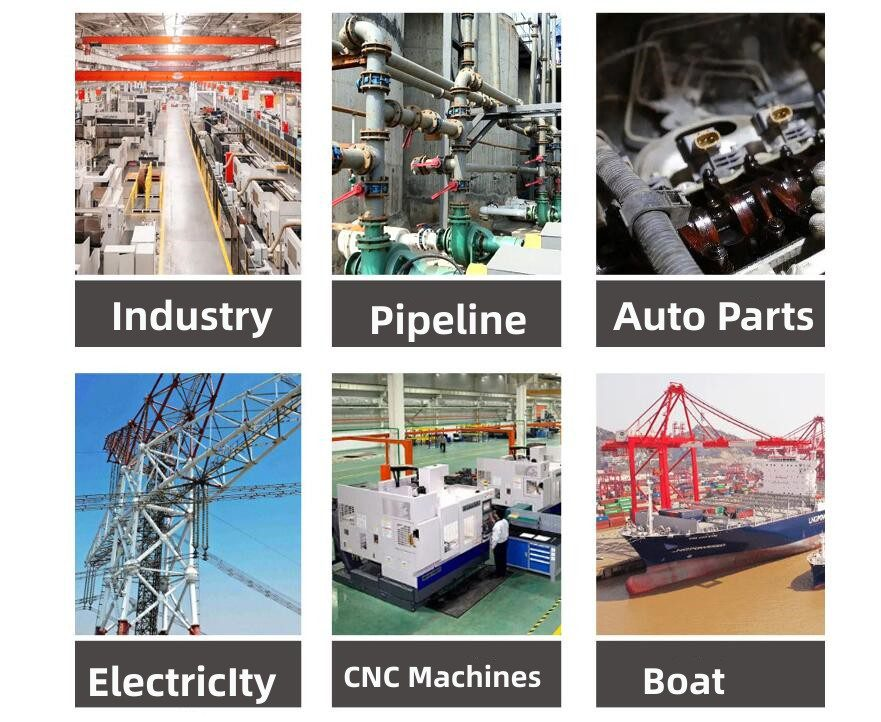
Metal stamping is a vital manufacturing process that transforms flat metal sheets into precise components using high-pressure machinery and custom tooling. This technique is essential in industries such as automotive, electronics, construction, and more—offering a cost-effective way to produce durable and consistent parts at scale. As technology continues to advance, metal stamping remains a cornerstone of modern manufacturing for both simple and complex parts.
Kbear is a trusted manufacturer specializing in high-quality metal stamping solutions. With a focus on precision, durability, and customer satisfaction, Kbear provides tailored metal components to meet the unique needs of clients across various industries.



