


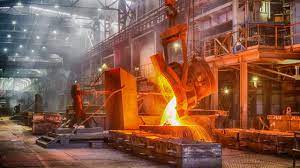
Casting with the rising industrial demand and applications, there comes a rise in the demand for complex and high-quality products.
Fortunately, different types of Mastering Casting Processes have been possible in the manufacturing of complex and precise products for various applications and user needs.
To choose the appropriate casting method for your needs, it is advantageous to understand the advantages and disadvantages of these methods.
The following article gives a brief description of some of the types of casting processes along with their pros and cons.
Overview of Mastering Casting Processes
casting process is a manufacturing method that produces desired-shape metal parts by pouring molten metal into a mold and solidifying and cooling it to room temperature. It’s capable of producing complex and intricate parts, irrespective of their sizes.
Casting can produce isotropic metal parts in bulk quantities, as a result, making it suitable for mass production. Furthermore, to meet specific user requirements, there are different types of casting that differ by the material and mold used.

Exploring the 11 Casting Process
Different Types of Mastering Casting Processes
1. Sand Casting Process
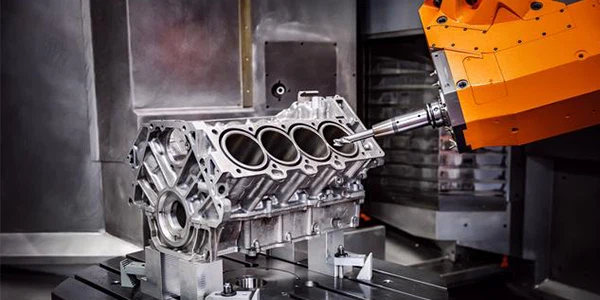
Sand casting is a flexible casting process that can be used to cast any ferrous or non-ferrous metal alloy. It is commonly used in industrial units for mass production of automotive metal casting parts such as engine blocks, cylinder heads, crankshafts, and so on.

2. Gravity Die Casting
Gravity die casting, also known as permanent mold casting, fabricates metal and metal alloys using reusable molds made of metal such as steel, graphite, and others.
This metal casting process can produce a variety of items such as gears, gear housing, pipe fittings, wheels, engine pistons, and so on.

3. Pressure Die Casting
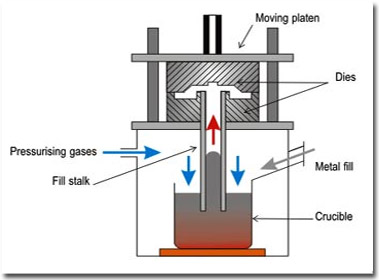
Depending on the pressure, there are two forms of pressure die casting. There are two types of die casting: low-pressure die casting and high-pressure die casting.
High-pressure die casting is more commonly used in the mass manufacturing of complex geometries requiring high precision. Low-pressure die casting, on the other hand, is a preferred casting process for big and simple component production.
4. Investment Casting
Investment casting, also known as lost-wax casting, is a method of producing metal castings by investing a wax pattern with refractory material and a binding agent to shape a disposable ceramic mold, and then pouring molten metal into the mold.
Investment casting is a costly and labor-intensive process that can be utilized for mass production or in intricate castings to make metal casting goods such as gears, bicycle trunks, moto discs, and blasting machine replacement parts.

5. Plaster Casting
Plaster casting is identical to sand casting, however, the mold is composed of a material known as ‘Plaster of Paris.’ Plaster cools the metal more slowly than sand due to its limited thermal conductivity and heat capacity, which aids in achieving high precision, particularly for narrow cross-section pieces.
It is not, however, suited for high-temperature ferrous materials. Plaster mold casting allows for the production of small castings of 30 grammes as well as massive castings of 45 kilogrammes. The figure below, for example, depicts a cast component created by this process with a section thickness of 1 mm.

6. Centrifugal Casting
Centrifugal casting, also known as roto casting, is a method of producing cylindrical objects in an industrial setting using centrifugal forces.
The molten metal is poured into a prepared spinning die in this method of metal casting. At high pressure, centrifugal forces aid in the distribution of molten metal within the die.

7. Lost-Foam Casting
The lost-foam casting method is similar to investment casting except that the pattern is made of foam rather than wax.
After the design is produced, it is coated with a refractory ceramic by dipping, coating, spraying, or brushing. The molten metal is then poured into the mold to create the desired product.
This process is applicable to a wide range of materials, including alloy steel, carbon steel, alloy cast iron, ferrous alloys, and others.

8. Vacuum Casting
As the name implies, vacuum casting is a type of casting in which manufacturing takes place under a vacuum pressure of 100 bar or less to exhaust gas from the mould cavity.
To eliminate bubbles and air pockets, molten metal is poured into the mould cavity inside a vacuum chamber.
The vacuum die-casting method is widely used in a variety of industries, including automotive, aerospace, electronics, marine, and telecommunications.
As a result, structural chassis components and vehicle body elements are among the components produced by this manufacturing technique.
9. Squeezing Casting
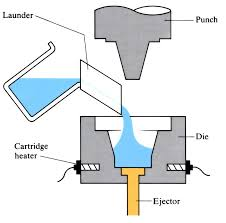
Squeezing die casting, in particular, is a promising casting process for safety-critical elements in automobile systems. Space frame joints, aluminum front steering knuckles, chassis frames, brackets, or nodes are examples. This metal casting process combines the advantages of casting and forging.
For example, the high pressure used during solidification aids in the prevention of shrinkage and porosity. However, because of specialized tooling needs, it is not as common for large production as other casting procedures.
10. Continuous Casting
It enables the continuous mass manufacture of metal profiles with a constant cross-section, as the name implies. This style of casting is commonly used in the manufacture of steel bars.
Continuous casting produces products that are generally uniform, consistent, and dense.

11. Shell Molding
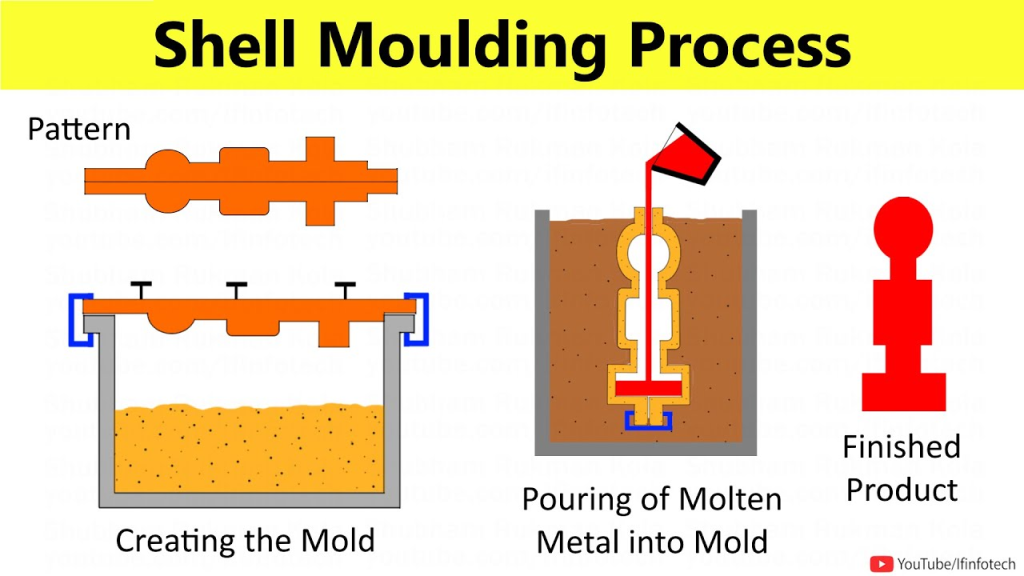
Shell molding is a mold-casting procedure that uses disposable molds. It is similar to the sand casting process, except that instead of a flask of sand, the hardened shell of sand forms the mold chamber.
The sand used in sand casting is finer, and it is combined with a resin so that it may be heat treated and cemented into the shell surrounding the design.
Shell molding is used to create industrial items such as gearbox housing, connecting rods, small-size boats, vehicle hoods, cylindrical heads, camshafts, valve bodies, and so on. The casting products have a smooth surface finish and are dimensionally accurate.
Basic Steps of Different Casting Production
Mostly, casting processes follow some basic steps such as pattern making, mold making, selection and pouring of metal alloys and lastly, finishing of the casted part.
- Pattern Making
To create a pattern, it is very much important to decide about the shape of the mold. For this, the materials used are wax, sand, plastic, or even wood.
- Mold making
Following that, it will be needed to develop various types of molds for casting. The single-use mold can be produced from sand, plaster, or ceramic shell. Each has a unique method of production. In addition, patterns made of foam or wax are burnt in the kiln.
- Select metal alloys
Metal castings are made from ferrous or non-ferrous alloys. Alloys are a chemical mixture of elements with mechanical properties that prove best in the final cast applications, whereas ferrous alloys consist of steel, malleable iron, and gray iron. On the other hand, non-ferrous metals comprise aluminum alloys, bronze, and copper.
- Melt the alloy and pour it as required.
Once the metal alloys have been selected, the following step is the pouring of metal into the mold. This process involves placing a solid metal over a crucible and heating it using an open flame or in the furnace till it melts. For small casting, pouring the molten metal directly from the crucible is possible, but large castings may require that the metal be poured into a bigger spoon before disposing it into the mold.
- Finishing
Once solidified, the product of casting is taken out, and metal surface finishing is performed on it. Besides, the finishing process may also involve scrubbing or machining in the removal of excess material for the larger waste material.
Comparison Mastering Casting Processes of advantages and disadvantages
To facilitate comparison among the aforementioned 15 casting methods, here’s a compilation of their respective advantages and disadvantages.
| Casting Method | Advantages | Disadvantages |
| Die Casting | High precision, smooth surface, high productivity | High mold manufacturing cost, brittleness |
| Sand Casting | Low cost, suitable for large parts, versatile | Rough surface, potential defects, low productivity |
| Investment Casting | High precision, intricate details, versatile | High manufacturing cost, long production cycle |
| Centrifugal Casting | High purity, no porosity, no internal stress | Limited to axis-symmetric parts, low productivity |
| Lost Foam Casting | High precision, suitable for large complex parts | High cost, limited material options, pollution |
| Permanent Mold Casting | Long mold life, high productivity, low cost | Limits complex geometries, high mold cost |
| Plaster Casting | Suitable for art and decorative items | High cost, fragility, unsuitable for large parts |
| Vacuum Casting | High precision, good surface quality, transparency | High equipment cost, suitable for small batches |
| Continuous Casting | High productivity, low material waste | Limits part shapes, high equipment cost |
| Shell Molding | High precision, good surface quality, long mold life | High cost, suitable for small batches |
| Pressure Die Casting | High productivity, high precision, suitable for mass production | High mold manufacturing cost, suitable for small parts |
| Squeezing Casting | Combines casting and forging, high density | High equipment and process requirements, high cost |
| Low Pressure Casting | Lower cost, high-quality parts | High equipment cost, suitable for small batches |
| Ductile Iron Casting | High toughness, high strength, versatile | High manufacturing cost, requires strict alloy control |
| Gravity Die Casting | Simple, low cost, suitable for small batches | Lower precision and surface quality, suitable for simple parts |
Choosing the Right Casting Manufacturer
Selecting the right casting manufacturer ensures your project meets its design, budget, and quality goals. At Kbear Metal, we specialize in delivering top-tier casting solutions tailored to your needs.
Whether you require precision investment casting or robust sand casting, our expertise ensures flawless results.
Selecting Kbear Metal means experiencing unmatched craftsmanship, reliable service, and dedication to superiority. Connect with us today and learn how we can bring your vision into reality!
Conclusion
When it comes to choosing the right casting process for your custom metal project, knowledge is key. Not knowing enough can greatly impact the quality, cost, and overall success of your product.
By understanding the 11 different types of casting processes discussed in the above sections, you can make a more informed decision as to which one will best suit your manufacturing needs.



